When I first visited Prague at the tail end of the ’90s, I was captivated by the city to the extent that it dominated my every waking thought. Like for millions of tourists each year, it was the historic centre’s visual splendour that first set my heart racing, but it wasn’t long before I got to know the less postcard-friendly side as well.
Attending a teaching course in the freezing winter of early 2002, the school provided cheap digs in a Communist-era Panelák out in the Barrandov district – namely, a block of flats constructed from panels of prefabricated concrete. In truth, it didn’t look all that different from similar eyesores in Britain, but it was still a striking contrast to the “Golden City” image of Prague. Just as the towers, domes, and spires of the centrum appeared etched in crystal thanks to the crisp, cold January air, the stark right angles and brute bulk of the housing project were brought into sharp focus in the snow and ice.
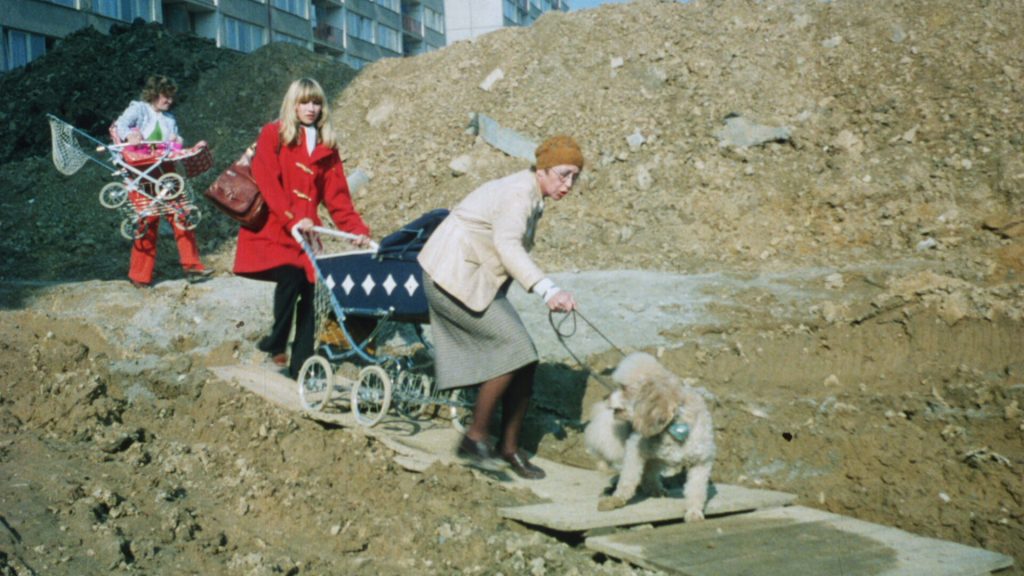
There was heavy construction going on at the time, which meant a lot of rubble and heaps of earth for the locals to pick their way through as they went about their daily business. One night, my flatmate was staggering back from the pub when he fell into an open trench and lay unconscious as the falling snow began covering him up. Luckily, a passing group of teenagers spotted him, fished him out, and took him back to the pub for a few reviving rounds of beer and shots.
I was reminded of this incident continually while watching Prefab Story, Věra Chytilová’s tragicomic day-in-the-life of the vast Jižní Město housing estate in Prague. The narrative, such as it is, follows an elderly man who arrives from the countryside to live with his daughter in one of the concrete monstrosities, but neither the taxi driver nor the harried locals can pinpoint the correct tower block…
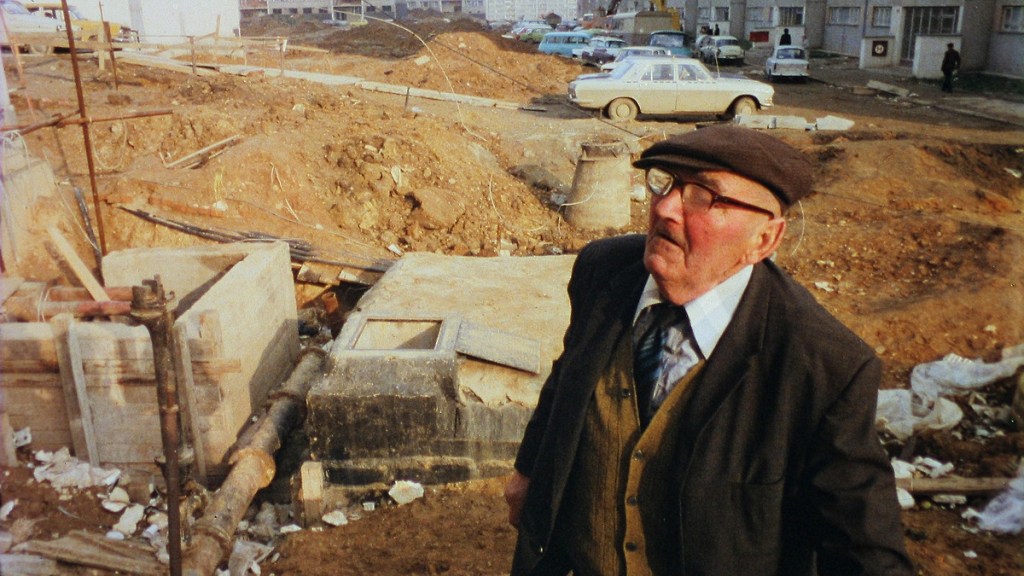
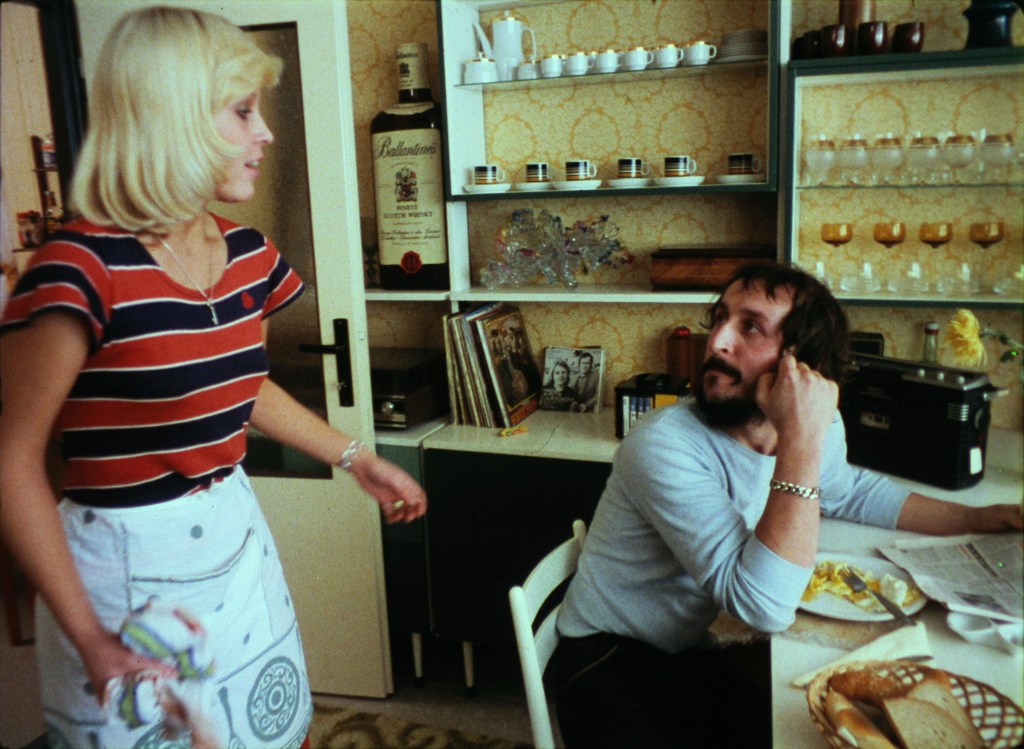
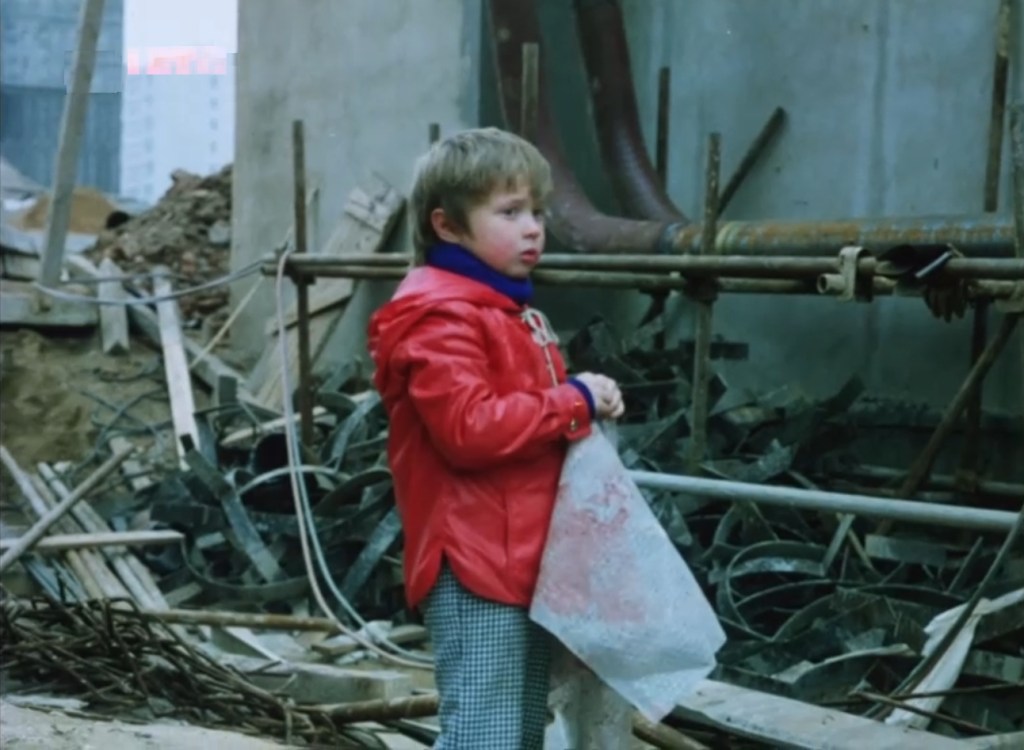
Undeterred, the old chap spends the day wandering around, engaging with the sullen residents and inserting himself into minor dramas with his misplaced sense of community. Among the other people we meet are a pregnant young woman who idealises the stay-at-home life of her comparatively glamorous friend, only to find out that her pal has greatly overstated her domestic bliss; an obnoxious TV actor and lothario whose car has broken down and consoles himself by trying to bed his neighbour; and a young boy who skips school and finds adventure on the endless construction site.
The real star of the show is the housing project itself, filmed in exaggerated cinéma vérité style by cinematographer Jaromír Šofr, one of Chytilová’s regular collaborators. The filmmaking team imagines the real-life estate as a Sisyphean labyrinth facilitated by penny-pinching bureaucrats as the beige era of Normalisation in Czechoslovakia was wheezing its way into the ’80s, overseen by incompetent jobsworths, and shoddily built by surly gangs of workers who would rather sit in the pub than get the job done.
We see the brutalist monoliths crumbling into decrepitude even as newer phases are half-arsed into existence, the perpetual chaos of construction providing a daily obstacle course for the frazzled residents as they negotiate unmade roads, heaps of rubble, overflowing bins, and haphazard piles of materials while dodging heavy machinery. Slapstick humour is derived from people constantly stumbling around indoors and out to the ever-present cacophony of jackhammers, as if the alien landscape is playing havoc with their balance and sense of spatial awareness.
Remarkably, after suffering heavy censorship due to her acerbic and challenging work during the Czechoslovak New Wave of the 1960s, Prefab Story was actually suggested as a suitable topic for Chytilová by the comrades at Prague’s Barrandov Studios. How her finished product evaded further censorship is even more remarkable – this is the utopian socialist dream turned sour, forcing a disparate cross-section of society into a patently unliveable environment where they are simultaneously isolated and alienated but always stuck in each other’s business.
Heightened social realism by way of dystopian farce, Prefab Story is deliberately discombobulating. Šofr is clearly having a blast with his whip-pans, tracking shots, and crash-zooms, capturing the mayhem on the ground and in cramped apartments as ominous concrete slabs dangle perilously from cranes above the heads of harried residents. His camerawork is emphasised by the aggressive editing by Jiří Brožek, who cuts in and out of scenes with alarming effect, and the score by Jiří Šust, who emulates the menace of schlocky horror movies for further unease.
As frequently disorienting as Prefab Story is, however, it still represents something more formally disciplined than the free-wheeling avant-garde caprices of her most famous film outside the Czech Republic’s borders, Daisies. As such, it is a satisfying cinematic treat: A simple concept brilliantly realised by a director with a unique vision. And, while subsequent post-Revolution governments have striven to make the notorious paneláky more desirable with brighter colour schemes and better facilities, the prefab stories continue for around a third of the country’s population who still dwell in them.

 Czech Film Review