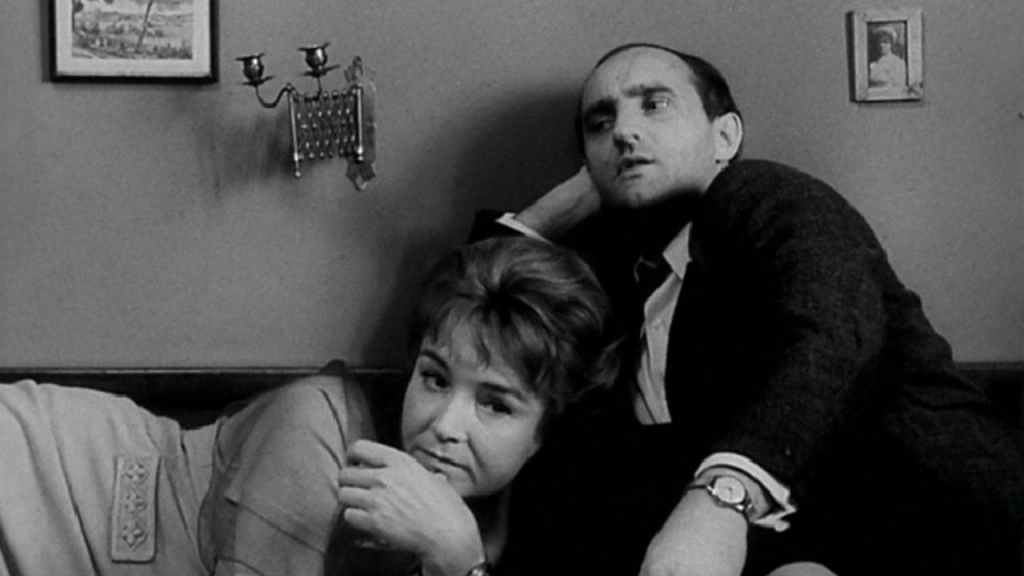
Streamlined from Milan Kundera’s novel of the same name into a trim 81-minute film, Jaromil Jireš’s The Joke is nevertheless one of the most forthright condemnations of Communism to emerge from the Czechoslovak New Wave. As a result, it was banned by the authorities shortly after its original run in 1969 and didn’t see the inside of a cinema again for another two decades.
Frankly, it’s remarkable that the film received a theatrical release at all. Unlike some other celebrated works of the period that took issue with the regime, The Joke doesn’t distance itself through allegory (such as Miloš Forman’s The Firemen’s Ball) or surrealism (Věra Chytilová’s Daisies). Those movies were censored, too, but Jireš’s quiet yet powerful adaptation of Kundera’s book comes right out and says it: People who didn’t toe the line (either wilfully or by misfortune) routinely had their lives shattered by the authorities.
The film opens as our cynical protagonist, Ludvik Jahn (Josef Somr), a middle-aged scientist and self-confessed womaniser, returns to his hometown in Moravia after a long absence. He meets Helena (Jana Dítětová), a reporter who wants to interview him for an article. By coincidence, she happens to be married to Pavel Zemánek (Luděk Munzar), a man Ludvik went to college with in Prague many years before. With this newfound knowledge, Ludvik decides he will seduce Helena to cuckold his old school chum and get belated revenge.
We flash back 15 years earlier to find out why. It’s May 1949, and many Czechoslovaks, including a good proportion of Prague’s student body, are eagerly embracing the country’s fledgling status as a people’s democratic state as it joins the Soviet-led Eastern Bloc – totally understandable after the brutality they faced under Nazi occupation during World War II.
Ludvik is an irreverent student who has the hots for Markéta (Jaroslava Obermaierová), a devoted follower of the new regime. She won’t sleep with him, however, and he gets even more butt-hurt when she leaves the city to attend a proletariat summer camp. In retaliation, he teases her ardour for the Party with a throwaway joke on a postcard:
“Optimism is the opium of mankind. A “healthy spirit” stinks of stupidity. Long live Trotsky! Yours, Ludvik”
Big mistake. Markéta grasses him up, and his other student friends in the Communist Party don’t see the funny side. Ludvik is hauled up in front of a tribunal, kicked out of college, and stripped of his Party membership. As if that wasn’t bad enough for a careless and petty jibe, he is also forced to serve six years of hard labour in the technical auxiliary battalion of the army – basically a chain gang where he and the others are dehumanised and humiliated by the drill sergeant.
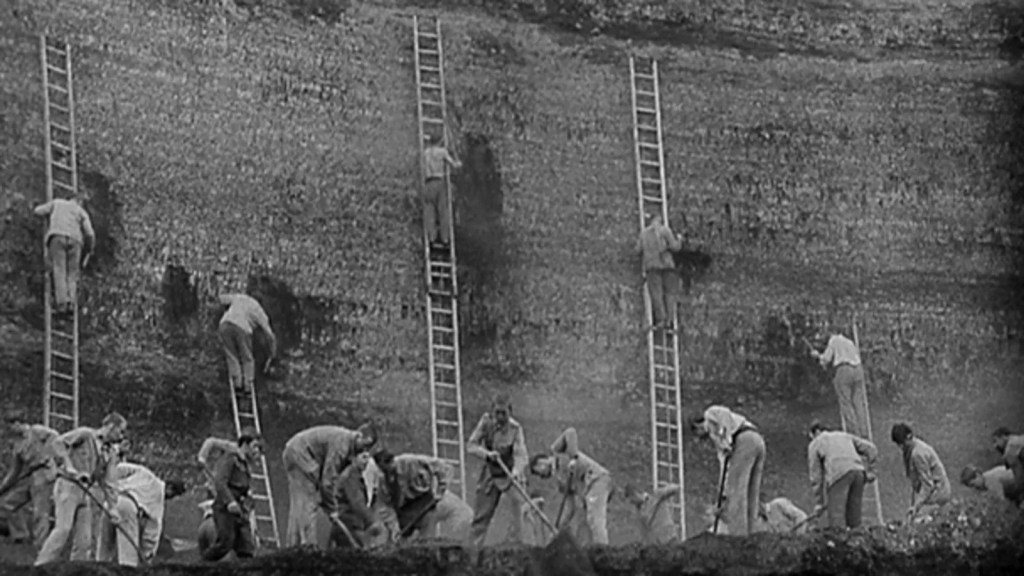
With shades of Full Metal Jacket, Ludvik recalls the plight of his friend Alexej (Milos Rejchrt), a proud Communist who, nevertheless, finds himself most harshly treated in the battalion. In one of the story’s many ironies, Alexej’s attempt to report the drill sergeant (people were encouraged to inform on one another in the ČSSR) ends in fatal repercussions.
The flashback sequences in The Joke are handled elegantly by Jireš, aided by fluid editing from Josef Valušiak. When Ludvik is thinking about the events that led him to his callous scheme, we see things from his point of view as we cut back and forth between past and present. It creates the impression that Ludvik is in dialogue with his memories, and it provides a certain poignancy to an otherwise dislikable character – sure, Ludvik was a victim of the regime, but he’s an odious sleazebag and his plan for revenge is indefensible. The technique is mesmerizing, and it also solves a practical problem – don’t you just hate it in Hollywood movies when they try to make an ageing actor look like a kid in flashback sequences?
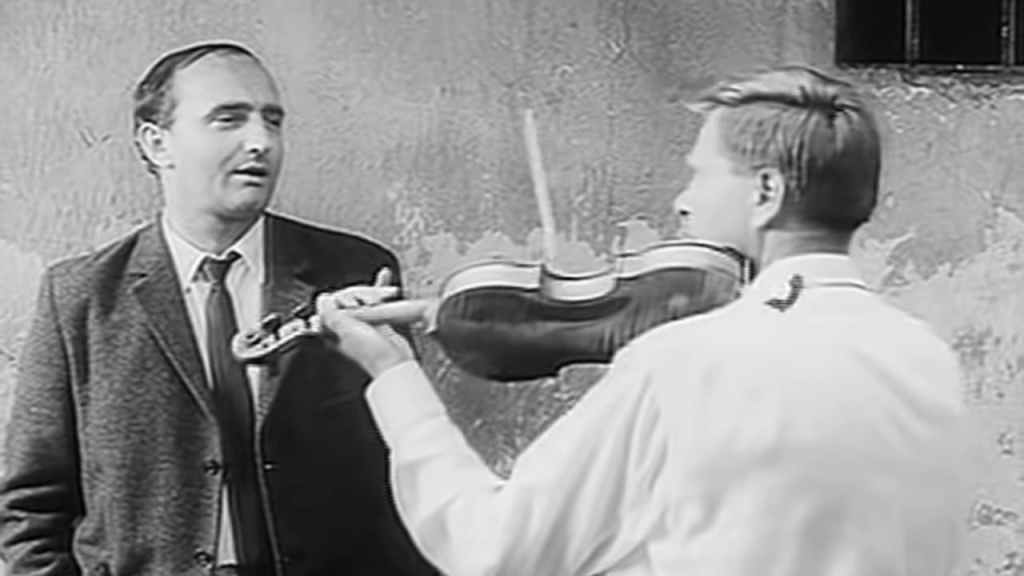
To pull off his seduction, Ludvik borrows the apartment of another ostracised college friend, Kostka (fellow New Wave director Evald Schorm), as a shagpad for his upcoming tryst with Helena. While he’s killing time before their date, Ludvik also catches up with Jaroslav (Milan Svrcina), an old friend from the town with whom he used to play in a folk band. Jaroslav seems quite content with his lot and invites Ludvik to pick up his instrument again, but he is unable – hearing the music he loves co-opted by the regime due to its proletarian themes makes him sick to the stomach.
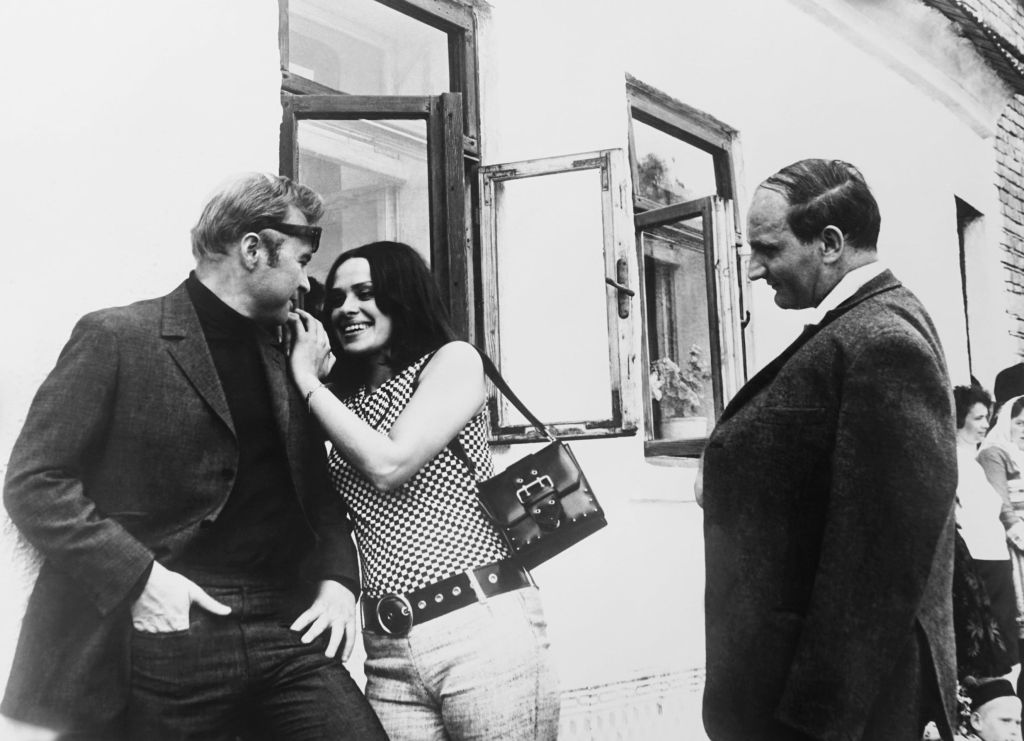
Milan Kundera was big on irony and, even in its more truncated form, the title of Jireš’s adaptation has multiple meanings. Beyond the obvious “joke” that landed Ludvik in hot water in the first place, the big ironic kicker comes (spoiler alert!) after he successfully beds Helena out of spite towards her husband. She’s fallen in love with him and reveals that her marriage to Pavel has been in name only for years. To make matters even more galling for the skirt-chasing Ludvik, Pavel also rocks up in town with his attractive young student girlfriend (Věra Křesadlová playing a similar role to hers in Intimate Lighting).
What we’re left with is an embittered middle-aged man almost stranded outside of time by his misfortunes and his own mean-spirited actions. A sense of disillusionment and uncertainty pervades the film, and Ludvik’s obsolescence is paralleled by the folk traditions and music we see and hear throughout as his hometown prepares for the Ride of the Kings festival. They still exist in a compromised form within this society, but the post-revolution youngsters would rather listen to rock music on the radio instead.
The Joke is generally regarded as the last true film of the Czech New Wave. If that is the case, it’s a fittingly provocative full stop to the movement. The following year, Jireš would bury his social criticism even deeper in folklore with the ravishing Valerie and Her Week of Wonders, but The Joke may well be his crowning achievement.

 Czech Film Review