When I first visited Prague at the tail end of the ’90s, I was captivated by the city to the extent that it dominated my every waking thought. Like for millions of tourists each year, it was the historic centre’s visual splendour that first set my heart racing, but it wasn’t long before I got to know the less postcard-friendly side as well.
Attending a teaching course in the freezing winter of early 2002, the school provided cheap digs in a Communist-era Panelák out in the Barrandov district – namely, a block of flats constructed from panels of prefabricated concrete. In truth, it didn’t look all that different from similar eyesores in Britain, but it was still a striking contrast to the “Golden City” image of Prague. Just as the towers, domes, and spires of the centrum appeared etched in crystal thanks to the crisp, cold January air, the stark right angles and brute bulk of the housing project were brought into sharp focus in the snow and ice.
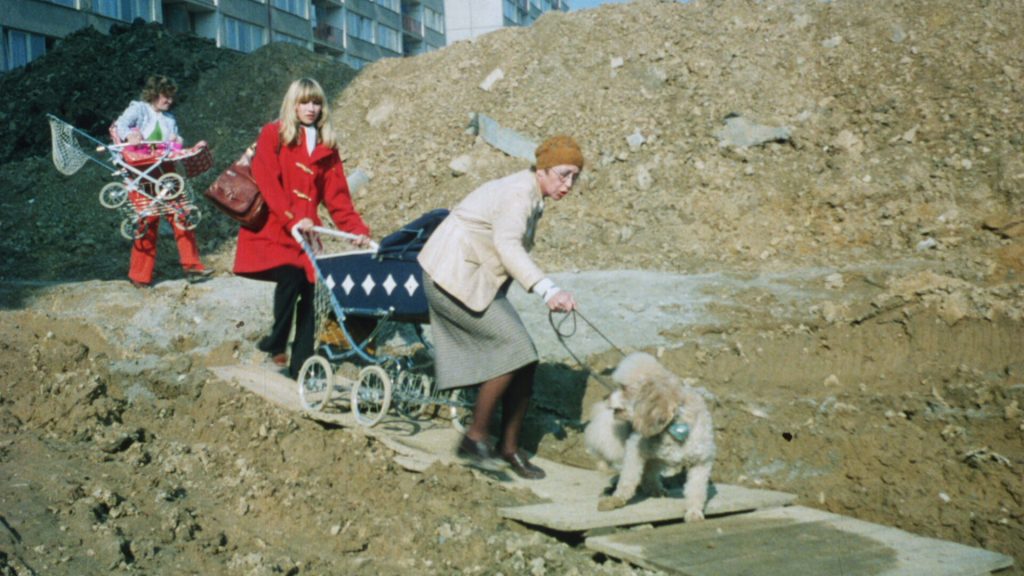
There was heavy construction going on at the time, which meant a lot of rubble and heaps of earth for the locals to pick their way through as they went about their daily business. One night, my flatmate was staggering back from the pub when he fell into an open trench and lay unconscious as the falling snow began covering him up. Luckily, a passing group of teenagers spotted him, fished him out, and took him back to the pub for a few reviving rounds of beer and shots.
I was reminded of this incident continually while watching Prefab Story, Věra Chytilová’s tragicomic day-in-the-life of the vast Jižní Město housing estate in Prague. The narrative, such as it is, follows an elderly man who arrives from the countryside to live with his daughter in one of the concrete monstrosities, but neither the taxi driver nor the harried locals can pinpoint the correct tower block…
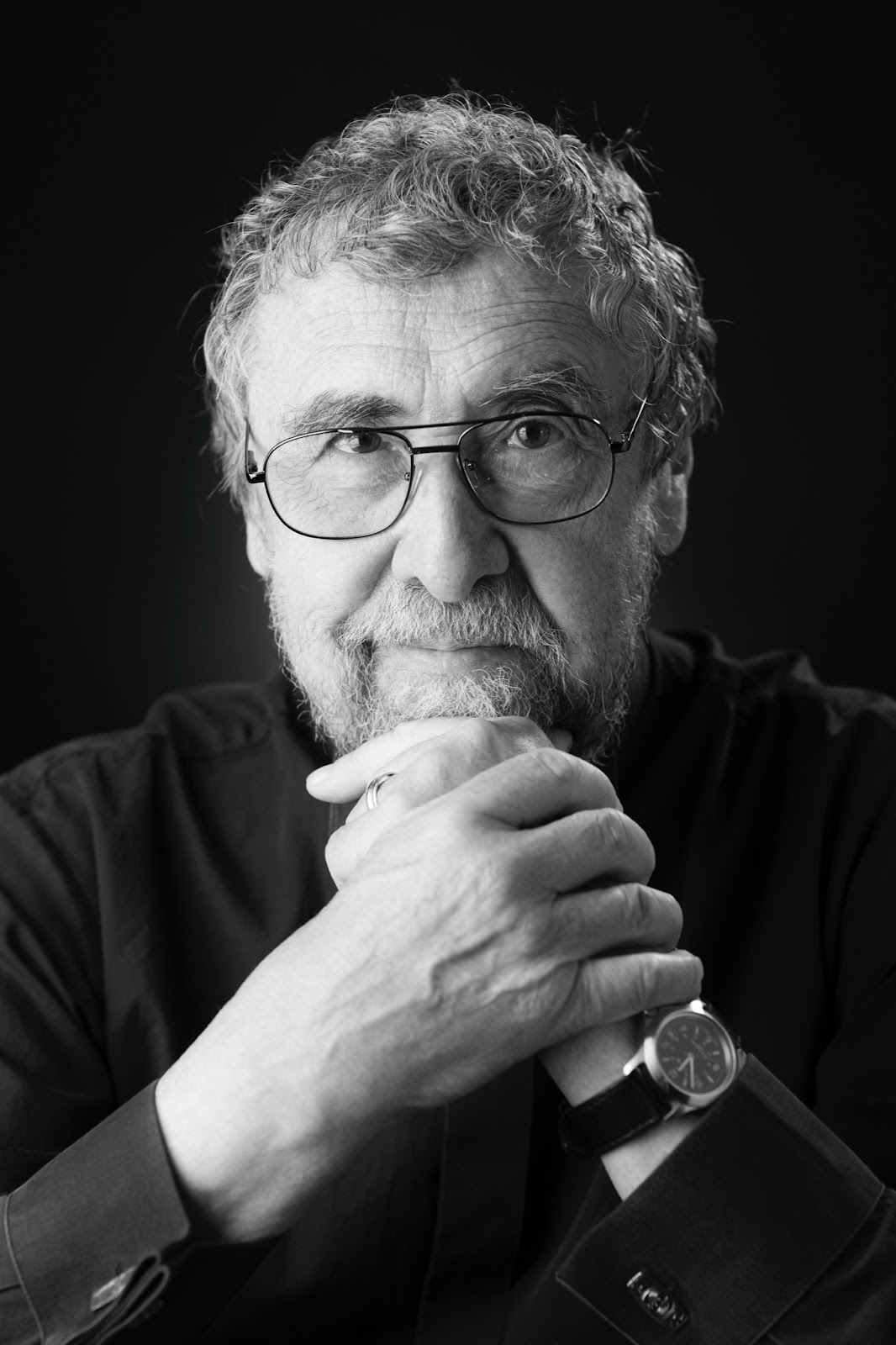
He shot Jiří Menzel’s Oscar-winning Closely Watched Trains and worked with key figures of the Czechoslovak New Wave including Jan Němec, Evald Schorm and Věra Chytilová. We spoke to legendary cinematographer Jaromír Šofr about his life in movies…
Q: Some of our readers will have seen “cinematographer” in movie credits but may not fully understand what one does. What does a cinematographer bring to a film? What would you say are your main talents, and what qualities define your work?
The cinematographer is essentially the author of the visual part of a movie. While the director controls the emotional effect of the film through the performance of the actors, the cinematographer as director of photography (DoP) controls a similar effect by creating photographic images of suitable quality and power. Both command movement within the scenic space. The DoP controls the tonality (light and dark), colour, linearity (composition) of the image with different tools. A special talent of the DoP is the ability to enforce their supporting ideas to everyone involved, and a basic talent is imagination and aesthetic sensitivity.
Q: In another interview you said that the Czechoslovak New Wave filmmakers were influenced by the French New Wave. What was it about those films that were particularly interesting to you? What films did you grow up with, and what other films have influenced your work?
From my point of view, you can see the influence of the French New Wave mostly in the field of lighting and image tonality. I saw many French movies of all genres while I was a student. Some of my favourites were Les Amants by Lui Malle and Bratranci by Chabrol – the DoP on both was Henri Decaë.
Q: You were a young guy when you first went to study at FAMU in Prague. What was the city like in those days? Did you make friends quickly? Where were the hotspots for people to socialise, for nightlife etc?
During my student years Prague was much like any other city neglected by Communist nationalisation, but it was still very charming for a boy coming from a poorer town. All my fellow students welcomed me quickly and the meeting point was mostly in the school building. I was quite shy so I wasn’t attracted to cafes or nightspots for meeting people. I was too busy studying conscientiously and enjoying the subject! It was fun taking trips out of Prague to the countryside with groups of my closest friends, who were mostly from the screenwriting department. We were all romantics.
Q: Your early career was in the 60s and around the time of the Prague Spring. How did it affect the lives of you, your family and friends? What was the mood like in the country?
It was a busy time for me, I was frequently offered work at the beginning of the Sixties. After spending one year in military service – where I also learned English – I was engaged in shooting a long widescreen film for Karel Kachyňa called Long Live the Republic (Ať žije republika). Shortly after that I did the very famous A Report on the Party and the Guests(O slavnosti a hostech) with Jan Němec. When I became an employee of Barrandov Studios I worked on some documentary films and then finally started my collaboration with my friend Jiří Menzel on films like Closely Watched Trains and Capricious Summer.
In the summer of 1968 I shot End of a Priest (Farářův konec) directed by Evald Schorm, a friend of Menzel’s. As for the social and political climate, we felt endangered and the threats became reality on 21st August during the soviet occupation, which started just one day after we finished the film. So I personally had no time to feel particularly enthusiastic about the Prague Spring, besides just the reformation of communism that I personally thought wasn’t enough. Since those times I am still waiting for the fall of totalitarianism, because totalitarian practices have found continuity today – now active as capitalists and low-principled politics. The only hopeful period was the presidency of Vaclav Havel.
Q: You worked on Věra Chytilová’s first two short films. What was she like to work with?
I accepted the role of cinematographer on her first significant work quite enthusiastically. Working with Věra was sometimes exhausting. Some decades later I can say… extremely exhausting! The challenge came from her special method of shooting according to her nature. I don’t know what the equivalent English expression is, but we say somebody is “born from wild eggs”. That is exactly what can be said in her case, but the result of her directing was always unusual. She never repeated what was just shot. She always made a different shot, sometimes without any consideration for continuity.
The first project, her school final film, The Ceiling (Strop), was comparatively smooth in structure and lyrical in message, while her movies became more rugged and provocative over the next few decades. In 1979 we finished our last really successful collaboration, Panelstory. She really appreciated my achievement in visual concept – which, by the way, would be quite unacceptable for Menzel. A less happy collaboration was on Wolf’s Hole (Vlčí bouda) which we shot in 1986. All in all, Vera was undoubtedly the First Lady of Czech New Wave filmmaking.
 Czech Film Review