Four Murders Are Enough, Darling (Čtyři vraždy stačí, drahoušku) – Oldřich Lipský, 1971

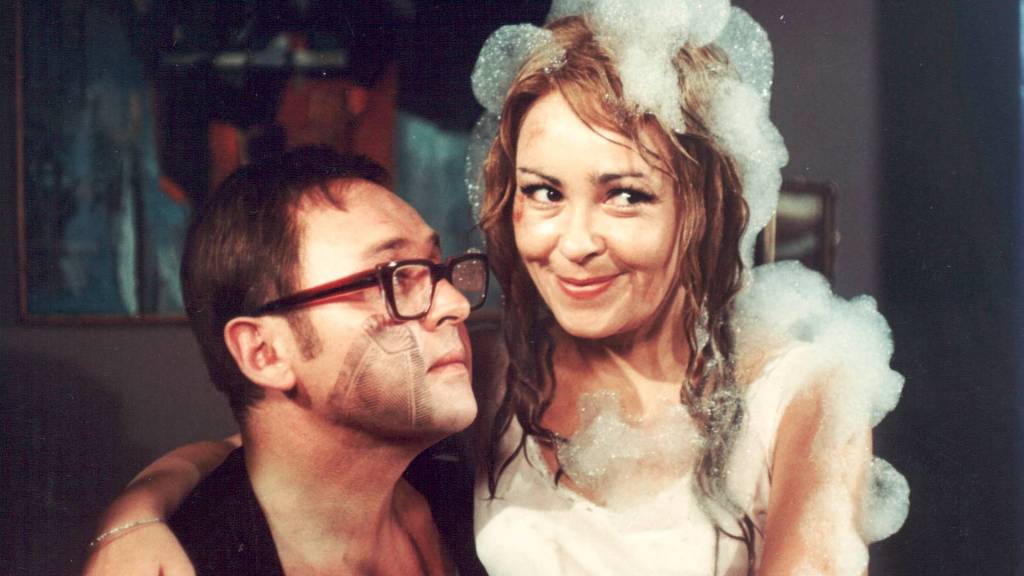
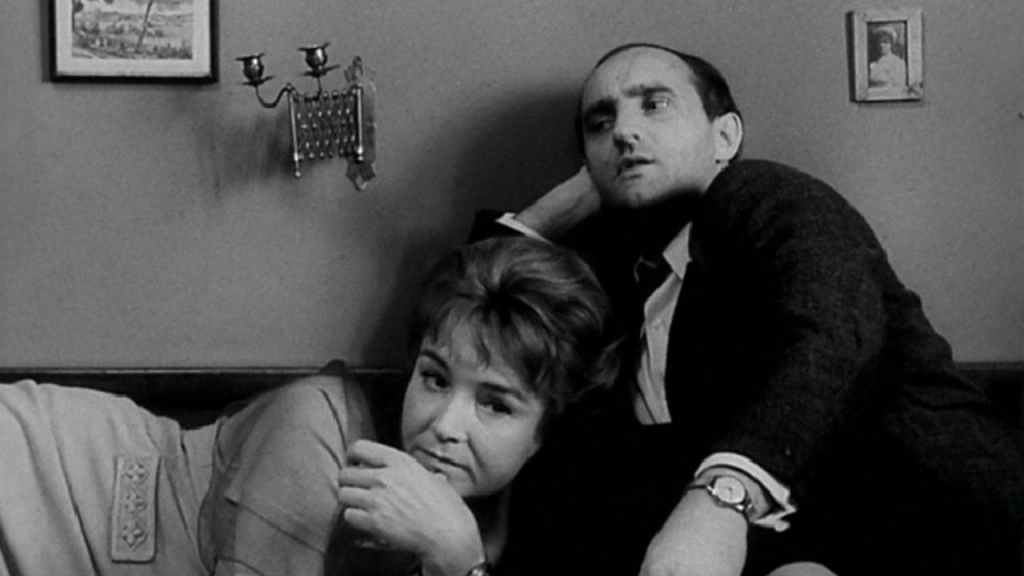
Lubomir Lipsky's hapless Georg Camel gazes at his love interest Sabrina, covered in soap suds, in Four Murders Are Enough, Darling

After parodying old-fashioned Hollywood cowboy movies in Lemonade Joe, the Czech Mel Brooks returned to affectionately lampooning American genres with Four Murders Are Enough, Darling. This time, classic crime flicks and pulp fiction are the targets, and Oldřich Lipský apparently never encountered a gag that he didn’t deem unworthy for inclusion in his movies. I say that in the best possible sense – here, the sheer deluge of broad jokes, irreverent wordplay, comic misunderstandings, and slapstick humour has a cumulative effect, rolled into a madcap farce with the purest intention: To make the audience laugh as often as possible.

Whether all the hilarity fully translates if you don’t speak Czech is another matter, but you’ll get the general vibe. The movie starts fast and sets the tone with a jaunty title sequence with evocatively dynamic comic book art by Kája Saudek. Then we’re on a night train where Dr. James Porter (Viktor Maurer), is nervously transporting a million-dollar cheque from Michago to San Fernando. Unfortunately for them, rival gangs from each city are also onboard with murderous designs on the loot.

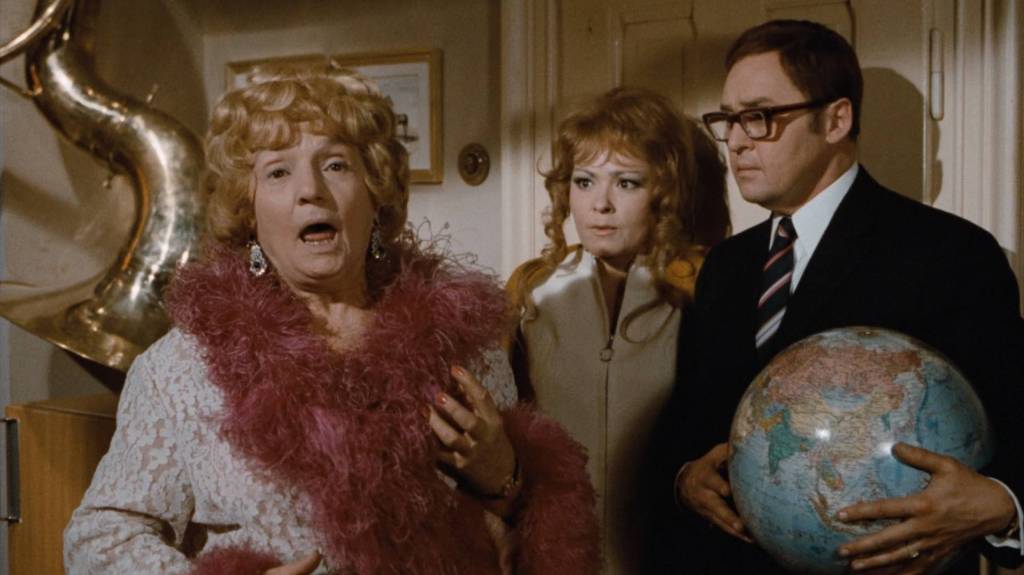
Segue to Springtown, where Lipský’s brother Lubomír (a regular actor in the director’s films) plays George Camel, a straight-laced school teacher with lofty literary ideals who doesn’t get much respect from his class – the kids would rather read comic books than Macbeth. He lives a solitary bachelor’s existence in a boarding house where he plays tuba and constantly gets nagged by his landlady, and tries to sell his highfalutin poetry to the local tabloid.

Lubomir Lipsky's George Camel in trouble with his nagging landlady again in Four Murders Are Enough, Darling

This is where he catches the eye of bored reporter Sabrina (Jiřina Bohdalová), who decides to woo George to make her roguish illustrator boyfriend jealous. George is excitedly getting ready for his hot date with her when the recently deceased Dr. Porter appears on his doorstep. Rather than call the police, however, George hastily stashes the stiff before Sabrina arrives.

Things escalate quickly as both gangs descend on the boarding house and take rooms, bumping each other off as they try to shake down George for the missing cheque. Already suspected of one murder by the bumbling cops, George arouses further suspicion when another dead body falls into his arms every time he opens a door. Initially setting out to clear his name by trying to find out who poisoned Dr. Porter, George grows to enjoy the notoriety as a feared killer and the increasingly amorous advances of Sabrina…

Continue reading “Four Murders Are Enough, Darling (Čtyři vraždy stačí, drahoušku) – Oldřich Lipský, 1971”

Prefab Story (Panelstory aneb Jak se rodí sídliště) – Věra Chytilová, 1979

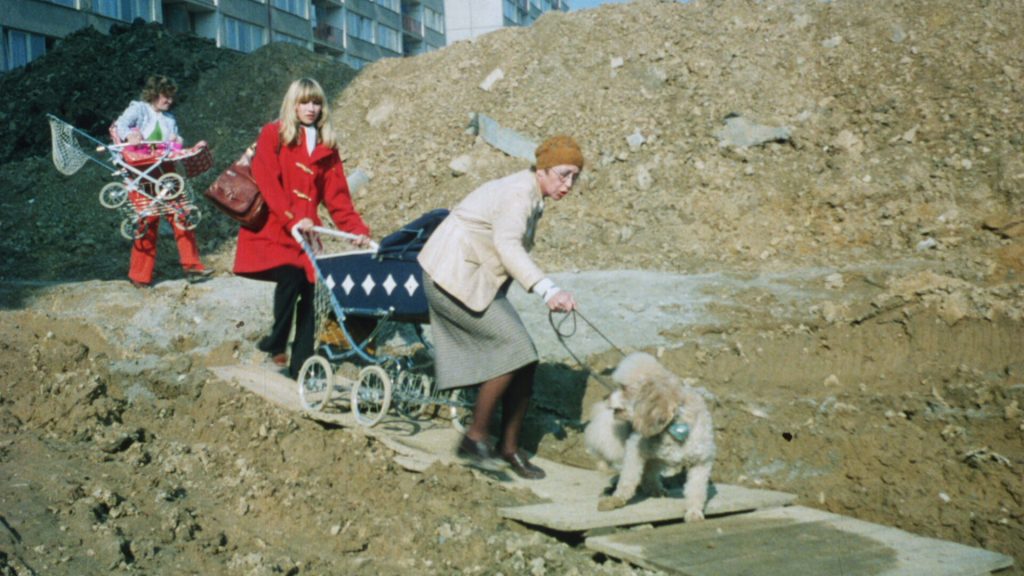
Residents struggle through the rubble in Prefab Story

When I first visited Prague at the tail end of the ’90s, I was captivated by the city to the extent that it dominated my every waking thought. Like for millions of tourists each year, it was the historic centre’s visual splendour that first set my heart racing, but it wasn’t long before I got to know the less postcard-friendly side as well.

Attending a teaching course in the freezing winter of early 2002, the school provided cheap digs in a Communist-era Panelák out in the Barrandov district – namely, a block of flats constructed from panels of prefabricated concrete. In truth, it didn’t look all that different from similar eyesores in Britain, but it was still a striking contrast to the “Golden City” image of Prague. Just as the towers, domes, and spires of the centrum appeared etched in crystal thanks to the crisp, cold January air, the stark right angles and brute bulk of the housing project were brought into sharp focus in the snow and ice.

There was heavy construction going on at the time, which meant a lot of rubble and heaps of earth for the locals to pick their way through as they went about their daily business. One night, my flatmate was staggering back from the pub when he fell into an open trench and lay unconscious as the falling snow began covering him up. Luckily, a passing group of teenagers spotted him, fished him out, and took him back to the pub for a few reviving rounds of beer and shots.

I was reminded of this incident continually while watching Prefab Story, Věra Chytilová’s tragicomic day-in-the-life of the vast Jižní Město housing estate in Prague. The narrative, such as it is, follows an elderly man who arrives from the countryside to live with his daughter in one of the concrete monstrosities, but neither the taxi driver nor the harried locals can pinpoint the correct tower block…

Continue reading “Prefab Story (Panelstory aneb Jak se rodí sídliště) – Věra Chytilová, 1979”

Insect (Hmyz) – Jan Švankmajer, 2018

A menacing man holding a knife and wearing a balaclava with comic bug antennae in Jan Svankmajer's Hmyz

Once on a family holiday, we were walking around the side streets of a small Welsh town when we stumbled upon an old bric-a-brac shop that was closed for many years. Among the dusty collection of forlorn objects in the window display sat a vintage doll with braided hair, a straw hat, and a yellowed cotton dress. Her cheeks were webbed with tiny cracks and one of her eyes was missing. With her remaining eye, she gazed out across the universe like a martyr in a medieval painting. A huge dead spider lay curled up in her lap.

That image really troubled my childhood imagination, filled me with a terrible sense of nausea. It is the same feeling I got years later when I first saw Jan Švankmajer’s Jabberwocky, which is celebrating its 50th anniversary this year. His use of musty found objects in his animation, including dolls like the one sitting in that shop window years ago, disturbs me to this day.

Strangely I consider this a good thing, and with this in mind, I thought I’d check out Švankmajer’s final film, Insects. The blurb states that it is based on the play Pictures from the Insects’ Life by Karel and Josef Čapek, although that is a little misleading. The film finds Švankmajer in a playful mood, seemingly determined to do everything apart from shoot a straightforward adaptation of the satirical work.

After a cold open where we see a middle-aged man dressed in bug wings and goggles hurrying along the street, Švankmajer appears before the camera himself to provide a foreword for his new feature. The brothers Čapek wrote the play in 1924 while Hitler was sitting in a pub scheming his terrible schemes and Lenin was building his first gulags. Meanwhile, the Czechs and Slovaks were enjoying their newly founded republic, and people found the Čapek’s play a bit too pessimistic for the times. It was sheer youthful misanthropy, he tells us, and only gained greater relevance as the momentous events of the 20th century unfolded. 

All very interesting, you might think, and this foreword certainly whetted my appetite for the adaptation that was to follow. However, that is when Švankmajer goes deliberately off-script, flunking his lines and warning us of the chaos to follow…

Continue reading “Insect (Hmyz) – Jan Švankmajer, 2018”

A Report on the Party and the Guests (O slavnosti a hostech) – Jan Němec, 1966

Guests at a large banquet in the forest toast the viewer in Jan Nemec's A Report on the Party and the Guests

Political satire can take many forms, but sometimes all that’s required is some actors, a few tables and chairs, and a patch of woodland. That’s all Jan Němec needed for A Report on the Party and the Guests, his abstract but high impact critique of life under communist rule in Czechoslovakia. It was considered scathing enough that it allegedly had Antonín Novotný, the president at the time, climbing the walls.

The concept of A Report on the Party and the Guests is about as simple as it gets. A group of middle-aged, middle-class lovers are having a picnic in a peaceful glade on a hot summer’s day. There is plenty of food and drink to go around, the weather is warm, and the friends are enjoying each other’s company. After freshening up in a babbling brook, the group are accosted by a shady little man in squeaky shoes – we later find out his name is Rudolf (Jan Klusák) – and his thuggish-looking cohorts.

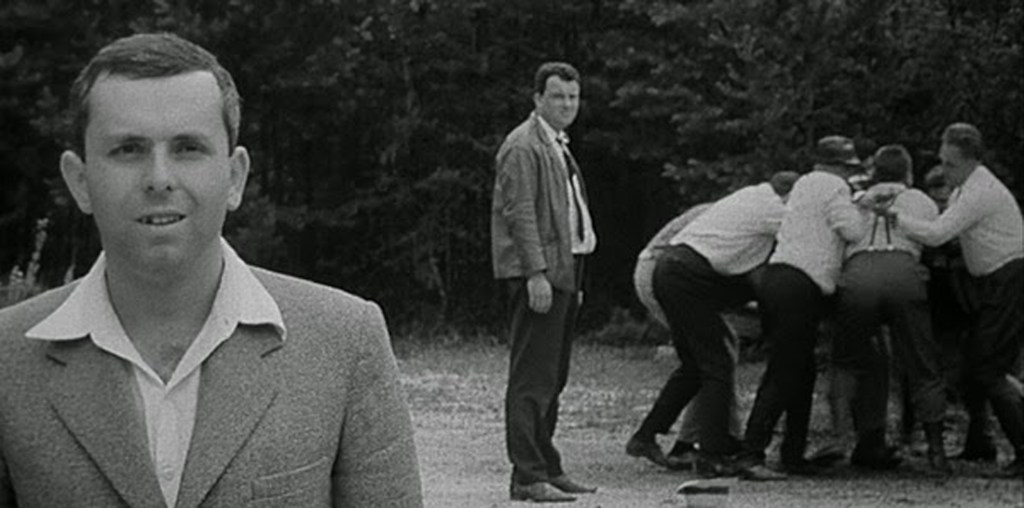
Rudolf and his gang bundle the picnickers away to a clearing where he subjects them to an impromptu interrogation. The group are separated into men and women and locked up in an imaginary prison marked by a line drawn in the dirt, with two rocks representing a door.

The picnickers uneasily play along with Rudolf’s game for a while, with Josef (Jiří Němec) acting as their spokesperson. Conversely, Karel (Karel Mareš) gets fed up and grumpily storms off, crossing the line of their prison. In response, Rudolf instructs his mob to chase after the escapee and torment him a bit.

Two men look directly at the camera as a scuffle unfolds in the background in A Report on the Party and the Guests

The game is interrupted by a suave older gent in a shining white jacket, known only as the Host (Ivan Vyskočil). He apologises for Rudolf’s actions and charms the group, especially the ladies, and invites them to his birthday banquet by the lake. The picnickers are quickly intermingled with the other guests when they are all assigned seating away from each other. Any complaints are forgotten with the plentiful food and drink on offer, and Josef is rewarded for his attempt to parley with a seat at the head table.

As the celebrations progress, it soon becomes apparent that one of the picnickers, a taciturn man who quietly refused to suck up to the Host previously, has discreetly left the party…

Continue reading “A Report on the Party and the Guests (O slavnosti a hostech) – Jan Němec, 1966”

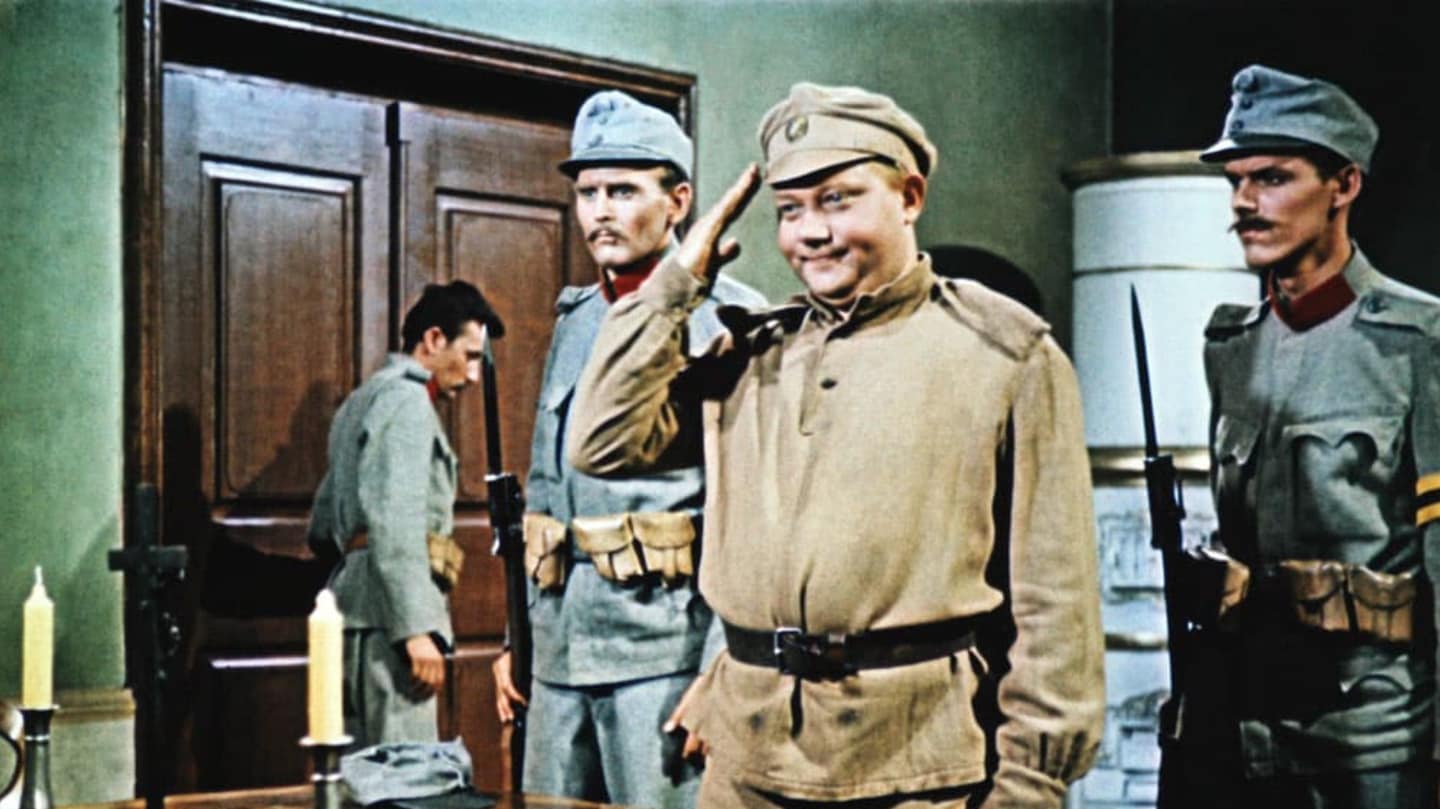
The Good Soldier Švejk (Dobrý voják Švejk) – Karel Steklý, 1956

I once knew an indestructible drunk who had a natural talent for causing mischief, then watching the mayhem unfold with a look of cherubic innocence on his face. I shared a grotty Barrandov flat with him for a while. The place was pretty dismal so we spent most of our waking hours in the pub, where I often ended up scrambling to unravel his mess while he sat there with his eyes spinning in opposite directions, chuckling to himself.

It was around this time that I first tried reading The Good Soldier Švejk. There was a remarkable facial similarity between my chaotic flatmate and the novel’s author, Jaroslav Hašek, himself a noted pub denizen, who in turn looked a little like the bottle-nosed character in Josef Lada’s famous illustrations from the book. Over time I conflated the three, so now years later I feel like I once lived with the good soldier himself.

Buy your copy of The Good Soldier Svejk from Amazon HERE

It has taken me almost one hundred posts on Czech Film Review to pluck up the courage to write something about Karel Steklý’s 1956 adaptation, perhaps the most well-known film version of the novel. It’s a daunting task – Švejk is a cultural icon in his home country and one of the most successful Czech exports, with Hašek’s novel translated into over 50 languages. There are dozens -if not hundreds – of beer halls and restaurants across the country bearing his name, and his image is common from the gift shops of Prague to the farmer’s pub in the small Moravian village where I recently moved. The word “Švejk” has also become a catch-all for willfully incompetent, subversive behaviour, commonly linked with the type of passive resistance that the Czechs have relied on to endure the numerous wars and foreign occupations of the last few centuries…

Continue reading “The Good Soldier Švejk (Dobrý voják Švejk) – Karel Steklý, 1956”

Food (Jídlo) – Jan Švankmajer, 1992

Svankmajer's Jidlo (Food)

Introducing Jan Švankmajer (Alice) to anyone always nets you a reputation for being a weirdo. From the word go, Food’s style is absurd and choppy, often very naturalistic, and more than a little risqué. But I think it’s well worth anyone’s time – so please indulge this weirdo as I talk about Švankmajer’s 1992 film Food and why it’s a lesser-known gem of Czech cinema.

Food contains three shorts films – breakfast, lunch, and dinner – that are thematically connected. They all contain some sort of food consumption (surprisingly) but there is often a twist that turns the simple daily rituals to downright bizarre affairs. In sixteen minutes, Food shows people who turn into machines, hungry diners devouring their clothes, and various kinds of gourmands digging into their own body-parts. So yeah, there’s a lot going on…

Continue reading “Food (Jídlo) – Jan Švankmajer, 1992”

In Context: Jára Cimrman Lying, Sleeping (Jára Cimrman ležící, spící) – Ladislav Smoljak, 1983

Zdenek Sverak as Jara Cimrman

How do you even start with a personage the size of Jára Cimrman? I feel like I’m describing Leonardo da Vinci using nothing but Morse code printed on popsicle sticks. I’d love to just talk about the film, Jára Cimrman Lying, Sleeping but without context, it would make no sense to you. So I’ll try to give you a sliver of a fragment of an introduction to the best playwright, philosopher, skier, and teacher – Jára Cimrman.

Jára Cimrman: Cultural Icon

This man is the closest thing to a national treasure the Czechs have, and he is still very much alive in the cultural space: his more than 15 plays are still running, he has a museum in Prague’s watchtower, Petřín, and he even has an asteroid named after him (7796 Járacimrman). His biggest peak was probably the 2005 Greatest Czech competition (which happened in reaction to the 100 Greatest Britons show in the UK and across Europe). But Cimrman didn’t make it in the end. He was unrightfully disqualified for being fictional…

Continue reading “In Context: Jára Cimrman Lying, Sleeping (Jára Cimrman ležící, spící) – Ladislav Smoljak, 1983”