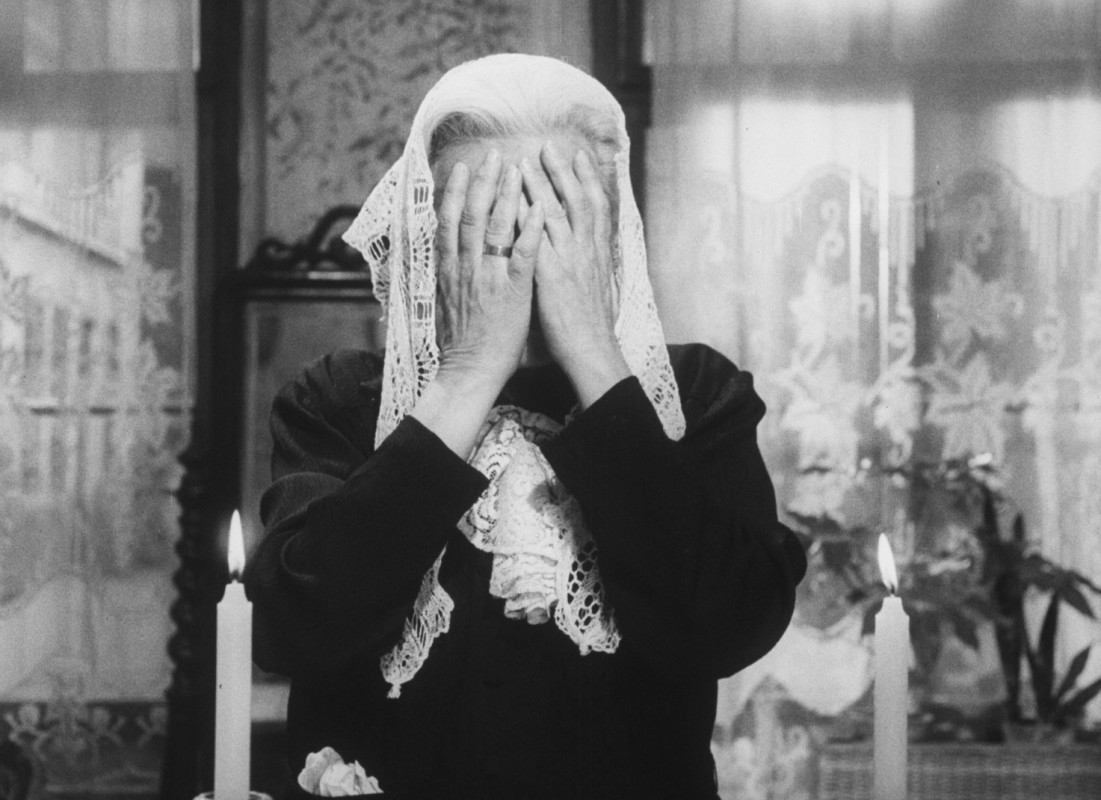
Barefoot (Po strništi bos) – Jan Svěrák, 2017

Barefoot 2017 Sverak

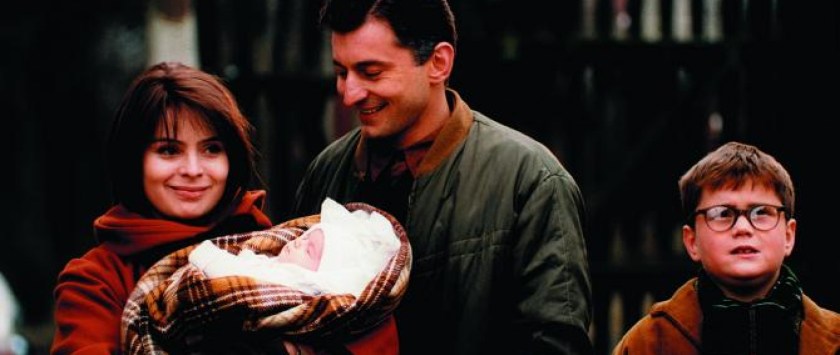
Prequels are, by and large, one of the most pointless things in cinema. By their very nature they lack much dramatic thrust, as we already know where the story will end up. Over the past few decades, prequels have also become synonymous with major studios cashing in on profitable intellectual properties, often ruining the mystique of the original film or films. The very word “prequel” is capable of setting a certain type of Star Wars fan into a fit of rage…

In a very modest field, Barefoot (Po strništi bos) stands out as one of the better prequels available for your delectation. At first it seems like a slender prospect, arriving a full 26 years after Zdeněk and Jan Svěrák’s Oscar-nominated crowdpleaser, The Elementary School (Obecná škola). Delightful though that movie was, it favoured nostalgic, anecdotal comedy and doesn’t seem like the obvious choice for prequel treatment.

Buy Barefoot from Amazon HERE

However, if you ever wondered what the kid in The Elementary School got up to during the death throes of World War II – that is, literally a year or two before the events of the original movie – then Barefoot will answer all your burning questions…

Continue reading “Barefoot (Po strništi bos) – Jan Svěrák, 2017”

The Ear (Ucho) — Karel Kachyňa, 1970/1989


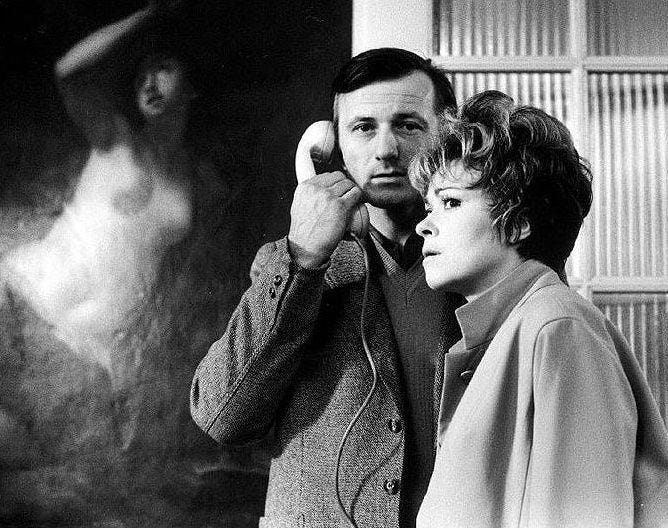
Like many films that were considered problematic by the communist regime in Czechoslovakia at their time of release, Karel Kachyňa’s The Ear was banned until 1989. Unlike the surreal elements found in Case for a Rookie Hangman, this film takes a more grounded approach to explore the fears and anxieties experienced by the country’s inhabitants. The film centres around a married couple trying to get through a night of desperation after they suspect their home might be under surveillance by the government.

The film begins with the couple coming home from an evening at an official dinner party. The husband, Ludvík (Radoslav Brzobohatý), is a reserved government official, and his wife, Anna (Jiřina Bohdalová), is an outspoken alcoholic. From their first interactions, we can already get a general idea of their relationship. You get the sense that they’ve been at odds for a while now, seeing as how they constantly bicker and throw verbal jabs at each other every chance they get. 

The Ear Blu Ray

Buy The Ear from Amazon HERE

Once they arrive at the entrance, they notice that they’ve misplaced the keys to the gate and find other means of getting inside, only to realize that the doors had been open and there’s been a power outage. Ludvík also notices some strange men lurking around the garden and a car parked on the other side of the street. This causes him to become more paranoid at the thought that he might be targeted by the government…

Continue reading “The Ear (Ucho) — Karel Kachyňa, 1970/1989”

3 Seasons in Hell (3 Sezony V Pelke) – Tomás Masín, 2009

Hadek in 3 Seasons in He'll

My curriculum was packed with boring subjects when I was at school. Maths was always a chore, chemistry was just soul-crushing, and history was the biggest snooze. For three years we sat in the same brown dusty classroom full of brown dusty books, listening to the teacher drone on. He was a pale gingery man who resembled the Gestapo agent in Raiders of the Lost Ark, and always wore a brown suit that looked like it was tailored from a rest home carpet. We only ever seemed to study World War I and II, without ever finding out any of the larger context surrounding the conflicts.

It was only after I left school and started reading up on things by myself that I came to wonder: how does anyone make a subject like World War II boring? On paper, it’s like the synopsis of the greatest, most exciting war movie ever made. I realized that it wasn’t the subject that was boring, it was the teacher. It’s the way you tell ’em, I suppose.

On paper, 3 Seasons in Hell sounds like pretty suspenseful stuff. Opening in 1947 Czechoslovakia, we follow a young nonconformist poet who falls in with a Bohemian crowd, just as the Communist regime seizes control of the country and starts clamping down on intellectual and subversive activities that don’t suit their agenda. Our arrogant young hero soon finds himself in increasing danger…

Continue reading “3 Seasons in Hell (3 Sezony V Pelke) – Tomás Masín, 2009”

Diamonds of the night (Démanty noci) — Jan Němec, 1964

Based on Arnošt Lustig’s novel Darkness Has No Shadow, Jan Němec’s first full-length feature, Diamonds of the Night, is a visceral experience that shouldn’t be missed. Right from the jump, the film hooks you with an incredible sequence that follows two young boys escaping a train heading towards a concentration camp. The whole scene is shot in one continuous take as the camera closes in to capture the desperation on their faces. By this point, it’s clear that the goal is to put the viewer in the state of mind of these characters as they struggle to survive.

Buy Diamonds of the Night from Amazon HERE

This is one of those films that focuses more on providing an immersive experience for the viewers, rather than telling a straightforward narrative. And that’s apparent in its presentation. Once the boys make their way into the woods, the film intercuts between their current situation and visions of life before the war. These memories belong to Ladislav Jánsky’s character, whose perspective is the one we follow throughout the film. The scenes are made up of simple moments that seem like distant memories compared to the situation he currently finds himself in. We see images of kids sledging down a hill while laughing, mundane details of people going about their day, and the relationship he shared with his girlfriend. Now, he just wants to survive and return to the life he once knew…

Continue reading “Diamonds of the night (Démanty noci) — Jan Němec, 1964”

A Case for a Rookie Hangman (Případ pro začínajícího kata)  –  Pavel Juráček, 1970

Starting off as a screenwriter for some of the most notable films in the Czech New Wave, Pavel Jurácek (Daisies) eventually transitioned into the role of director and went on to contribute to the movement by directing his own films. His last film, Case for a Rookie Hangman, was a surreal experience, to say the least.

From the start of the film, it’s no secret that Jurácek was inspired by the works of Jonathan Swift, specifically Gulliver’s Travels. He even apologizes beforehand in the film’s opening credits: “If Swift should turn in his grave on account of this film, I beg his compatriots for forgiveness.” This interpretation of the novel finds Lemuel Gulliver (Lubomír Kostelka) in a strange place with bizarre customs that satirize life in Czechoslovakia under the Communist regime.

Case for a Rookie Hangman Blu Ray

Buy A Case for a Rookie Hangman from Amazon HERE

Jurácek also channels the works of Franz Kafka and Lewis Caroll’s Alice in Wonderland, which is evident in the surreal nature of the film. For instance, at the beginning of the film, Mr Gulliver loses control of his car and ends up running over a hare dressed in tiny clothes, and even finds that it had a watch in its pocket. After this bizarre incident, he finds a house that resembles the one from his childhood. But once he’s inside, he’s bombarded with memories of his youth: a girl he once loved who drowned, an old friend who also died, a woman who had a part in his sexual awakening, and many more images from his past…

Continue reading “A Case for a Rookie Hangman (Případ pro začínajícího kata)  –  Pavel Juráček, 1970”

Czechoslovak Film Review: The Shop on Main Street (Obchod na korze) – Ján Kadár and Elmar Klos, 1965

The Shop on Main Street

“Of all my films, The Shop on Main Street touches me most closely. Elmar Klos and I usually work as equal partners, but in this case he left me a free hand. He knows that I am not thinking of the fate of all the six million tortured Jews, but that my work is shaped by the fate of my father, my friends’ fathers, mothers of those near to me and by people whom I have known. I am not interested in the outer trappings—figures, statements, generalizations. I want to make emotive films…”

– Ján Kadár, New York Herald Tribune, Jan 23 1966

With any major catastrophe resulting in the loss of human life, I often find it difficult to get my head around the numbers. Sometimes incidental details can help visualize the size of the tragedy. For example, after I first watched The Shop on Main Street and was pondering Kadár’s quote above, the official Coronavirus death toll in the UK had just passed 30,000. That’s roughly a capacity crowd at Portman Road in Ipswich, where I was a season ticket holder for ten years. So now I only had to imagine a packed stadium suddenly silenced forever to get to grips with the scale of the public health disaster/scandal in my country.

But six million? A quick Google search tells me that is approximately the entire population of Turkmenistan, which doesn’t really help comprehend the vastness of the Holocaust. And that is the brilliance of The Shop on Main Street – better than anything else I’ve seen on the subject, it narrows the focus down to two individuals and makes us feel personally involved in the horror of their circumstances. The 55-year-old Academy Award winner hit me hard, feeling as fresh and vital as any other film I’ve seen about the Holocaust in recent years.

Buy The Shop on Main Street from Amazon HERE

The Shop on Main Street wears its flawed greatness lightly, starting with a comedic tone and growing darker, building a sense of dread until its harrowing conclusion. And then… well, spoilers ahead: I’ll talk about that ending later…

Continue reading “Czechoslovak Film Review: The Shop on Main Street (Obchod na korze) – Ján Kadár and Elmar Klos, 1965”
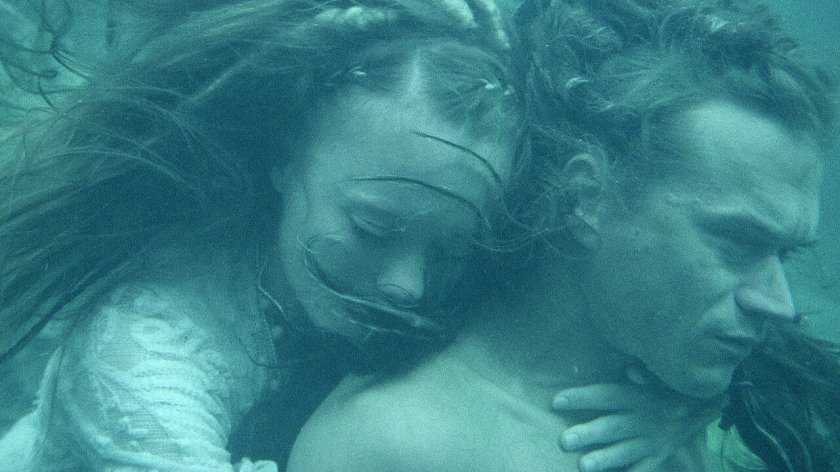
Adelheid (1970) – František Vláčil

Petr Cepak in Adelheid

Shot in wintry hues, Adelheid is a tragic drama about two shellshocked, fatally star-crossed lovers who find each other amid the psychic fallout of World War II. It is the cinematic equivalent of curling up in front of the fire with a really good book.

The story opens in 1945, during the tumultuous expulsion of Germans from Czechoslovakia. The war may be over but it’s still a dangerous time, with lawlessness and banditry as the liberated country tries to find its feet again. Troubled Lieutenant Viktor Chotovick (Petr Čepek) arrives in a small town after spending the war moving from place to place, longing to return to his home country. He is treated with initial suspicion by Sergeant Hejna (Jan Vostrcil, a familiar face from Miloš Forman’s New Wave stuff, including Loves of a Blonde and The Firemen’s Ball). Turns out Viktor is in town with a job to do – he’s been assigned to catalogue and manage a large isolated mansion.

Adelheid DVD

Buy Adelheid from Amazon HERE

The assignment suits Viktor because he’s just trying to get his head together after the war. The mansion was formerly the home of a wealthy Jewish family before it was commandeered by a local Nazi party member, Heidenmann, who has been captured and taken to Olomouc to await execution. What Viktor isn’t told is that the mansion comes with a cleaner and a cook – Heidenmann’s daughter, Adelheid (Emma Černá), who is sent by Hejna to serve Viktor…

Continue reading “Adelheid (1970) – František Vláčil”

Witchhammer (Kladivo na čarodějnice) – Otakar Vávra, 1970

An innocent burnt at the stake in Witchhammer

“A woman’s womb is the gateway to Hell,” whispers a rabidly fanatical monk at the beginning of Otakar Vávra’s Witchhammer (Kladivo na čarodějnice), while we cut away to watch a group of women bathing nude.

It’s a provocative opening and, although Vávra had the Communist show trials of the 1950s in mind while making the film, it sets out its stall early: the problem is the patriarchy, and sexual repression goes hand-in-hand with political repression, a theme that is as depressingly relevant fifty years later. Or 300-odd years on from the events of the film. Same as it ever was.

Witchhammer Blu Ray

Buy Witchhammer from Amazon HERE

The film takes its title from the Malleus Maleficarum, a weighty 15th-century tome that details at length the procedures deemed necessary for dealing with witchcraft, including the methods of torture that were legally permissible for extracting confessions from the accused…

Continue reading “Witchhammer (Kladivo na čarodějnice) – Otakar Vávra, 1970”

Empties (Vratné lahve) – Jan Svěrák, 2007

Back when I was completely skint (as opposed to just moderately skint nowadays), bottle returns were a lifesaver just before payday. With a 3kc deposit coming back on every bottle, you could fund another evening’s beer with a moderate stack of empties!

Now, most supermarket chains in the Czech Republic have moved across to automated deposit machines. They lack the personal touch of handing over your bottles through a little window to a person standing in the gloom of the shop’s stockroom, shuffling empties into crates and handing over handwritten tickets for the amount you could deduct from your next purchase. Some smaller stores still have bottle return windows, but it is clear that it’s a dying profession.

Buy Empties from Amazon HERE

Zdeněk and Jan Svěrák, the crack father and son team behind popular hits like The Elementary School and Kolya, have often made films touched with nostalgia. They join forces once again for Empties (Vratné lahve), a compassionate and grown-up comedy-drama that largely revolves around a man finding a new lease of life when he gets one of these endangered jobs, working the bottle returns window at his local supermarket…

Continue reading “Empties (Vratné lahve) – Jan Svěrák, 2007”

Kajínek – Petr Jákl, 2010

In May 2017 Jiří Kajínek, a gangster, robber and hardman, was released from prison after serving 23 years of two life sentences, pardoned by President Zeman. During that time he became something of a folk hero in the Czech Republic. Sent down for the brutal killing of a businessman and his bodyguard, doubts persisted about his case, with over half of Czechs believing he was wrongfully accused.

Petr Jákl’s 2010 crime saga is a pulpy retelling of Kajínek’s struggles, including his infamous breakout from Mirov prison, known as the “Czech Alcatraz”. Former stuntman Jákl directs the film like a man setting himself alight and flinging himself down a flight of stairs.

Kajinek Blu Ray

Buy Kajinek from Amazon HERE

He’s used to making situations exciting, I guess, and has no qualms about cramming just about every thriller trope there is into his movie, trying to pump as much drama as he can into each scene. It’s a heady mix of prison breakout movie, legal drama and conspiracy thriller, and it’s got the lot – sadistic screws, transparently corrupt bad guys, tense escape scenes, and bursts of gory violence…

Continue reading “Kajínek – Petr Jákl, 2010”