Prefab Story (Panelstory aneb Jak se rodí sídliště) – Věra Chytilová, 1979

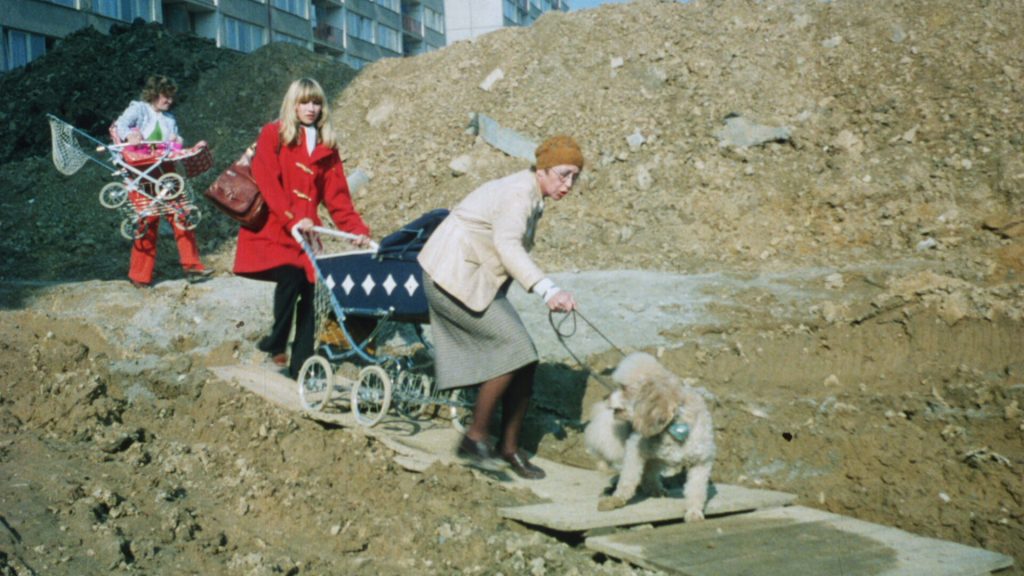
Residents struggle through the rubble in Prefab Story

When I first visited Prague at the tail end of the ’90s, I was captivated by the city to the extent that it dominated my every waking thought. Like for millions of tourists each year, it was the historic centre’s visual splendour that first set my heart racing, but it wasn’t long before I got to know the less postcard-friendly side as well.

Attending a teaching course in the freezing winter of early 2002, the school provided cheap digs in a Communist-era Panelák out in the Barrandov district – namely, a block of flats constructed from panels of prefabricated concrete. In truth, it didn’t look all that different from similar eyesores in Britain, but it was still a striking contrast to the “Golden City” image of Prague. Just as the towers, domes, and spires of the centrum appeared etched in crystal thanks to the crisp, cold January air, the stark right angles and brute bulk of the housing project were brought into sharp focus in the snow and ice.

There was heavy construction going on at the time, which meant a lot of rubble and heaps of earth for the locals to pick their way through as they went about their daily business. One night, my flatmate was staggering back from the pub when he fell into an open trench and lay unconscious as the falling snow began covering him up. Luckily, a passing group of teenagers spotted him, fished him out, and took him back to the pub for a few reviving rounds of beer and shots.

I was reminded of this incident continually while watching Prefab Story, Věra Chytilová’s tragicomic day-in-the-life of the vast Jižní Město housing estate in Prague. The narrative, such as it is, follows an elderly man who arrives from the countryside to live with his daughter in one of the concrete monstrosities, but neither the taxi driver nor the harried locals can pinpoint the correct tower block…

Continue reading “Prefab Story (Panelstory aneb Jak se rodí sídliště) – Věra Chytilová, 1979”
Indie Profiles: Valida Baba

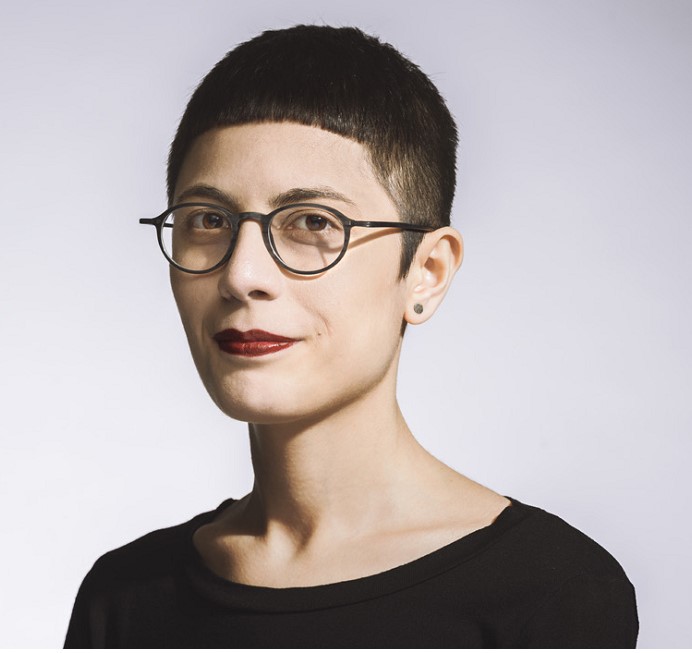
Filmmaker Valida Baba
Photo credit: Jakub Hrab

Valida Baba is an Azeri filmmaker who has called Prague her home for the past eight years. She uses photography, poetry and dance in her short experimental films to explore her ideas about human relationships and existence. I spoke to her about her work, her influences and her experiences so far in the Czech capital.

Hey, so thanks for making time to speak with me! First off, can you tell me about your first impressions of Prague?

Well, when I was first accepted at FAMU to study photography, I didn’t even know that it was so famous for film and photo! But when I first arrived at the airport I got the feeling of coming home. Of course, Azerbaijan is my home too, but even when I travel abroad now I get the sense of coming home when I return to Prague, and it is such a deep feeling for me, you know?

How does Azerbaijan compare to the Czech Republic culturally?

They are not too similar culturally, because Azeri culture is more like Turkish. However, because we were also part of the Soviet Union we have Russian as a second language, so there are some Slavic influences there.

Prague has become almost synonymous with Hollywood blockbusters over the last few decades, but how does the city treat an indie filmmaker working on smaller projects?

When I was studying at FAMU I could see that there are lots of opportunities to make films here. However, there was always some divide between the Czech community and the foreign community, and I was so introverted to begin with that I found it hard to communicate. I love making films but it felt like there was a border I needed to cross before I could start working with people, which is why I originally did it independently. Then I realised that it’s hard to make a film by yourself, and much easier when you have a team of like-minded people all working towards one goal.

Generally, Czech people are open and willing to collaborate if you are willing to open up to them, so it was my problem to solve, how to be more outgoing with them. Now there are many female film producers coming through who are looking to work with female directors, so it’s easier to start working on a project and take it in the direction to want…

Continue reading “Indie Profiles: Valida Baba”