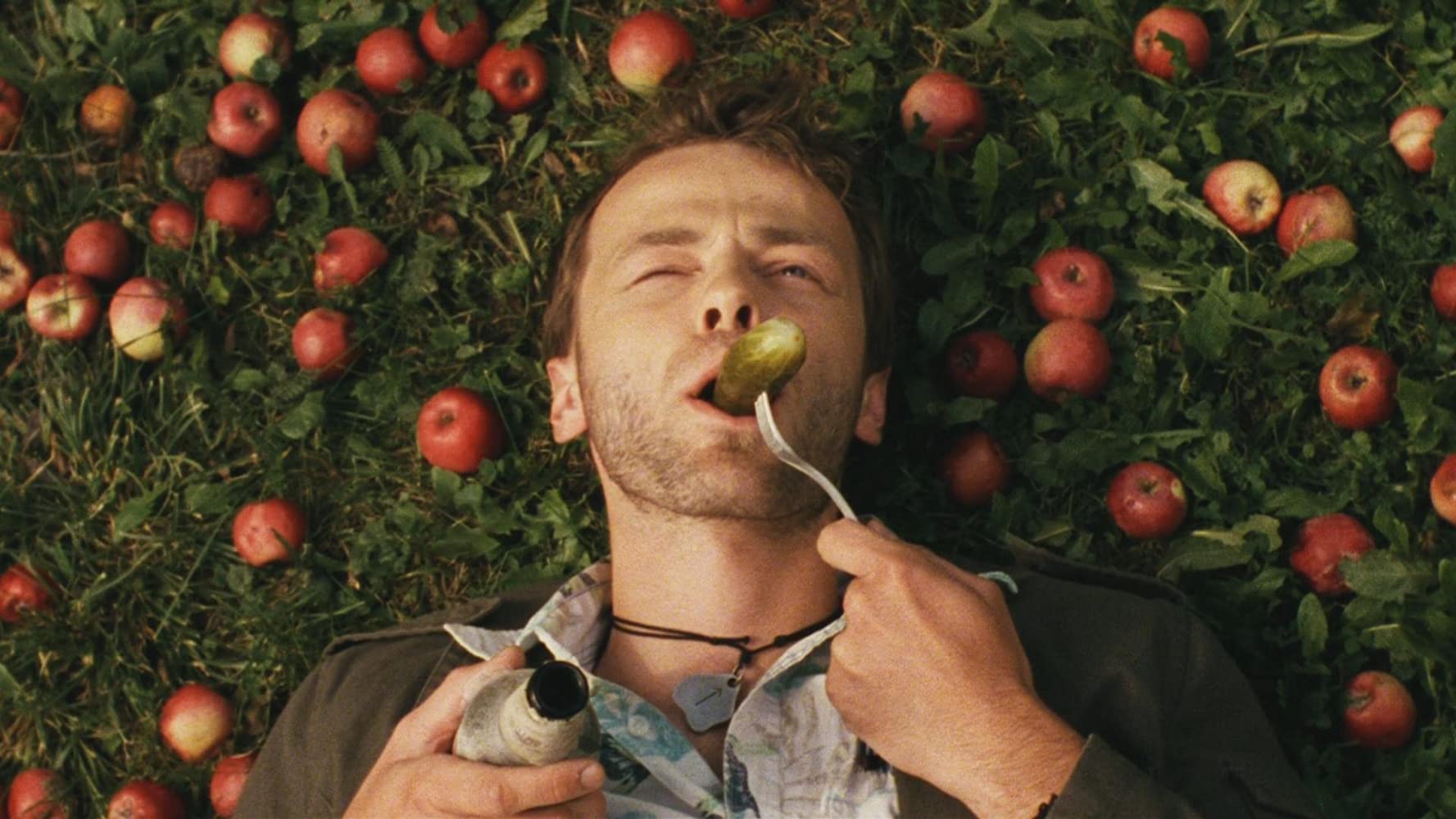
On the Roof (Na střeše) – Jiří Mádl, 2019

Na střeše 2019

You can watch On the Roof (Na střeše) right HERE with our View on Demand partner Eyelet

There was a time when every pub and restaurant in Brno seemed to be competing for the title of the city’s best burger. Everyone I knew had an opinion on whose was top, and my own pick wasn’t too popular with pub-owner friends who prided themselves on their homemade patties. 

A new craze put paid to all that nonsense, and we partially have the country’s burgeoning Vietnamese community to thank for that – suddenly everyone was head-over-heels for Bún bò Nam Bô and Bánh mì sandwiches.

Vietnamese immigrants began settling in Czechoslovakia during the Communist era, arriving as guest workers invited by the government. Nowadays Vietnamese people make up the Czech Republic’s third-largest ethnic minority, after Slovaks and Ukrainians.

The first Czech film I’ve seen so far that touches upon the Vietnamese-Czech experience is Jiří Mádl’s On the Roof, a comedy-drama that focuses on the growing friendship between a lonely old man and a desperate young immigrant…

Alois Švehlík plays Antonín Rypar, a cantankerous retired professor living alone in his top floor apartment in Prague. He doesn’t have much time for people, and people aren’t too keen on him either – especially when they find out he was a communist during the soviet era. His wife left him a long time ago, taking their son with her, and he hasn’t heard from them in years – he’s isolated and regretful.

One day he pops up to the roof for a smoke and finds a distraught young Vietnamese guy, Song (Duy Anh Tran) getting ready to jump. Song has escaped from the marijuana farm where he was forced to work before it was raided by the police. Now homeless and on the run, Song is about to end it all. 
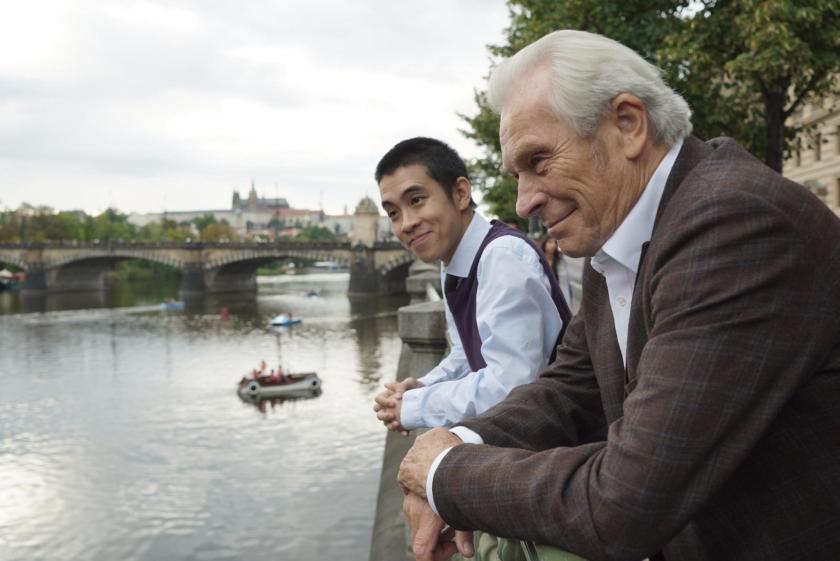
Antonín talks Song down and gives the hungry and frightened young man some food while treating him to his bigoted ideas. The old man is angry at the state of the world and thinks the answer to the country’s problems is to close the borders and prevent illegal immigrants from getting in, a view that will strike a topical nerve with audience members on both sides of the argument.

Despite this, Antonín begrudgingly enjoys Song’s company and offers him his spare room, in exchange for some free cleaning. He strikes upon the idea of finding Song a Czech bride so he can stay in the country legally, and the pair secretively turn their attention to the attractive young woman living across the hall…

On the Roof takes a bunch of modern social issues and lightly squeezes them into the shape of an odd-couple movie, which hits all the comedic and dramatic beats you’d expect. The pair are distrustful at first but soon start to benefit from each other – Antonín helps Song learn Czech, while Song teaches the old man how to use Facebook to woo their pretty neighbour. You see, friendship isn’t bound by age, race or language…

Then, just when I was about to write off On the Roof as an entertaining but formulaic movie, it pulled out a genuinely surprising and touching plot turn in the final act that left me grinning. I won’t give it away but if I was the type of reviewer to give star ratings, that one thing would be enough to upgrade this from a three-star movie to a four-star one.

On the Roof was originally intended as a vehicle for Jan Tříska (The Elementary School), who sadly died just before shooting began. Alois Svehlík stepped into the role of Antonín and he’s terrific. Irritable and defiant, Antonín is a man who knows his time is coming slowly to an end and isn’t happy about it all. While he’s a redoubtable character, his loneliness makes him strangely vulnerable and regret haunts his eyes. Svehlík plays him sternly without ever trying to make him seem like a loveable old gent.

Duy Anh Tran makes an interesting foil for Svehlík’s crotchety old-timer, giving an emotional, unguarded performance as Song. He’s scared and alone until his friendship with Antonín encourages him to slowly come out of his shell. 

The pair work off each other well and they manage to sell the film’s unlikelier elements, especially during the scenes when they’re trying to flirt with the neighbour without letting her know who’s doing the flirting. Together, the two actors make their character’s budding bromance worth rooting for – they are so good that I just wish they were in a better movie.

Don’t get me wrong, there’s nothing bad about On The Roof. In fact, it’s a perfectly enjoyable evening’s entertainment. It’s a decent watch, just be prepared to feel a little undernourished afterwards.

***

This article was first published by the Prague Daily Monitor.

If you enjoyed the review and now want to check out the movie, you can watch it HERE with our VOD partner Eyelet.

Voyage to the End of the Universe (Ikarie XB-1) – Jindřich Polák, 1963

Influential sci-fi Ikarie XB-1

Despite the turmoil currently on planet earth, things are looking more optimistic up in space. Only last week scientists announced that they have picked up potential signs of life on Venus and, depending on the sources, a manned mission to Mars could launch within the next 10-20 years. Ambitious initiatives like Breakthrough Starshot are looking even further afield, with a vision of sending a tiny unmanned probe to investigate exoplanets orbiting our next-door neighbour in the cosmos, Alpha Centauri.

Long-distance space travel raises many physical and mental challenges for potential crew members. How will we keep our bodies from wasting away without gravity for our muscles to fight against? How will our minds cope with the isolation and the knowledge that, for future colonists of distant planets, it may be a one-way ticket? Is there a decent curry house, and will they take visa?

Buy Ikarie XB-1 on Amazon here

Some of these questions are tackled in Jindřich Polák’s visionary sci-fi thriller, Ikarie XB-1. Based on The Magellanic Cloud by legendary science fiction author Stanisław Lem, it charts the adventures of the crew of a near-light speed ship, Ikarie XB-1, on its 28-month mission to Alpha Centauri…

Continue reading “Voyage to the End of the Universe (Ikarie XB-1) – Jindřich Polák, 1963”

The Teacher (Učitelka) – Jan Hřebejk, 2016

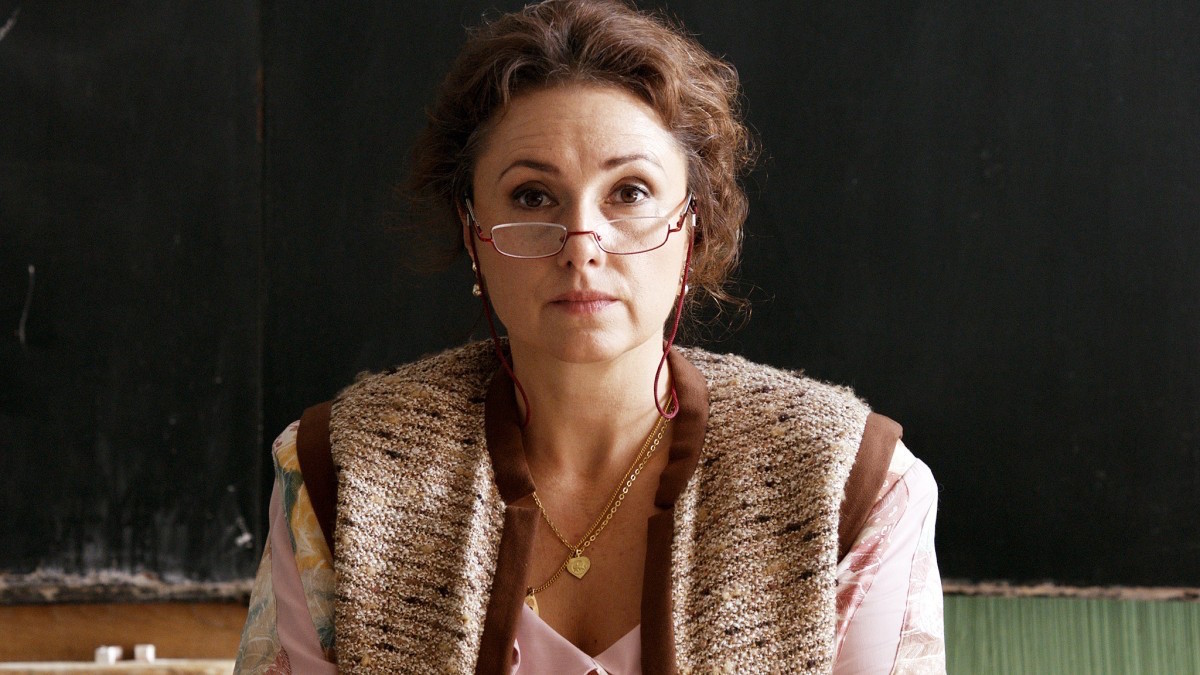
How does an oppressive regime empower individuals who are willing to toe the line? It’s a question that director Jan Hřebejk and his regular screenwriter Petr Jarchovský (Cosy Dens, Divided We Fall) tackle with the efficiency of a 90s psycho thriller in The Teacher. The answers are chilling and, while the final shot may be a little glib, the film offers plenty of food for thought.

The story opens in 1983 in a classroom in Bratislava. Right away we can see that all is not well – the new teacher Ms. Drazdechová (Zuzana Mauréry) asks her students to introduce themselves. Fairly standard procedure, but she is more interested in what their parents do for a living…

Continue reading “The Teacher (Učitelka) – Jan Hřebejk, 2016”

Gangster Ka (2015) – Jan Pachl

You can watch Gangster Ka right HERE with our View on Demand partners Eyelet!

The first thing you’ll become aware of while watching Gangster Ka is that people talk about money. A lot. And by a lot I mean all the time – in the first half an hour, I was so bombarded by characters I’d barely met talking about large sums of cash that I considered breaking out the abacus to help keep up.

So what? You might think. Gangsters like money, don’t they?

Of course they do, but it got me thinking about how true classics of the gangster genre aren’t really about money at all. Take Goodfellas, for example. There’s plenty of cash floating around throughout the movie, and at one point some characters pull off a lucrative airport heist. Yet while our protagonist Henry Hill sure enjoys the money, it’s the life of a gangster that he’s addicted to. And, through his eyes, we are too.

The main problem with Gangster Ka is that it thinks the most interesting thing about its protagonist, Radim Kraviec (Hynek Čermák), is how much loot he’s making through his various scams. Ironically, this preoccupation with cash really cheapens an otherwise routine crime thriller.

Kraviec, based loosely on the real-life crime boss Radovan Krejčíř, is a mobster from Ostrava who heads a gang of Albanian criminals. Deciding the city is too small for him, he sets his sights on Prague and wastes no time hustling his way into some big scores, such as taking over Čepro, a company that owns the whole country’s fuel supplies. Along the way, he double-crosses the capital’s established kingpins, Milota (Miroslav Etzler) and Sivák (Alexej Pyško), and gains a glamourous wife, Sandra (Vlastina Svátková). His next goal is muscling into politics, with a view to getting the future Prime Minister in his pocket.

Things quickly go south when an associate informs on his plan to make his 3 billion Čepro tax bill disappear, and Kraviec finds himself doing porridge while his lawyer and his loyal lieutenant Dardan (Predrag Bjelac) busy themselves bribing judges to ensure his quick release. Meanwhile, Milota and Sivák realize it’s the perfect time to seek revenge…

Continue reading “Gangster Ka (2015) – Jan Pachl”

Intimate Lighting (Intimní osvetlení)- Ivan Passer, 1965

As many of you already know, 2020 has been the year of a number of misfortunes that have affected all of us. One of which was the passing of Ivan Passer, a prominent figure that helped establish the Czech New Wave movement. He worked as an assistant director for some of Miloš Forman’s earlier films like Black Peter and Loves of a Blonde, a film he also co-wrote along with The Firemen’s Ball. Before he and Forman moved to the United States, Passer managed to direct his first full-length feature in his homeland of Czechoslovakia, titled Intimate Lighting, which is widely considered to be his masterpiece.

Buy Intimate Lighting from Amazon HERE

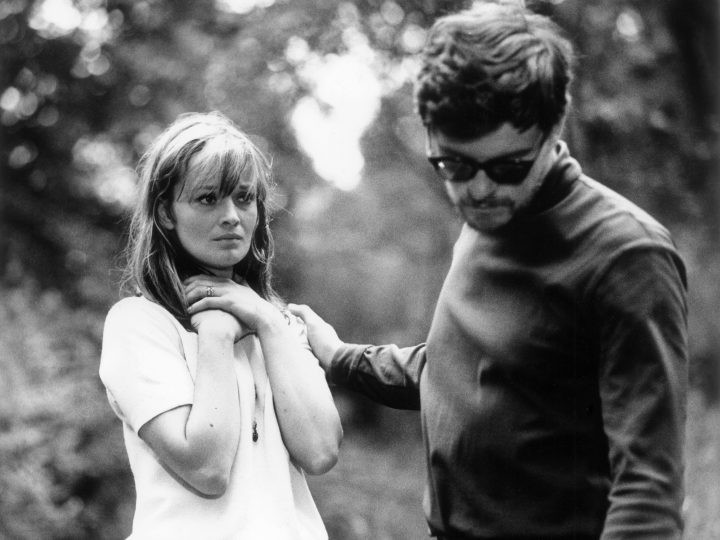
The story centres around Bambas (Karel Blažek), a music teacher who invites his old friend Petr (Zdeněk Bezušek) to play as the soloist for an upcoming concert. Petr arrives at Bambas’ house accompanied by his young girlfriend, Stepa (Věra Křesadlová), where he meets Bamba’s wife, kids, and parents — who all live under the same roof. Much like Black Peter, the film focuses on individual moments in the lives of these characters as they go about their days. This might seem like there isn’t a lot going on, but that couldn’t be further from the truth. These moments actually give us insight into the lives of these characters and paint an earnest and realistic picture of domestic life…

Continue reading “Intimate Lighting (Intimní osvetlení)- Ivan Passer, 1965”

All My Good Countrymen (Všichni dobří rodáci) – Vojtěch Jasný, 1968

All My Good Countrymen cinematography

When people find out that I write about Czech movies, one of the questions they sometimes ask is: why are so many Czech films about the Communist era?

The example I always use is this: I’m from England, and such a large part of our national identity is defined by World War II, which lasted six years. Three iconic events from the conflict – Dunkirk, the Blitz, and the Battle of Britain – are still touchstones in our collective conscience and influence how we think of ourselves as a people. Even seventy-odd years later, nostalgia for the war played a part in the campaign to leave the European Union.

And, of course, we’re still making successful movies about it.

Buy All My Good Countrymen from Amazon HERE

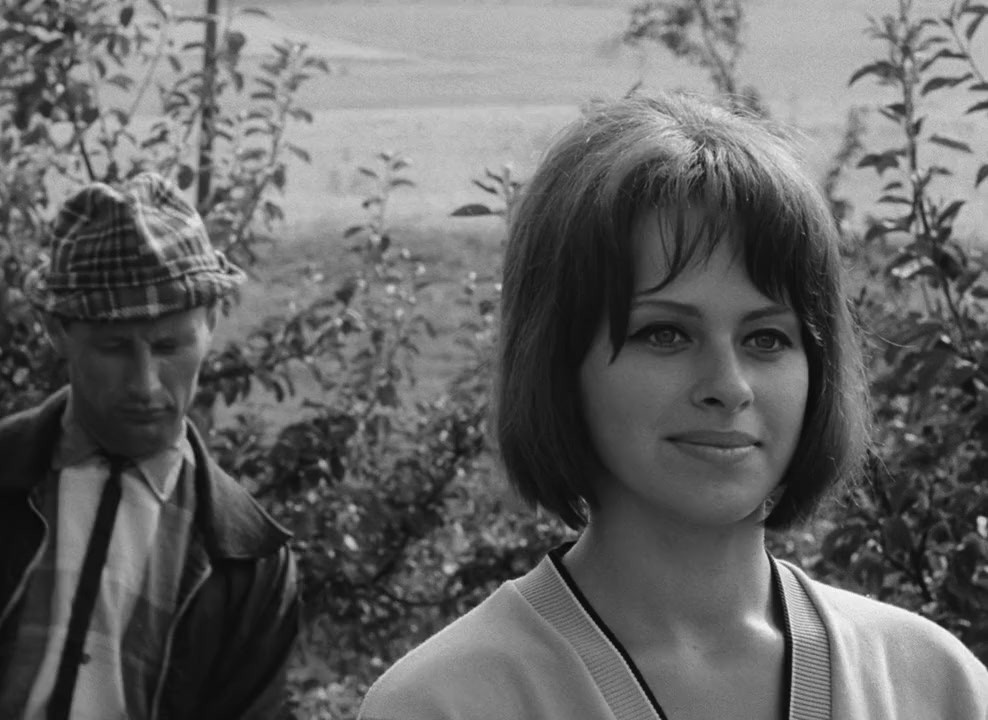
Czechoslovakia, by comparison, spent over forty years in the clutches of a Communist regime, only to regain independence relatively recently. It’s little wonder that the period still exerts such a powerful hold on the Czech national psyche and is ingrained so deeply in the country’s culture. Not only that, but forty years is a long time, so even films that aren’t directly about it still have life under communism very present as background scenery. We can probably expect Czech cinema to go on exploring those decades of subjugation for many years to come…

Continue reading “All My Good Countrymen (Všichni dobří rodáci) – Vojtěch Jasný, 1968”

Return of the Prodigal Son (Návrat ztraceného syna) — Evald Schorm, 1967

Released in 1967 and directed by Evald Schorm, Return of the Prodigal Son centres around the mental health of an engineer named Jan (Jan Kacer) as he stays in a psychiatric ward following a suicide attempt. The film begins with a brief disclaimer: “The film you are about to see — in its plot, characters and setting — bears no resemblance to reality. It is only a play in which everything is distorted and exaggerated. Life isn’t like this.” Of course, this is meant to be a very tongue-in-cheek statement seeing as how the film is very much representing the existential dilemmas found in real life…

Continue reading “Return of the Prodigal Son (Návrat ztraceného syna) — Evald Schorm, 1967”

Zelary (Želary) – Ondřej Trojan, 2003

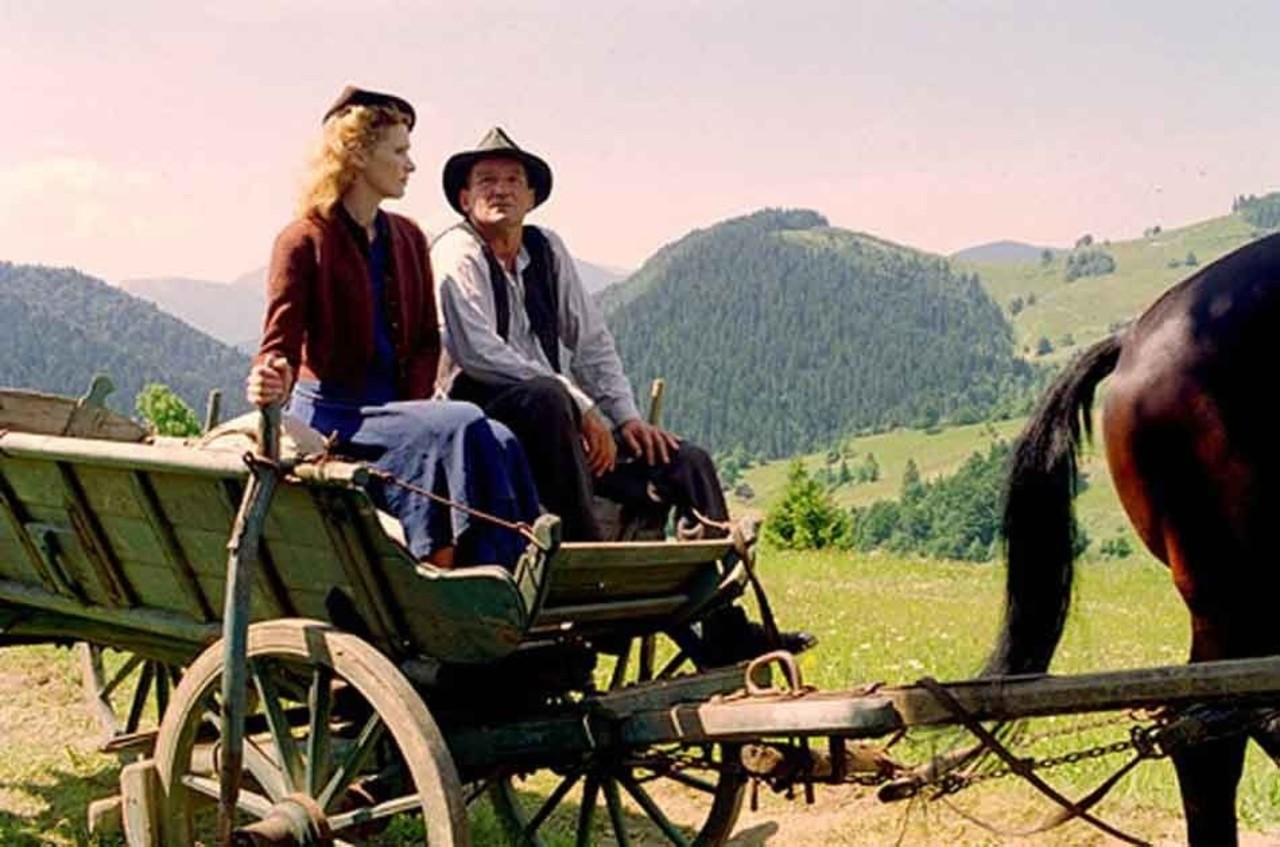
As sturdy and dependable as its rugged leading man, György Cserhalmi, Želary is a classy wartime romantic drama that scored an Academy Award nomination for Best Foreign Language Film in 2004. While the story suffers from over-familiarity, it earns its emotional payoff thanks to strong performances by an excellent cast and thoughtful direction by Ondřej Trojan.

The film opens in 1940s Nazi-occupied Prague as dapper surgeon Richard (Trojan) and his nurse/lover Eliška (Anna Geislerová) respond to an emergency call to save a seriously injured man. The patient requires an urgent transfusion and Eliška unquestioningly gives the much-needed blood.

Buy Zelary from Amazon HERE

Richard and Eliška are also part of the resistance, and when her attempt to run a message to a contact falls foul of the Gestapo, the whole network is suddenly in mortal danger. Richard hastily emigrates, leaving Eliška with forged papers, and a friend tells her that if she wants to escape detection she must assume a new identity and leave the city in the company of Joza (Cserhalmi), the man whose life she helped save…

Continue reading “Zelary (Želary) – Ondřej Trojan, 2003”

Grapes (Bobule) – Tomáš Bařina, 2008

You can watch Grapes (Bobule) right HERE with our View on Demand partners Eyelet.

It’s been a funny sort of year so far, hasn’t it? Usually one of the things I love most about living in the Czech Republic is the slow build-up to summer, with the palpable sense of anticipation that grows during the spring months before the good weather really sets in. It’s been a different story in 2020 thanks to Covid-19, going into lockdown in early March and popping up again months later with summer already in full swing. Now we’re only a few weeks away from the start of burčák season, which means autumn is already on its way…

This year also saw the release of 3Bobule, the third in the popular series of romantic comedies set among the vineyards of South Moravia. So with these two things combined, I thought it was the perfect time to check out the original film in the trilogy, Bobule

Continue reading “Grapes (Bobule) – Tomáš Bařina, 2008”

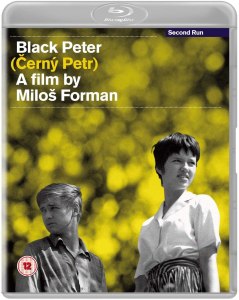
Black Peter (Černý Petr) – Miloš Forman, 1964

Black Peter (1964) - Photo Gallery - IMDb

Recently, I’ve been reviewing films that dealt with more social and political issues, but this time around, I’m kind of glad to be reviewing a film that focuses on a much more easy-going subject: adolescence. Black Peter — the first feature-length film directed by one of the most celebrated filmmakers of Czech Cinema, Miloš Forman (Loves of a Blonde, The Firemen’s Ball) — focuses on the life of a young man named Petr (Ladislav Jakim) and his journey through adolescence.

Buy Black Peter from Amazon HERE

The film begins with Petr on his first day working at a supermarket. He is tasked to keep an eye on the customers and to make sure that they aren’t stealing any of the merchandise, but he is so oblivious to the concept of subtlety that he easily exposes himself. He then proceeds to follow a man he believes may have stolen some merchandise by walking right behind him. Unfortunately, he never really confronts him. This is an interesting way to convey just how young and inexperienced Petr is and how much he has yet to learn…

Continue reading “Black Peter (Černý Petr) – Miloš Forman, 1964”