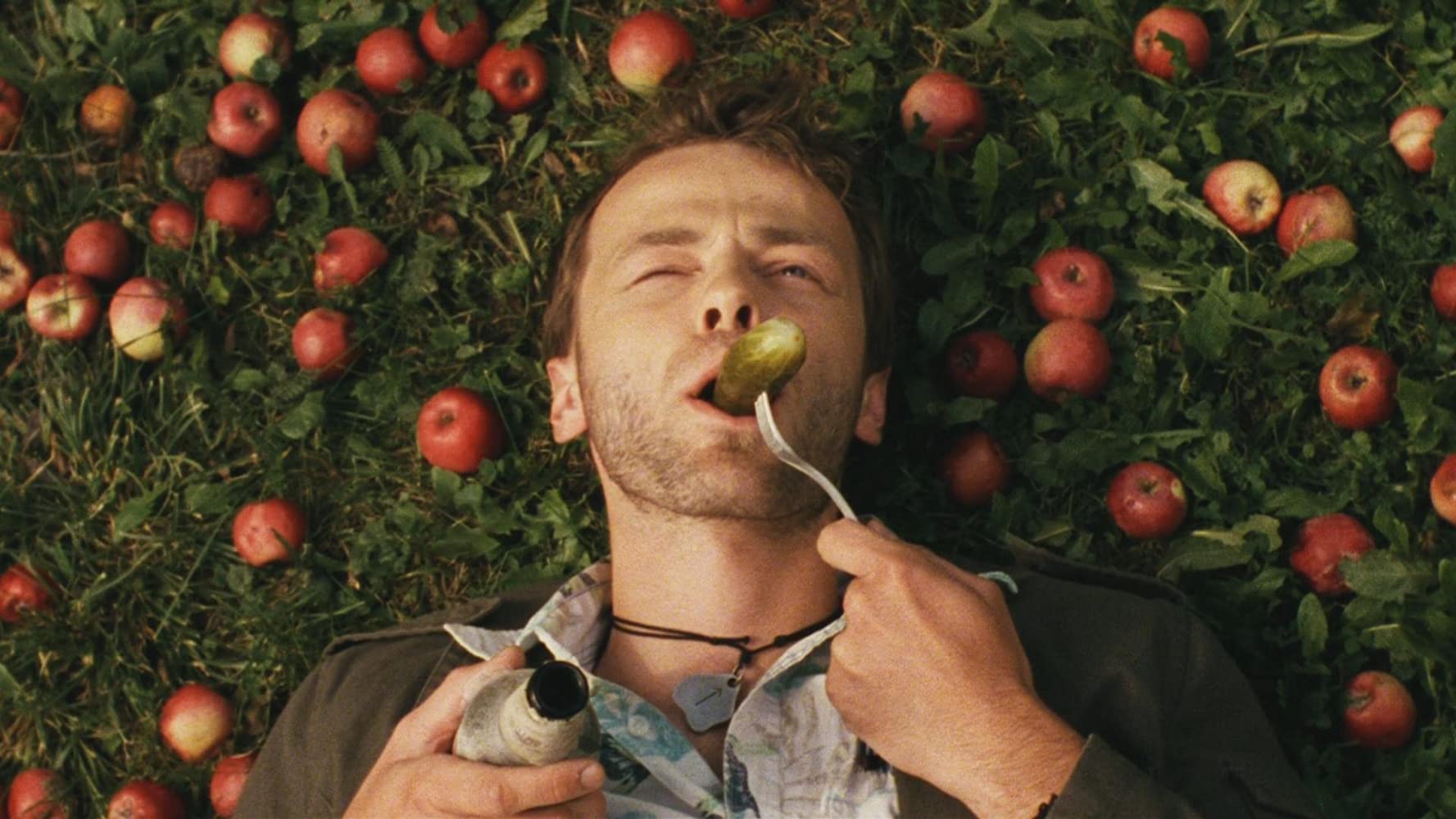
All My Good Countrymen (Všichni dobří rodáci) – Vojtěch Jasný, 1968

All My Good Countrymen cinematography

When people find out that I write about Czech movies, one of the questions they sometimes ask is: why are so many Czech films about the Communist era?

The example I always use is this: I’m from England, and such a large part of our national identity is defined by World War II, which lasted six years. Three iconic events from the conflict – Dunkirk, the Blitz, and the Battle of Britain – are still touchstones in our collective conscience and influence how we think of ourselves as a people. Even seventy-odd years later, nostalgia for the war played a part in the campaign to leave the European Union.

And, of course, we’re still making successful movies about it.

Buy All My Good Countrymen from Amazon HERE

Czechoslovakia, by comparison, spent over forty years in the clutches of a Communist regime, only to regain independence relatively recently. It’s little wonder that the period still exerts such a powerful hold on the Czech national psyche and is ingrained so deeply in the country’s culture. Not only that, but forty years is a long time, so even films that aren’t directly about it still have life under communism very present as background scenery. We can probably expect Czech cinema to go on exploring those decades of subjugation for many years to come…

Continue reading “All My Good Countrymen (Všichni dobří rodáci) – Vojtěch Jasný, 1968”

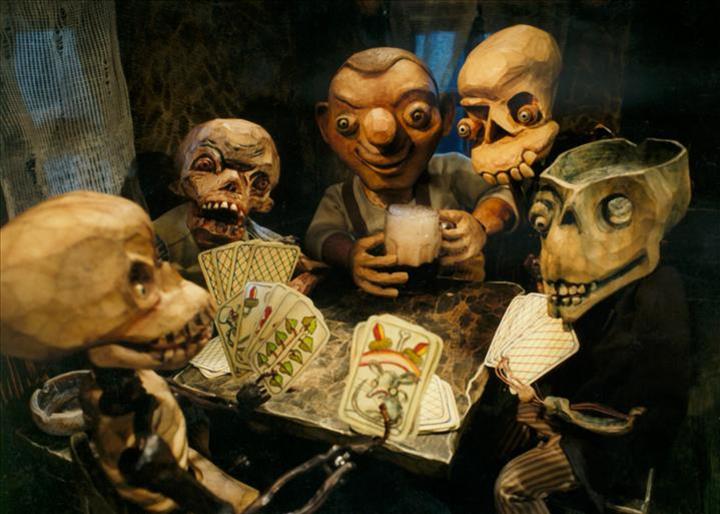
Food (Jídlo) – Jan Švankmajer, 1992

Svankmajer's Jidlo (Food)

Introducing Jan Švankmajer (Alice) to anyone always nets you a reputation for being a weirdo. From the word go, Food’s style is absurd and choppy, often very naturalistic, and more than a little risqué. But I think it’s well worth anyone’s time – so please indulge this weirdo as I talk about Švankmajer’s 1992 film Food and why it’s a lesser-known gem of Czech cinema.

Food contains three shorts films – breakfast, lunch, and dinner – that are thematically connected. They all contain some sort of food consumption (surprisingly) but there is often a twist that turns the simple daily rituals to downright bizarre affairs. In sixteen minutes, Food shows people who turn into machines, hungry diners devouring their clothes, and various kinds of gourmands digging into their own body-parts. So yeah, there’s a lot going on…

Continue reading “Food (Jídlo) – Jan Švankmajer, 1992”

Grapes (Bobule) – Tomáš Bařina, 2008

You can watch Grapes (Bobule) right HERE with our View on Demand partners Eyelet.

It’s been a funny sort of year so far, hasn’t it? Usually one of the things I love most about living in the Czech Republic is the slow build-up to summer, with the palpable sense of anticipation that grows during the spring months before the good weather really sets in. It’s been a different story in 2020 thanks to Covid-19, going into lockdown in early March and popping up again months later with summer already in full swing. Now we’re only a few weeks away from the start of burčák season, which means autumn is already on its way…

This year also saw the release of 3Bobule, the third in the popular series of romantic comedies set among the vineyards of South Moravia. So with these two things combined, I thought it was the perfect time to check out the original film in the trilogy, Bobule

Continue reading “Grapes (Bobule) – Tomáš Bařina, 2008”

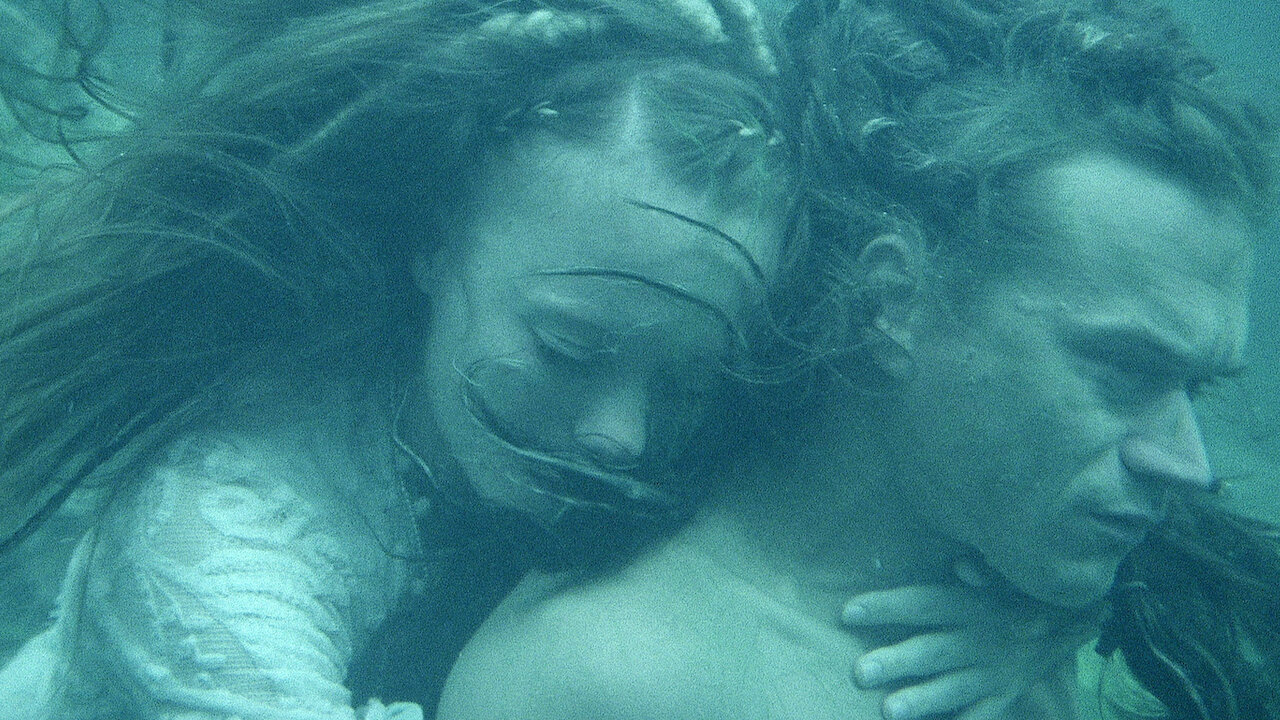
Wild Flowers (Kytice) – F.A. Brabec, 2000

Vodnik Dan Barta Kytice 2000

You can watch Wild Flowers (Kytice) HERE with our VOD partners Eyelet.

Like a struggling Hogwarts student about to flunk their final exam, F.A Brabec fails to conjure the requisite magic to transform Wild Flowers into something completely worth watching. Flashy visuals and a strong cast can’t disguise the fact that this is an extremely patchy anthology based on the ballads of Czech folklorist, Karel Jaromir Erben…

Continue reading “Wild Flowers (Kytice) – F.A. Brabec, 2000”

Owners (Vlastníci) – Jiří Havelka (2019)

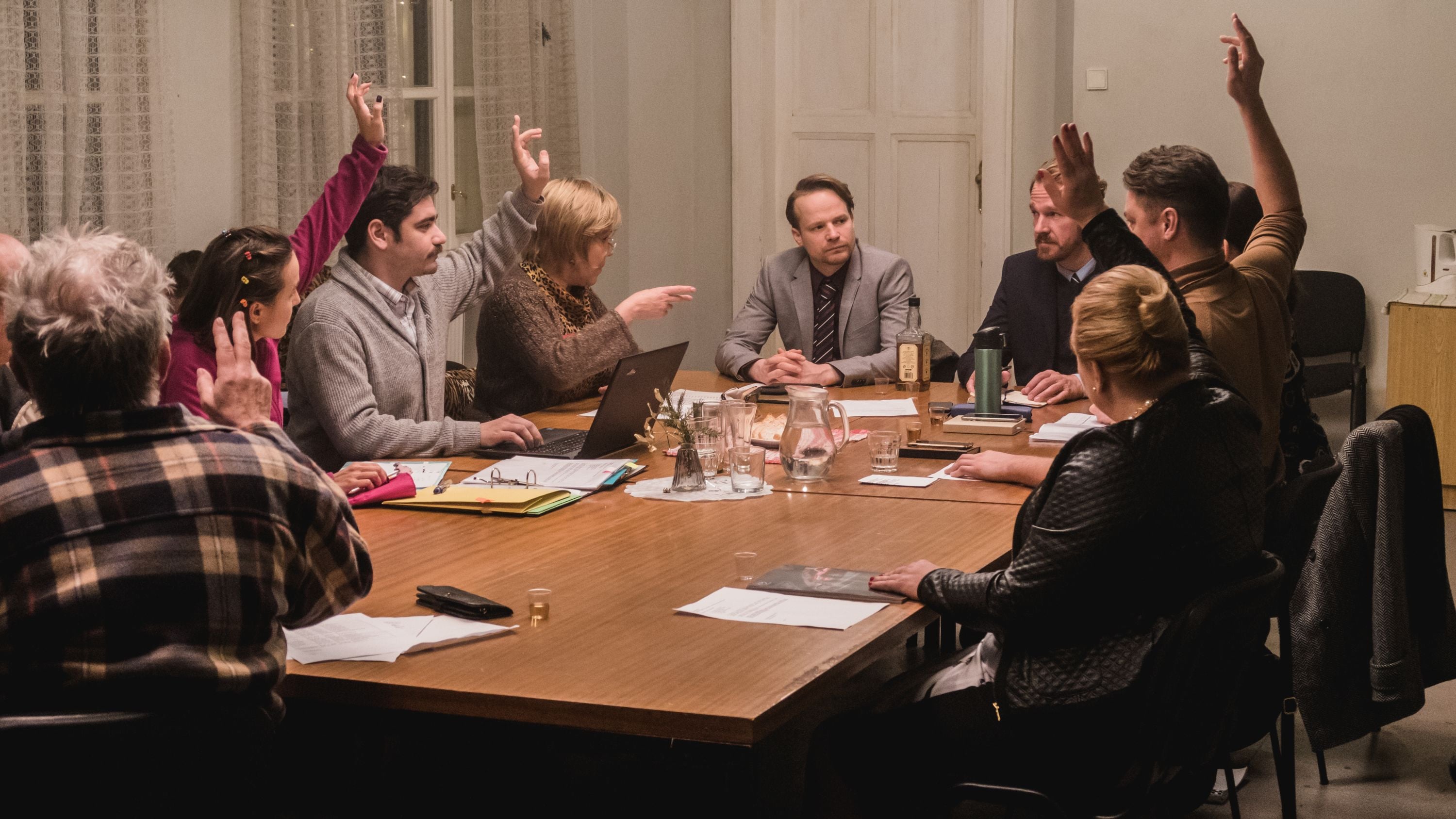
Written and directed by Jiří Havelka, based on his own award-winning stage play, Vlastníci presents us with a curious cast of characters, all of whom own apartments in the same block somewhere in Prague, and charts their progress as they attempt to tolerate each others’ presence long enough to take some important decisions about the building’s future. The film took home three Czech Lions and two Czech Film Critics’ Awards, and with fine performances from the leading cast, sharp dialogue, and painfully relevant political overtones, it’s not difficult to see why.

The action all takes place in one room, recalling Sidney Lumet’s 1957 classic 12 Angry Men – and these owners are certainly angry. Over the course of the film, the tension that hangs close around the earliest scenes is released explosively, as slight disagreements turn into raging arguments, and no stone in any of the owners’ lives is left unturned as they seek to blame and criticise each other for sins past and present, real and perceived. And like in Lumet’s film, the fact that the characters can’t escape means that neither can the viewer. We are forced to live through the conflict along with the owners, sharing their frustrations, their fury, and their offence (and it is very offensive at points)…

Continue reading “Owners (Vlastníci) – Jiří Havelka (2019)”

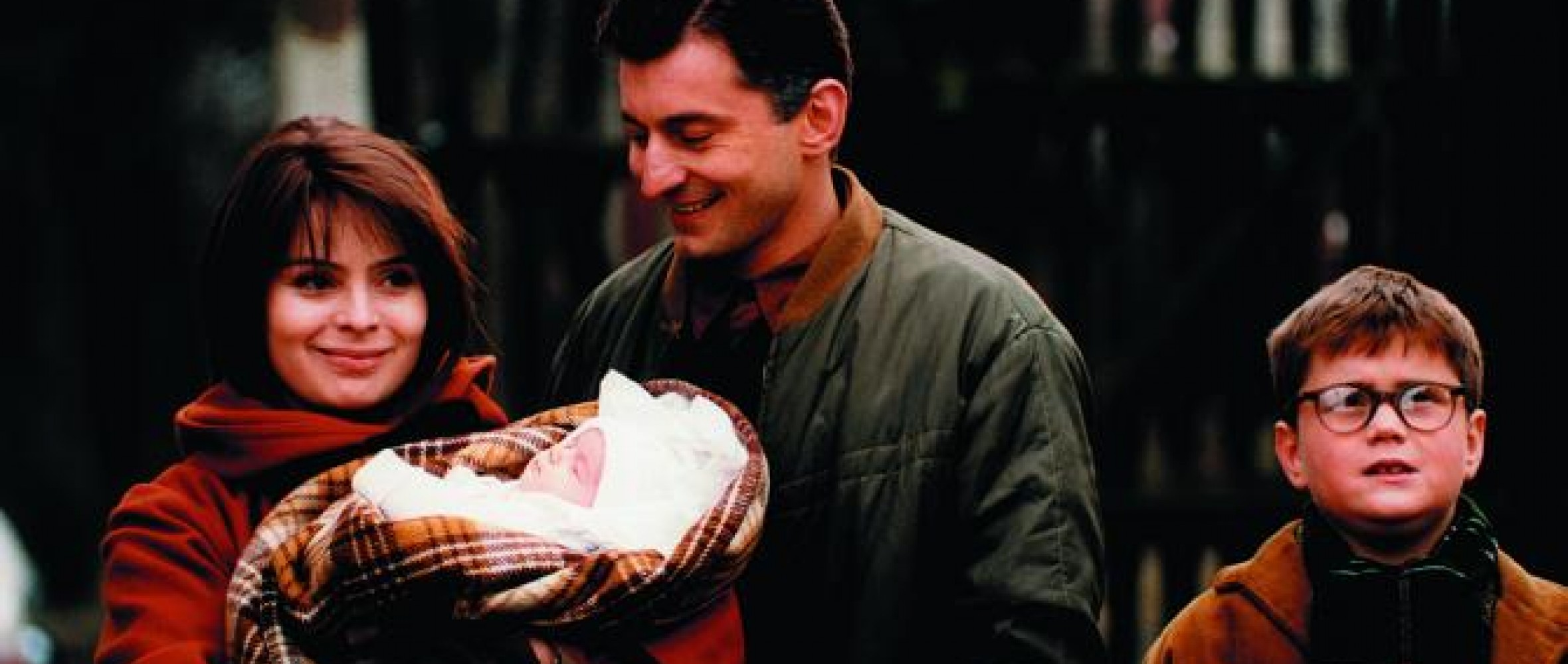
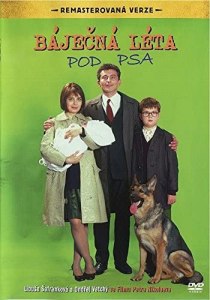
Those Wonderful Years That Sucked (Báječná léta pod psa) – Petr Nikolaev, 1997

If you’re a regular follower of Czech Film Review you’ll know that I have a long-standing beef with movies based on the works of Michael Viewegh. I hate them so much – especially Angels (Andělé všedního dne), which must rank as one of the worst movies I’ve seen in any language – that I’m kind of addicted to them. Not only are they sexist, ageist and homophobic, but they’re also just so damned mean-spirited, with a nihilistic view on human relationships. Perhaps the subtleties of Viewegh’s novels don’t adapt well to the screen, but Viewegh seems to hate all his characters, especially women. So what made the novelist such a black-hearted misanthrope? It’s like a puzzle I need to solve.

Buy Those Wonderful Years That Sucked from Amazon HERE

So I arrived at Those Wonderful Years That Sucked, based on Viewegh’s semi-autobiographical novel of the same name. Semi-autobiographical, eh? It’s probably going to be a heinous chore just like his other adaptations, I thought, but maybe I’ll find some answers…

Continue reading “Those Wonderful Years That Sucked (Báječná léta pod psa) – Petr Nikolaev, 1997”

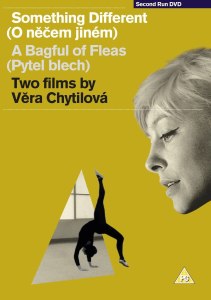
Something Different (O něčem jiném) — Věra Chytilová, 1963

Written and directed by avant-garde filmmaker Věra Chytilová (Daisies, The Inheritance or Fuckoffguysgoodday), Something Different tells the story of the lives of two women: Eva Bosáková, a real-life gymnast training for her final performance, and Vera (Vera Uzelacová), a fictional housewife who lives an unfulfilled life. The film presents a nuanced look into the worlds of both women as they face the daily challenges that life brings upon them.

The opening sequence features Eva performing her routine until it cuts away to reveal that Vera’s son is watching it on TV. The film then intercuts between the lives of both women as they go about their everyday life. While one might assume that Eva’s life might be more interesting than Vera’s, I found myself equally invested in both stories. A lot of Eva’s days are spent practising for her final performance, while Vera’s days are consumed by housework as she raises her son at the same time—an equally exhausting balancing act. 

Buy Something Different from Amazon HERE

Eva strives for perfection but is sometimes unsure of her own abilities, while Vera is unsatisfied with her marriage and has a hard time taking care of her hyperactive son. Her husband barely pays any attention to her and would rather spend his time reading the newspaper. He tells her he does this because he can only read it after work, to which Vera replies, “my work is never done.” He also says he’s saving money for a car, which means Vera can’t buy anything for herself. This is frustrating for her as she also spends her days working, but never receives anything in return. This leads to her having an affair with a man she meets while buying groceries…

Continue reading “Something Different (O něčem jiném) — Věra Chytilová, 1963”

The Ear (Ucho) — Karel Kachyňa, 1970/1989


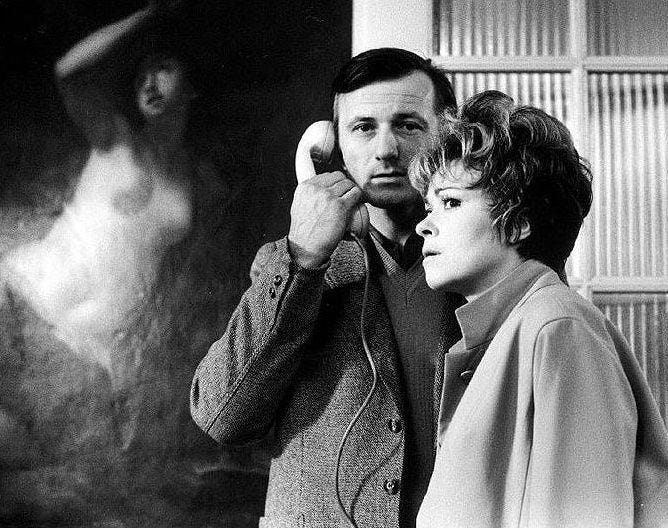
Like many films that were considered problematic by the communist regime in Czechoslovakia at their time of release, Karel Kachyňa’s The Ear was banned until 1989. Unlike the surreal elements found in Case for a Rookie Hangman, this film takes a more grounded approach to explore the fears and anxieties experienced by the country’s inhabitants. The film centres around a married couple trying to get through a night of desperation after they suspect their home might be under surveillance by the government.

The film begins with the couple coming home from an evening at an official dinner party. The husband, Ludvík (Radoslav Brzobohatý), is a reserved government official, and his wife, Anna (Jiřina Bohdalová), is an outspoken alcoholic. From their first interactions, we can already get a general idea of their relationship. You get the sense that they’ve been at odds for a while now, seeing as how they constantly bicker and throw verbal jabs at each other every chance they get. 

The Ear Blu Ray

Buy The Ear from Amazon HERE

Once they arrive at the entrance, they notice that they’ve misplaced the keys to the gate and find other means of getting inside, only to realize that the doors had been open and there’s been a power outage. Ludvík also notices some strange men lurking around the garden and a car parked on the other side of the street. This causes him to become more paranoid at the thought that he might be targeted by the government…

Continue reading “The Ear (Ucho) — Karel Kachyňa, 1970/1989”

3 Seasons in Hell (3 Sezony V Pelke) – Tomás Masín, 2009

Hadek in 3 Seasons in He'll

My curriculum was packed with boring subjects when I was at school. Maths was always a chore, chemistry was just soul-crushing, and history was the biggest snooze. For three years we sat in the same brown dusty classroom full of brown dusty books, listening to the teacher drone on. He was a pale gingery man who resembled the Gestapo agent in Raiders of the Lost Ark, and always wore a brown suit that looked like it was tailored from a rest home carpet. We only ever seemed to study World War I and II, without ever finding out any of the larger context surrounding the conflicts.

It was only after I left school and started reading up on things by myself that I came to wonder: how does anyone make a subject like World War II boring? On paper, it’s like the synopsis of the greatest, most exciting war movie ever made. I realized that it wasn’t the subject that was boring, it was the teacher. It’s the way you tell ’em, I suppose.

On paper, 3 Seasons in Hell sounds like pretty suspenseful stuff. Opening in 1947 Czechoslovakia, we follow a young nonconformist poet who falls in with a Bohemian crowd, just as the Communist regime seizes control of the country and starts clamping down on intellectual and subversive activities that don’t suit their agenda. Our arrogant young hero soon finds himself in increasing danger…

Continue reading “3 Seasons in Hell (3 Sezony V Pelke) – Tomás Masín, 2009”

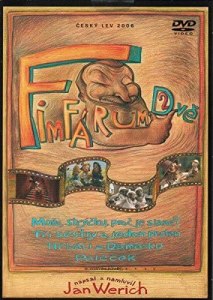
Jan Werich’s Fimfárum (Fimfárum Jana Wericha) – Vlasta Pospíšilová and Aurel Klimt, 2002

Fimfarum Jana Werich
One ČSFD (Czech IMDb) reviewer reports that the lesson they learned from watching Fimfárum Jana Wericha is the following: if you’re a drunk unable to provide for your family or take care of your farm, offer your son to the devil and then use a homeless woman to get him back. And they’re not even reading anything into it. 
 
Buy Jan Werich’s Fimfárum from Amazon HERE
 

Fimfárum is one of those strange collections of stories that don’t like simple answers in life. The original book, written and later recorded on tape by Jan Werich in the 1960s, included 21 fairy tales, most of which are absurd or downright bizarre. The 2002 film adaptation didn’t have an easy task translating the light humour, ambiguous moral messages, and beautiful use of the Czech language to the big screen, but they nailed it!

Continue reading “Jan Werich’s Fimfárum (Fimfárum Jana Wericha) – Vlasta Pospíšilová and Aurel Klimt, 2002”