Four Murders Are Enough, Darling (Čtyři vraždy stačí, drahoušku) – Oldřich Lipský, 1971

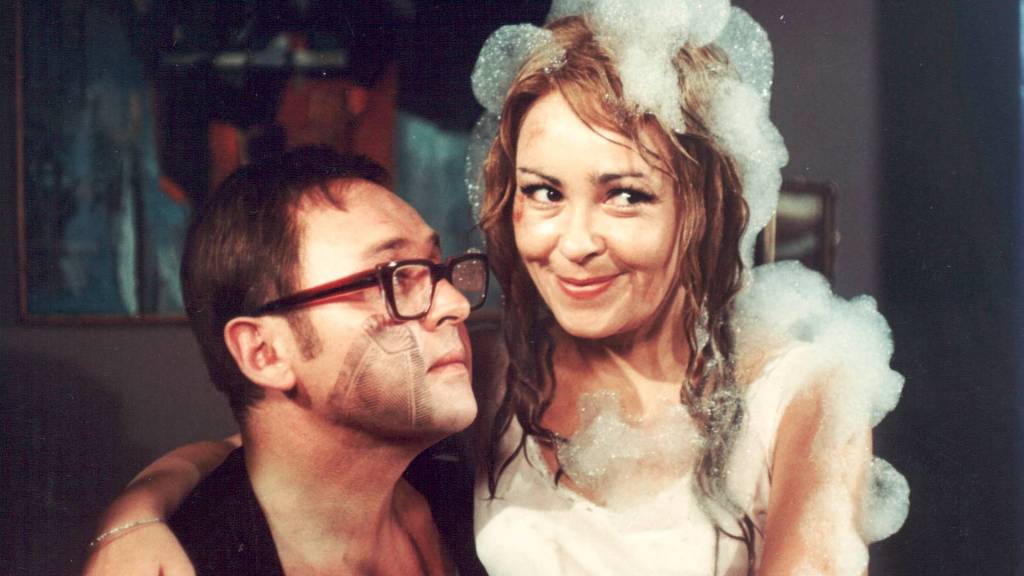
Lubomir Lipsky's hapless Georg Camel gazes at his love interest Sabrina, covered in soap suds, in Four Murders Are Enough, Darling

After parodying old-fashioned Hollywood cowboy movies in Lemonade Joe, the Czech Mel Brooks returned to affectionately lampooning American genres with Four Murders Are Enough, Darling. This time, classic crime flicks and pulp fiction are the targets, and Oldřich Lipský apparently never encountered a gag that he didn’t deem unworthy for inclusion in his movies. I say that in the best possible sense – here, the sheer deluge of broad jokes, irreverent wordplay, comic misunderstandings, and slapstick humour has a cumulative effect, rolled into a madcap farce with the purest intention: To make the audience laugh as often as possible.

Whether all the hilarity fully translates if you don’t speak Czech is another matter, but you’ll get the general vibe. The movie starts fast and sets the tone with a jaunty title sequence with evocatively dynamic comic book art by Kája Saudek. Then we’re on a night train where Dr. James Porter (Viktor Maurer), is nervously transporting a million-dollar cheque from Michago to San Fernando. Unfortunately for them, rival gangs from each city are also onboard with murderous designs on the loot.

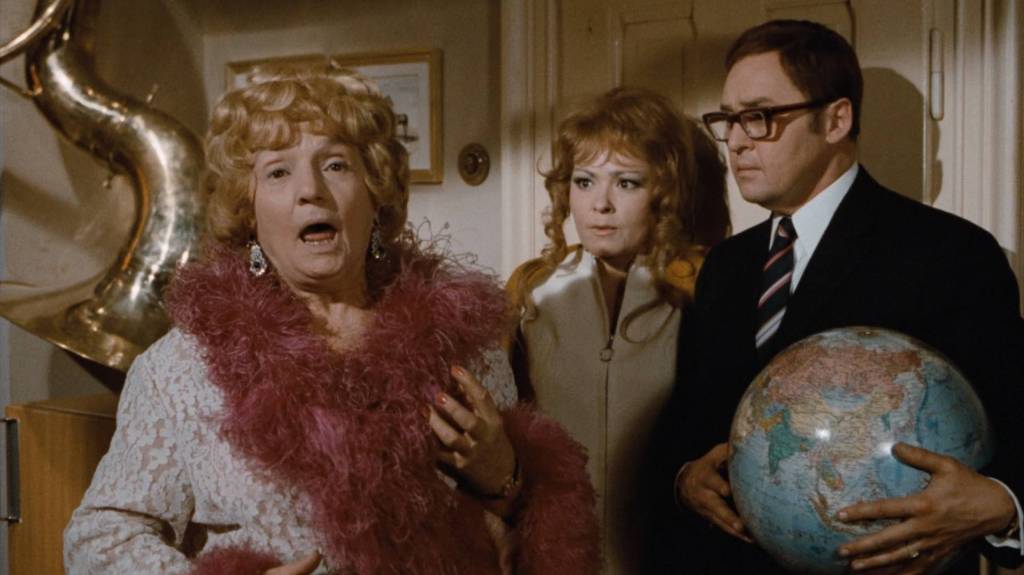
Segue to Springtown, where Lipský’s brother Lubomír (a regular actor in the director’s films) plays George Camel, a straight-laced school teacher with lofty literary ideals who doesn’t get much respect from his class – the kids would rather read comic books than Macbeth. He lives a solitary bachelor’s existence in a boarding house where he plays tuba and constantly gets nagged by his landlady, and tries to sell his highfalutin poetry to the local tabloid.

Lubomir Lipsky's George Camel in trouble with his nagging landlady again in Four Murders Are Enough, Darling

This is where he catches the eye of bored reporter Sabrina (Jiřina Bohdalová), who decides to woo George to make her roguish illustrator boyfriend jealous. George is excitedly getting ready for his hot date with her when the recently deceased Dr. Porter appears on his doorstep. Rather than call the police, however, George hastily stashes the stiff before Sabrina arrives.

Things escalate quickly as both gangs descend on the boarding house and take rooms, bumping each other off as they try to shake down George for the missing cheque. Already suspected of one murder by the bumbling cops, George arouses further suspicion when another dead body falls into his arms every time he opens a door. Initially setting out to clear his name by trying to find out who poisoned Dr. Porter, George grows to enjoy the notoriety as a feared killer and the increasingly amorous advances of Sabrina…

Continue reading “Four Murders Are Enough, Darling (Čtyři vraždy stačí, drahoušku) – Oldřich Lipský, 1971”

Prefab Story (Panelstory aneb Jak se rodí sídliště) – Věra Chytilová, 1979

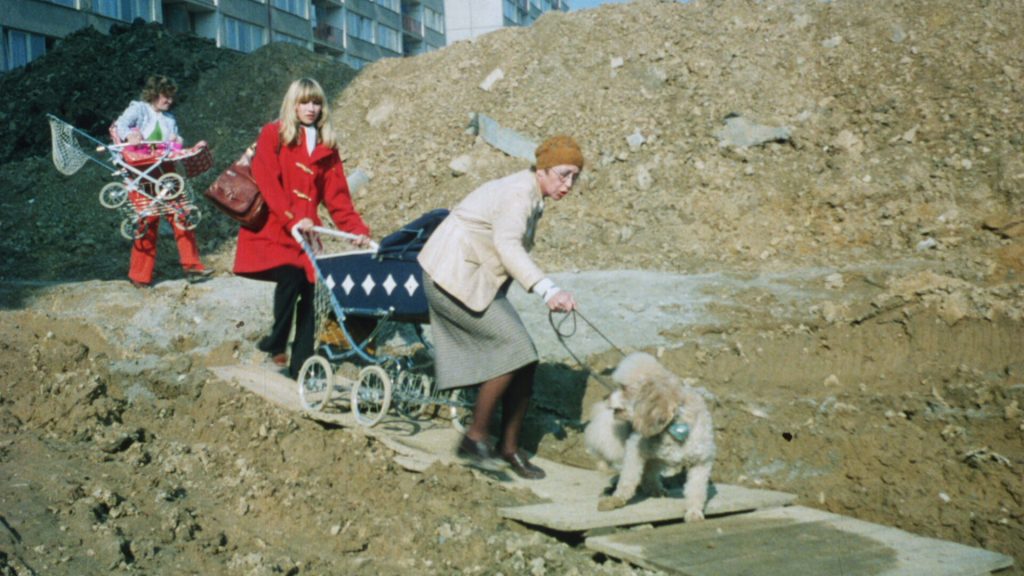
Residents struggle through the rubble in Prefab Story

When I first visited Prague at the tail end of the ’90s, I was captivated by the city to the extent that it dominated my every waking thought. Like for millions of tourists each year, it was the historic centre’s visual splendour that first set my heart racing, but it wasn’t long before I got to know the less postcard-friendly side as well.

Attending a teaching course in the freezing winter of early 2002, the school provided cheap digs in a Communist-era Panelák out in the Barrandov district – namely, a block of flats constructed from panels of prefabricated concrete. In truth, it didn’t look all that different from similar eyesores in Britain, but it was still a striking contrast to the “Golden City” image of Prague. Just as the towers, domes, and spires of the centrum appeared etched in crystal thanks to the crisp, cold January air, the stark right angles and brute bulk of the housing project were brought into sharp focus in the snow and ice.

There was heavy construction going on at the time, which meant a lot of rubble and heaps of earth for the locals to pick their way through as they went about their daily business. One night, my flatmate was staggering back from the pub when he fell into an open trench and lay unconscious as the falling snow began covering him up. Luckily, a passing group of teenagers spotted him, fished him out, and took him back to the pub for a few reviving rounds of beer and shots.

I was reminded of this incident continually while watching Prefab Story, Věra Chytilová’s tragicomic day-in-the-life of the vast Jižní Město housing estate in Prague. The narrative, such as it is, follows an elderly man who arrives from the countryside to live with his daughter in one of the concrete monstrosities, but neither the taxi driver nor the harried locals can pinpoint the correct tower block…

Continue reading “Prefab Story (Panelstory aneb Jak se rodí sídliště) – Věra Chytilová, 1979”

Intimate Lighting (Intimní osvetlení)- Ivan Passer, 1965

As many of you already know, 2020 has been the year of a number of misfortunes that have affected all of us. One of which was the passing of Ivan Passer, a prominent figure that helped establish the Czech New Wave movement. He worked as an assistant director for some of Miloš Forman’s earlier films like Black Peter and Loves of a Blonde, a film he also co-wrote along with The Firemen’s Ball. Before he and Forman moved to the United States, Passer managed to direct his first full-length feature in his homeland of Czechoslovakia, titled Intimate Lighting, which is widely considered to be his masterpiece.

Buy Intimate Lighting from Amazon HERE

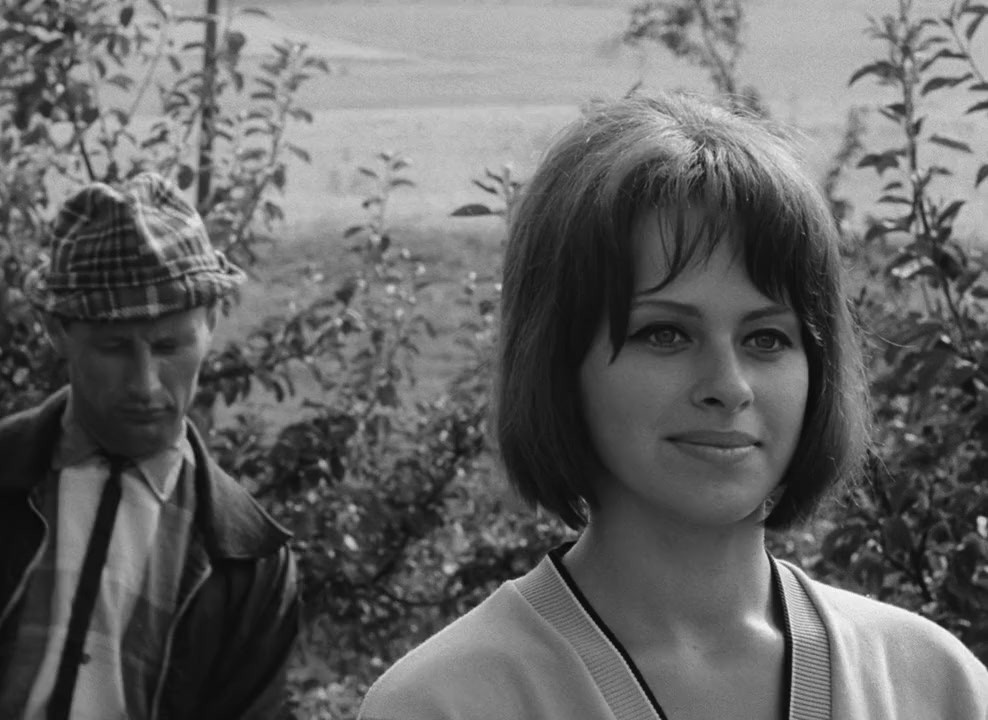
The story centres around Bambas (Karel Blažek), a music teacher who invites his old friend Petr (Zdeněk Bezušek) to play as the soloist for an upcoming concert. Petr arrives at Bambas’ house accompanied by his young girlfriend, Stepa (Věra Křesadlová), where he meets Bamba’s wife, kids, and parents — who all live under the same roof. Much like Black Peter, the film focuses on individual moments in the lives of these characters as they go about their days. This might seem like there isn’t a lot going on, but that couldn’t be further from the truth. These moments actually give us insight into the lives of these characters and paint an earnest and realistic picture of domestic life…

Continue reading “Intimate Lighting (Intimní osvetlení)- Ivan Passer, 1965”

All My Good Countrymen (Všichni dobří rodáci) – Vojtěch Jasný, 1968

All My Good Countrymen cinematography

When people find out that I write about Czech movies, one of the questions they sometimes ask is: why are so many Czech films about the Communist era?

The example I always use is this: I’m from England, and such a large part of our national identity is defined by World War II, which lasted six years. Three iconic events from the conflict – Dunkirk, the Blitz, and the Battle of Britain – are still touchstones in our collective conscience and influence how we think of ourselves as a people. Even seventy-odd years later, nostalgia for the war played a part in the campaign to leave the European Union.

And, of course, we’re still making successful movies about it.

Buy All My Good Countrymen from Amazon HERE

Czechoslovakia, by comparison, spent over forty years in the clutches of a Communist regime, only to regain independence relatively recently. It’s little wonder that the period still exerts such a powerful hold on the Czech national psyche and is ingrained so deeply in the country’s culture. Not only that, but forty years is a long time, so even films that aren’t directly about it still have life under communism very present as background scenery. We can probably expect Czech cinema to go on exploring those decades of subjugation for many years to come…

Continue reading “All My Good Countrymen (Všichni dobří rodáci) – Vojtěch Jasný, 1968”

Wild Flowers (Kytice) – F.A. Brabec, 2000

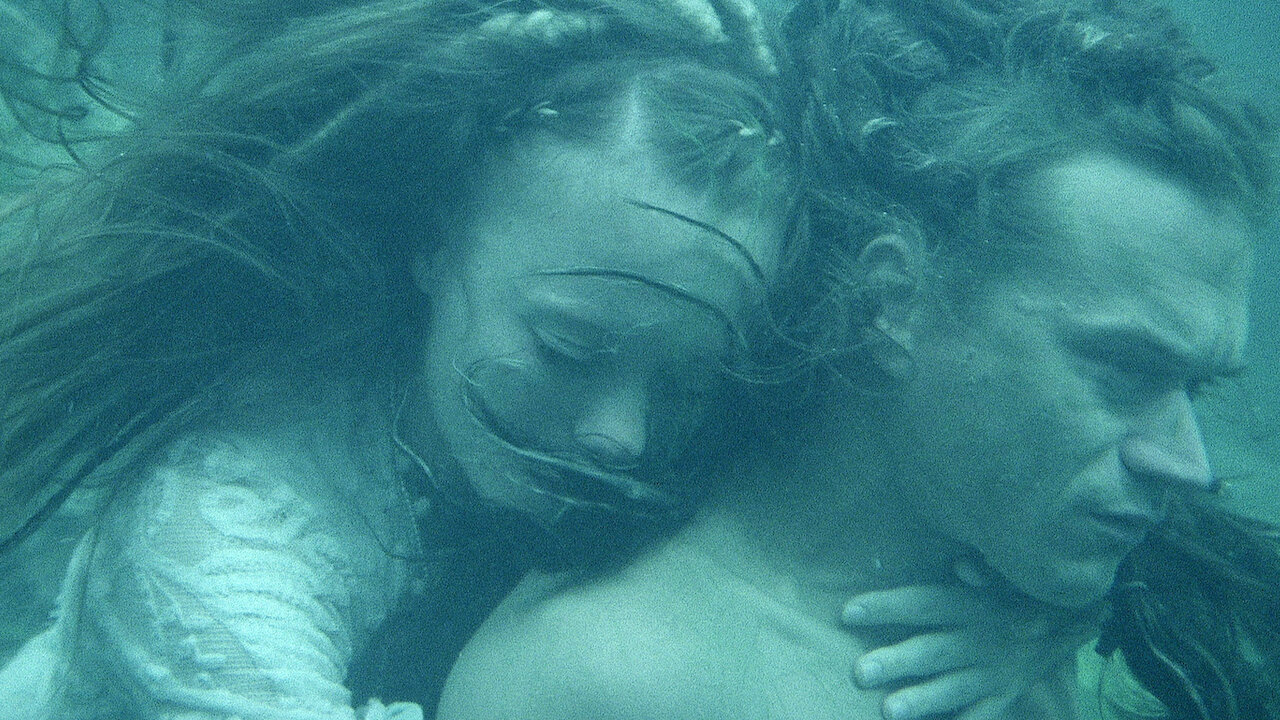
Vodnik Dan Barta Kytice 2000

You can watch Wild Flowers (Kytice) HERE with our VOD partners Eyelet.

Like a struggling Hogwarts student about to flunk their final exam, F.A Brabec fails to conjure the requisite magic to transform Wild Flowers into something completely worth watching. Flashy visuals and a strong cast can’t disguise the fact that this is an extremely patchy anthology based on the ballads of Czech folklorist, Karel Jaromir Erben…

Continue reading “Wild Flowers (Kytice) – F.A. Brabec, 2000”

Barefoot (Po strništi bos) – Jan Svěrák, 2017

Barefoot 2017 Sverak

Prequels are, by and large, one of the most pointless things in cinema. By their very nature they lack much dramatic thrust, as we already know where the story will end up. Over the past few decades, prequels have also become synonymous with major studios cashing in on profitable intellectual properties, often ruining the mystique of the original film or films. The very word “prequel” is capable of setting a certain type of Star Wars fan into a fit of rage…

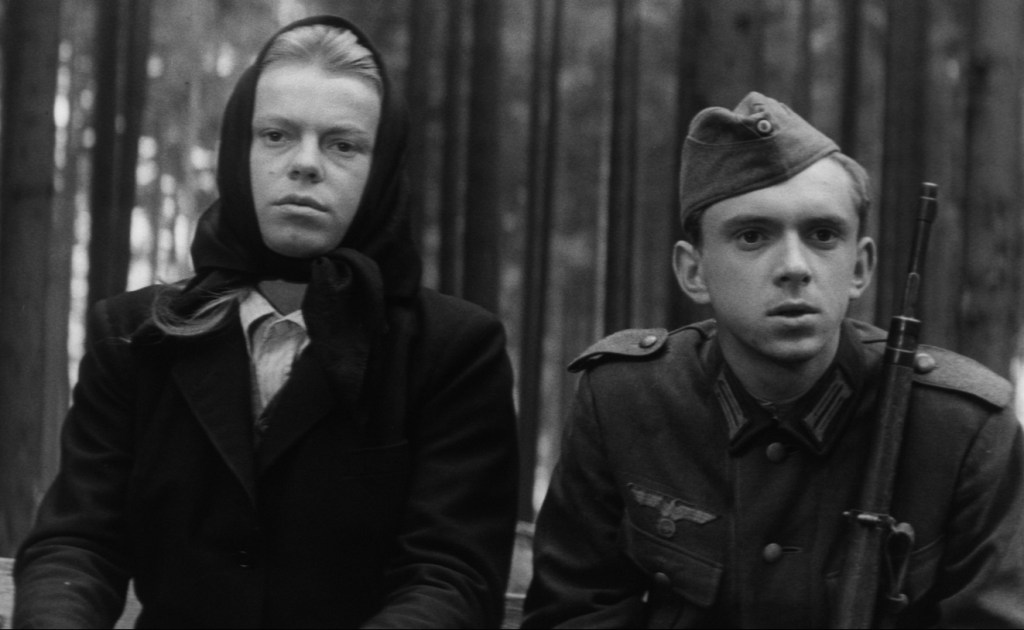
In a very modest field, Barefoot (Po strništi bos) stands out as one of the better prequels available for your delectation. At first it seems like a slender prospect, arriving a full 26 years after Zdeněk and Jan Svěrák’s Oscar-nominated crowdpleaser, The Elementary School (Obecná škola). Delightful though that movie was, it favoured nostalgic, anecdotal comedy and doesn’t seem like the obvious choice for prequel treatment.

Buy Barefoot from Amazon HERE

However, if you ever wondered what the kid in The Elementary School got up to during the death throes of World War II – that is, literally a year or two before the events of the original movie – then Barefoot will answer all your burning questions…

Continue reading “Barefoot (Po strništi bos) – Jan Svěrák, 2017”

The Ear (Ucho) — Karel Kachyňa, 1970/1989


Like many films that were considered problematic by the communist regime in Czechoslovakia at their time of release, Karel Kachyňa’s The Ear was banned until 1989. Unlike the surreal elements found in Case for a Rookie Hangman, this film takes a more grounded approach to explore the fears and anxieties experienced by the country’s inhabitants. The film centres around a married couple trying to get through a night of desperation after they suspect their home might be under surveillance by the government.

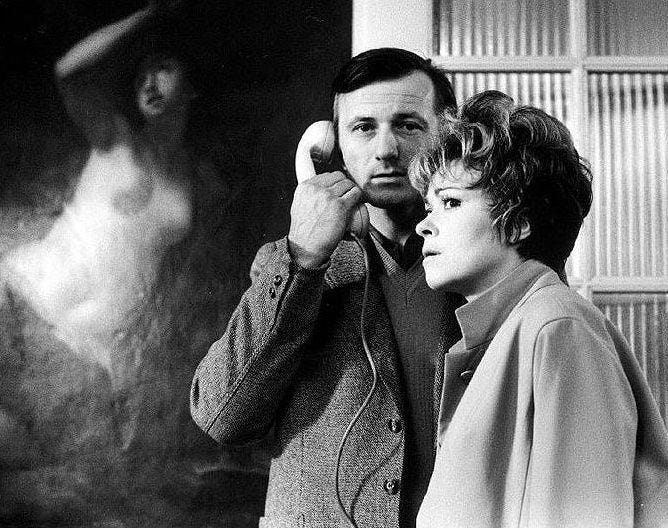
The film begins with the couple coming home from an evening at an official dinner party. The husband, Ludvík (Radoslav Brzobohatý), is a reserved government official, and his wife, Anna (Jiřina Bohdalová), is an outspoken alcoholic. From their first interactions, we can already get a general idea of their relationship. You get the sense that they’ve been at odds for a while now, seeing as how they constantly bicker and throw verbal jabs at each other every chance they get. 

The Ear Blu Ray

Buy The Ear from Amazon HERE

Once they arrive at the entrance, they notice that they’ve misplaced the keys to the gate and find other means of getting inside, only to realize that the doors had been open and there’s been a power outage. Ludvík also notices some strange men lurking around the garden and a car parked on the other side of the street. This causes him to become more paranoid at the thought that he might be targeted by the government…

Continue reading “The Ear (Ucho) — Karel Kachyňa, 1970/1989”

A Case for a Rookie Hangman (Případ pro začínajícího kata)  –  Pavel Juráček, 1970

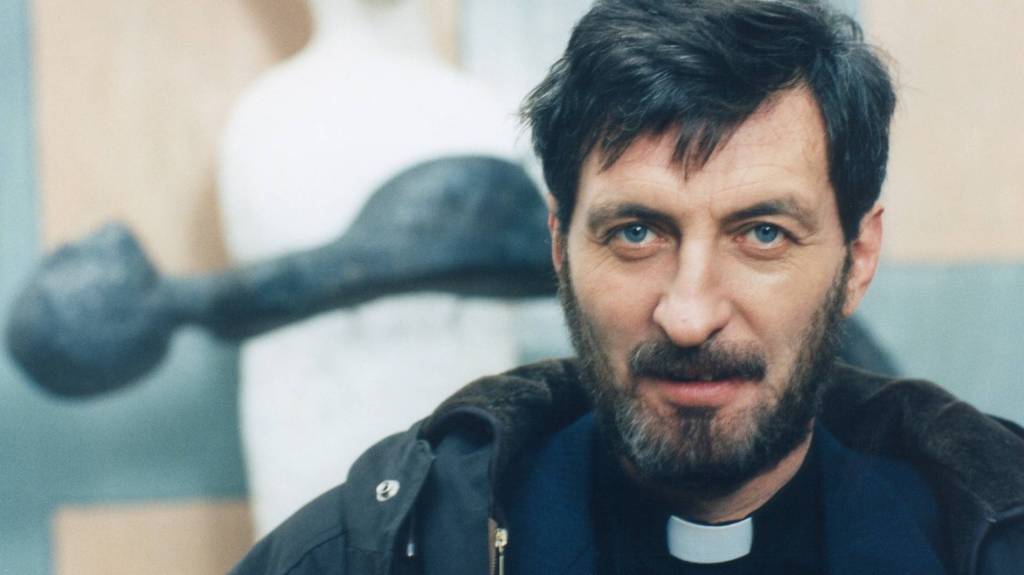
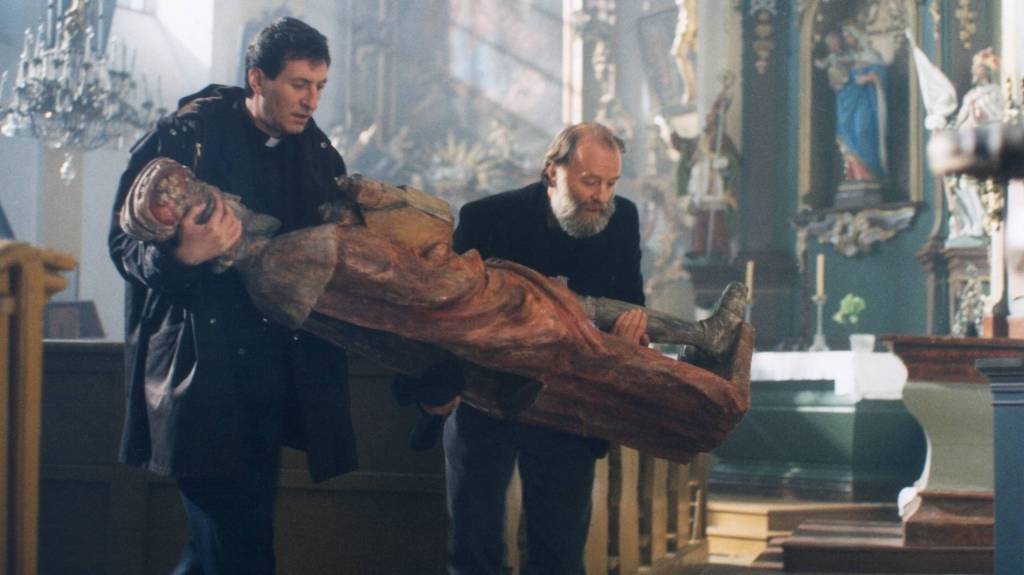
Starting off as a screenwriter for some of the most notable films in the Czech New Wave, Pavel Jurácek (Daisies) eventually transitioned into the role of director and went on to contribute to the movement by directing his own films. His last film, Case for a Rookie Hangman, was a surreal experience, to say the least.

From the start of the film, it’s no secret that Jurácek was inspired by the works of Jonathan Swift, specifically Gulliver’s Travels. He even apologizes beforehand in the film’s opening credits: “If Swift should turn in his grave on account of this film, I beg his compatriots for forgiveness.” This interpretation of the novel finds Lemuel Gulliver (Lubomír Kostelka) in a strange place with bizarre customs that satirize life in Czechoslovakia under the Communist regime.

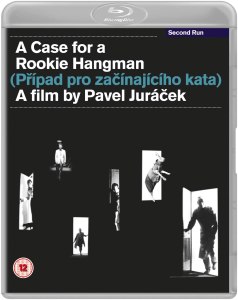
Case for a Rookie Hangman Blu Ray

Buy A Case for a Rookie Hangman from Amazon HERE

Jurácek also channels the works of Franz Kafka and Lewis Caroll’s Alice in Wonderland, which is evident in the surreal nature of the film. For instance, at the beginning of the film, Mr Gulliver loses control of his car and ends up running over a hare dressed in tiny clothes, and even finds that it had a watch in its pocket. After this bizarre incident, he finds a house that resembles the one from his childhood. But once he’s inside, he’s bombarded with memories of his youth: a girl he once loved who drowned, an old friend who also died, a woman who had a part in his sexual awakening, and many more images from his past…

Continue reading “A Case for a Rookie Hangman (Případ pro začínajícího kata)  –  Pavel Juráček, 1970”

Accumulator 1 (Akumulátor 1)  -  Jan Svěrák, 1994

Zdeněk Svěrák in Accumulator 1

Co-written and directed by Jan Svěrák (Kolya, The Elementary School), Accumulator 1 is an entertaining film that features a lot of interesting ideas, but they just don’t come together in a way that’s coherent enough to justify their existence.

The film features a pretty bizarre premise: people who have appeared on television are suddenly losing their energy and dying. The main character, a self-conscious man named Olda (Petr Forman) turns into a recluse after he misses his shot with the girl he’s interested in. He becomes so lethargic that all he does is watch TV for a whole week and loses consciousness for a couple of days. The paramedics save him by barging into his apartment, and at the hospital, he meets a mysterious man, Fišarek (Zdeněk Svěrák), who heals him with his special abilities.

Buy Accumulator 1 from Amazon HERE

Fišarek refers to himself as a natural healer. He helps people that have also suffered from the same condition as Olda. To reinvigorate himself, Fišarek advises Olda to gather energy from natural sources like exercise, the life force of trees, paintings, and even sexual stimulation. He teaches Olda how to harness the energy from these sources, and even shows him how to transfer energy over long distances…

Continue reading “Accumulator 1 (Akumulátor 1)  -  Jan Svěrák, 1994”

Loners (Samotáři) – David Ondříček, 2000

Loners (Samotáři) was the first Czech film I saw in a movie theatre. I was on a teacher training course in Prague at the time, and there was a buzz going around that it was the Czech answer to Trainspotting. I ended up getting completely rat arsed before, during and after the screening, so I couldn’t remember a single thing about it.

That complete blackout has always made Loners something I’ve been eager to revisit. Trainspotting flash-froze a zeitgeist so perfectly that it felt dated by the time it came out on video, so if Loners truly was in any way equivalent, how would it stand the test of time? It’s now half my life since that drunken cinema visit – I was in my early twenties then. What, if anything, would the movie say to me now as a father of two in my early forties?

Loners Blu Ray

Buy Loners from Amazon HERE

Well first up, the Trainspotting comparison was way off. I can kind of see why people at the time were making the analogy, as it focuses on the lives of twenty-somethings in the city and there are drugs involved, albeit ganja rather than smack. Other than that, Loners is a very ho-hum, meandering, mildly amusing look at the lives of a group of young-ish people at the turn of the Millenium. It’s unfair to compare the two really, but since I’ve already started I may as well continue by saying it also lacks Trainspotting‘s vivacity, bleak humour, empathy, and directorial verve. If Trainspotting was a howl of defiance in the dark, Loners is more like a shrug of indifference in a Starbucks…

Continue reading “Loners (Samotáři) – David Ondříček, 2000”