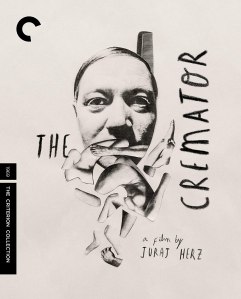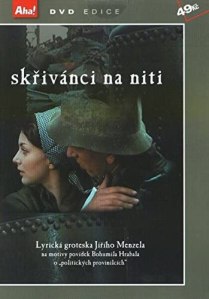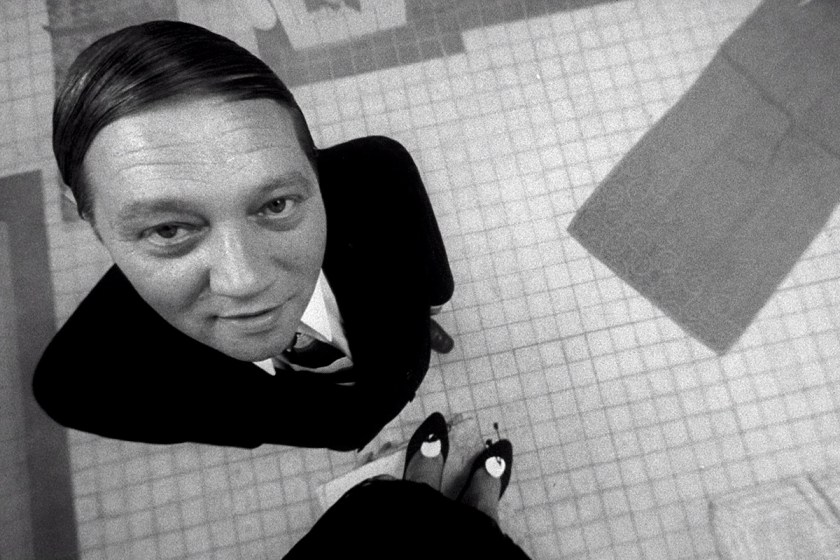
Larks on a String (Skřivánci na niti) – Jiří Menzel, 1969/1990

Banned for over twenty years and only released after the Velvet Revolution, Jiří Menzel’s Larks on a String is a film out of time. It was one of the director’s more overtly critical works in the ’60s, openly sarcastic about the Communist regime in Czechoslovakia. As a result, it endured censure and became a valuable relic of the grim post-Prague Spring era, lacking the timelessness of Menzel’s more gently comedic films of the period.

It’s a shame that it has dated in comparison to the likes of Closely Watched Trains (Ostře sledované vlaky) and Capricious Summer (Rozmarné léto), because as well as ripping the piss out of the petty bureaucrats and their dim-witted slogans (“We’ll pour our peaceful steel down the imperialist war-mongers’ throat!”) it is also an extremely tender and poignant film.

Larks on a String DVD

Buy Larks on a String from Amazon HERE

Set in a huge scrapyard in the Bohemian town of Kladno in the ’50s, the story centres around a group of so-called dissidents and counter-revolutionaries, sent by the authorities for re-education among the piles of broken typewriters and twisted wrought-iron bedsteads. They’re a mostly meek and browbeaten bunch, resigned to shuffling about among the mountains of waste, having philosophical discussions and sneaking a peek at the group of women detained for attempted defection across the fence…

Continue reading “Larks on a String (Skřivánci na niti) – Jiří Menzel, 1969/1990”

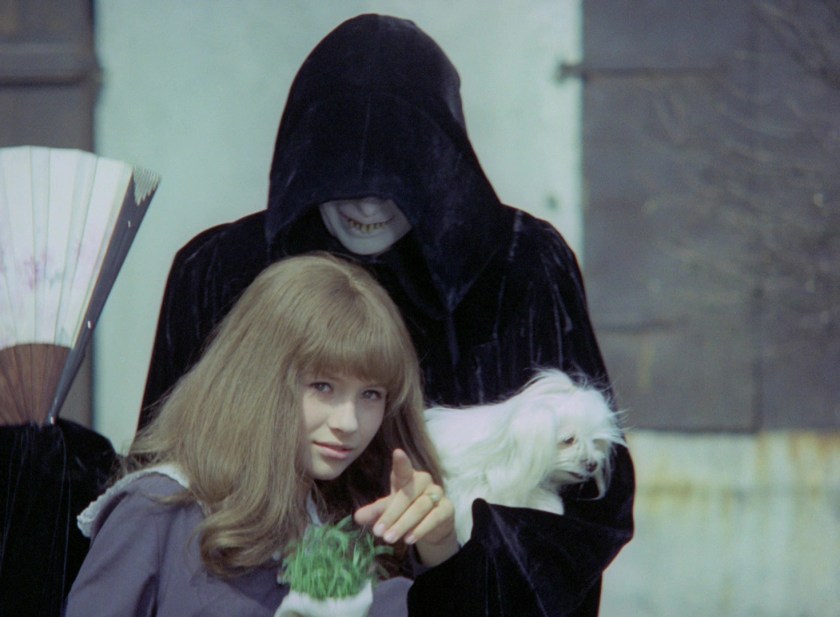
Valerie and Her Week of Wonders (Valerie a týden divů) – Jaromil Jireš, 1970

Rapturously beautiful, disturbingly erotic, and strangely frightening, Valerie and Her Week of Wonders is an intoxicating blend from director Jaromil Jireš, a key figure in the Czechoslovak New Wave. It’s a surrealist horror where reality and identity are fluid, yet the film has its own dreamlike logic where it all makes a kind of sense while you’re watching it. Then, like so many dreams, the more you try to remember on waking, the more it slips from your grasp…

That was my first experience of the film. I’ve wanted to write about it for a year now because when I saw it on a crappy Youtube copy, I realized that I’d just watched something very special. I just couldn’t quite define what I’d watched. It probably didn’t help that I forgot a key detail – that our young protagonist, Valerie (Jaroslava Schallerová), is encountering her first period.

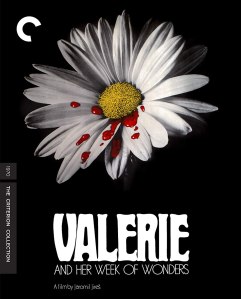
Valerie and Her Week of Wonders Blu Ray

Buy Valerie and Her Week of Wonders from Amazon HERE

It occurs early on, and provides one of the iconic images of the film – a droplet of bright fresh blood on the head of a daisy – but the moment was lost to me almost immediately in the subsequent whirl of ravishing imagery, potent symbolism, ethereal beauty and earthy sensuality. Luboš Fišer’s score is also transportive, whisking you away to another time and place…

Continue reading “Valerie and Her Week of Wonders (Valerie a týden divů) – Jaromil Jireš, 1970”

From Subway With Love (Román pro ženy) – Filip Renč, 2005

From Subway with Love is the English title for Román pro ženy (A Novel for Women), although a more appropriate title may have been Men’s Midlife Crisis: The Movie…

I approached the film with pretty low expectations, because a) I’ve already come into contact with two movies adapted from his own novels by the virulent Michal Viewegh, and b) this DVD cover art –

Let’s take a moment to see what we have here. There’s a beautiful young woman, staring seductively at the camera. She’s in a submissive pose, kneeling as she kisses the hand of a man, who is mostly out of the frame. The positioning of the man’s forearm suggests that the rest of his body is open to the camera. I’m intrigued by what is happening outside the borders of this photo. What could the man be doing while this young woman is humbling herself before his masculinity? Drinking a beer? Unzipping his fly? Playing paddle ball? Check out later in the review to find out…

Continue reading “From Subway With Love (Román pro ženy) – Filip Renč, 2005”

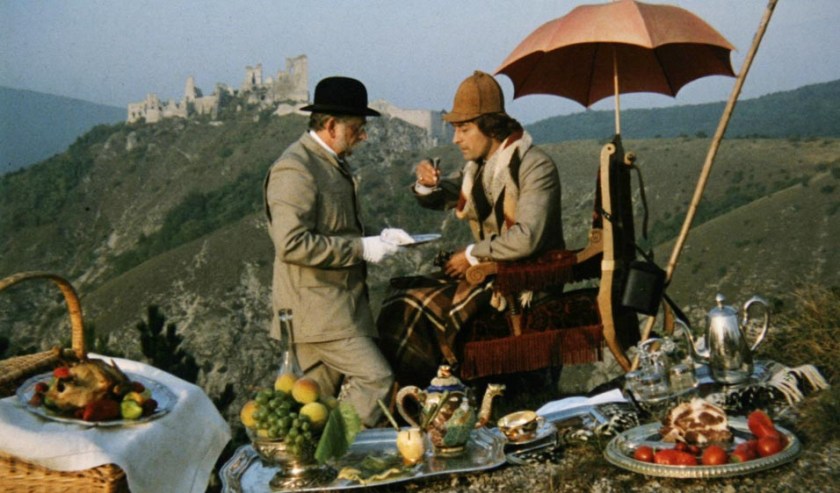
The Mysterious Castle in the Carpathians (Tajemství hradu v Karpatech) – Oldřich Lipský, 1981

I love old dark house movies, to the point where whenever a discussion comes up with family or friends about the prospect of building a house, I can’t help railroading the conversation into talk of secret passages, secret doors (bookcase or fireplace, I’m not picky), and of course large paintings where I can remove the portrait’s eyes and peek into the room below.

Due to this, Oldřich Lipský’s silly-funny, endlessly inventive spoof Tajemství hradu v Karpatech was a source of absolute delight for me. It’s basically like a Czech version of Murder by Death, a star-studded mystery set in – yes, an old dark house – peppered with jokes so hoary and dumb that they go all the way around the dial to becoming hilarious again.

Mysterious Castle DVD

Buy The Mysterious Castle in the Carpathians from Amazon HERE

What The Mysterious Castle has over Neil Simon’s groaner-fest and other pastiches of the genre is some genuinely inspired proto-steampunk design work by legendary surrealist filmmaker Jan Švankmajer, and a visual style all of its own…

Continue reading “The Mysterious Castle in the Carpathians (Tajemství hradu v Karpatech) – Oldřich Lipský, 1981”

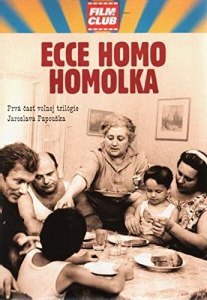
Behold Homolka (Ecce homo Homolka) – Jaroslav Papoušek, 1969

We open in an idyllic forest somewhere in the Czechoslovak paradise, and two teens have found a discreet spot for a little nookie on a summer’s afternoon. Their amorous encounter is soon interrupted though – first by ants having a nibble, then by the noise created by the boorish Homolka family descending on the peaceful scene for a picnic.

There’s plenty of boors in the countryside in Czech movies, which led me to coin the term “bumpkincore” to describe a certain type of Czech comedy. The twist here is that the bumpkins are from the city rather than the village. They’re in the woods to let their screaming kids run around, cool their beer in the stream, and doze in the shade of the trees.

Buy Behold Homolka from Amazon HERE

The female half of the canoodling couple thinks quickly – she starts crying for help. Sometimes it feels like Czechs would rather step over your stricken body if you fell down with a heart attack than lend a hand, so it’s a smart move: dozens of daytrippers hear the distress call, pack up their families and picnic gear, and beat a hasty retreat to the city…

Continue reading “Behold Homolka (Ecce homo Homolka) – Jaroslav Papoušek, 1969”

My Sweet Little Village (Vesničko má středisková) – Jiří Menzel, 1985

Ask a film critic what the best Czech film is, and they’ll probably tell you Marketa Lazarová. Ask your average Czech in the street, however, and they’ll more likely say My Sweet Little Village (Vesničko má středisková). Menzel’s second Academy award-nominated film frequently comes in higher than Vláčil’s wild and capricious epic in public polls, and it’s not hard to see why. It’s another celebration from Menzel of the gentle wiles of country folk, and another ode to the idyllic simplicity of village life. In short, it’s exactly the kind of thing that goes down like a curry to a pisshead with the Czechs.

The story concerns Otík (János Bán), a lanky, mentally disabled young man who works as an assistant lorry driver with his rotund, bumptious neighbour, Karel Pávek (Marián Labuda). Mr Pávek has had Otík under his wing for five years now, supervising his work and helping the boy with simple tasks like eating with a knife and fork. Otík totally idolizes Pávek, neatly shown by how he wants to match the older man’s step as the walk to the truck depot each morning.

My Sweet Little Village DVD

Buy My Sweet Little Village from Amazon HERE

However, as the end of the season nears, Mr Pávek is growing increasingly frustrated with Otík’s simple-minded blunders. He asks for Otík to get transferred to another driver for the following year, the surly and mean-spirited Mr Turek (Petr Čepek). Otík isn’t happy with this arrangement, and accepts a mysterious transfer to Prague…

Continue reading “My Sweet Little Village (Vesničko má středisková) – Jiří Menzel, 1985”

Smart Phillip (Mazaný Filip) – Václav Marhoul, 2003

Humphrey Bogart. Elliot Gould. Robert Mitchum. Dick Powell. Danny Glover. James Caan. Many great actors have put their unique spin on the role of Raymond Chandler’s classic sleuth, Phillip Marlowe. Then there’s Tomáš Hanák in Mazaný Filip, who looks about as enthusiastic in the part as a PE teacher who’s been browbeaten by his wife into taking part in a murder mystery LARP, when he could be away on a weekend jolly with his rugby teammates instead.

Starting off by criticizing Hanák’s awkward performance is a bit like standing in front of your house after it’s been flattened by a tornado, and worrying that it’s been ages since you last mowed the lawn. It is maybe the least of the problems with this painfully weak detective spoof, which are so wide-ranging and catastrophic that it’s tough to know where to begin. So it might as well be with the lead.

Smart Philip DVD

Buy Smart Philip from Amazon HERE

The plot of Mazaný Filip is a mish-mash of Chandler-esque story beats. Hanák plays Marlowe, a world-weary detective who spends time between cases peering out through the Venetian blinds in his office, or taking generous slugs from the bottle of liquor that he keeps in his filing cabinet. He’s approached by a character who calls himself “Charlie Brown” (Pavel Liska in an almost unwatchably bizarre performance, which is still not the worst acting in this movie) to find his twin brother…

Continue reading “Smart Phillip (Mazaný Filip) – Václav Marhoul, 2003”

Holiday Makers (Účastníci zájezdu) – Jiří Vejdělek, 2006

A broad cross-section of Czech society go on a coach trip to Slovenia for their holidays, and much mirthlessness ensues. While this ensemble comedy-drama from Jiří Vejdělek is wildly unfunny, it is strangely entertaining, if only because it serves as another terrifying glimpse into the cynical and predatory mind of the Czech Republic’s pervert laureate, Michal Viewegh.

The best selling author also provided the source material for easily one of the worst films I’ve ever seen, Andělé všedního dne (Angels of Everyday). While the attitudes towards sex and women in Holiday Makers aren’t quite as repellent as in that movie, it is still pretty reprehensible. It’s worth saying at this point that I haven’t read Viewegh’s original material for either so perhaps the subtleties of his work don’t translate well to film. However since I found the sexual politics in both films gross, crass and just plain creepy, I think it’s fair to say that I probably have a vastly different worldview to the writer. But more on that later…

Continue reading “Holiday Makers (Účastníci zájezdu) – Jiří Vejdělek, 2006”

A Prominent Patient (Masaryk) – Julius Ševčík, 2016

It was a full house at Kino Art for a Friday night screening of Julius Ševčík’s Masaryk (aka A Prominent Patient), and it made uncomfortable viewing. I was about the last one in and had to sit on the front row, one English guy watching a film about how my country sold out Czechoslovakia with a room full of Czechs.

I grew up thinking that we were unconditionally the good guys. In history class, we learnt a little about the Munich Agreement, saw pictures of Neville Chamberlain waving his piece of paper and his infamous “Peace for our time” speech. Our teacher never really got into the human consequences of it – who cared about Czechoslovakia anyway? He just wanted to get to the fun stuff, and it was just a prologue before Winston Churchill sparked up a big cigar and guided us to our Finest Hour.

Buy Masaryk from Amazon HERE

History is written by the victors, and we were raised on our grandparent’s war stories. Although they all lost friends and family during the war, they always talked about it with pride and nostalgia. Pride in playing their own small part in defeating the Nazis, and nostalgia for the sense of identity and purpose it gave them.

Then I grew up a bit, and found out that we weren’t always the good guys. In fact, there were many occasions when we were the bad guys. That boggled my mind for a while because I’d always been unthinkingly proud of my country’s role in World War II and the world as a whole, and it didn’t occur to me that other countries might not like us very much. Then it dawned on me – perhaps there is a reason no-one votes for us in the Eurovision Song Contest…

Continue reading “A Prominent Patient (Masaryk) – Julius Ševčík, 2016”

Seclusion Near a Forest (Na samotě u lesa) – Jiří Menzel, 1976

There can be no greater picture of contentment than a Czech guy standing with a beer in his hand, meat on the grill, and his feet in the grass on a summer’s day. Czechs rarely need an excuse to evacuate the towns and cities at the weekends in the summer and head out to the forests, lakes and hills, where many still own a vacation cottage. They genuinely seem to draw spiritual energy from contact with their nature, which stands in stark contrast to back home in Britain. For many urban-dwelling Brits, a trip to the countryside is something to be dutifully endured rather than enjoyed. This may be the reason that we have folk horror, and the Czechs have gentle folk comedies like Na samotě u lesa.

Zdeněk Svěrák (Kolya, Empties) plays Olda Lavička, head of a nice Prague family who are looking to buy their own country cottage. An eccentric acquaintance, Radim Zvon (Ladislav Smoljak, the man behind Jára Cimrman Lying, Sleeping in a colourful role) has taken up residence in a beautiful old mill. He points them in the direction of an elderly farmer, Mr Komárek (Josef Kemr – Marketa Lazarova), who may be willing to sell up and relocate to Slovakia to live with his son. He’s got a few loose ends to tie up first though, like selling his cow and sorting out the crops, so in the meantime, he agrees to rent the Lavičkas a room so they can stay whenever they like.

Seclusion DVD

Buy Seclusion Near a Forest from Amazon HERE

Mr Komárek’s cottage is picturesquely ramshackle, with rotten floorboards and damp in the walls. Apart from the old man, the Lavičkas end up sharing the joint with his mischievous goat, some invasive chickens, a cow, a dog and its fleas (despite the locals’ insistence that dog fleas don’t bite humans). Olda is totally enthralled by every aspect of country living, and his inquisitive son and daughter settle in well, instinctively calling Mr Komárek “grandad”. Mrs Lavička is less enthused about cottage sharing with a strange old man and the total lack of mod cons, such as electricity. She also thinks they should be encouraging Mr Komárek to get his arse into gear and sell up so they can enjoy the cottage without him hanging around, rather than feeding him and keeping him company…

Continue reading “Seclusion Near a Forest (Na samotě u lesa) – Jiří Menzel, 1976”