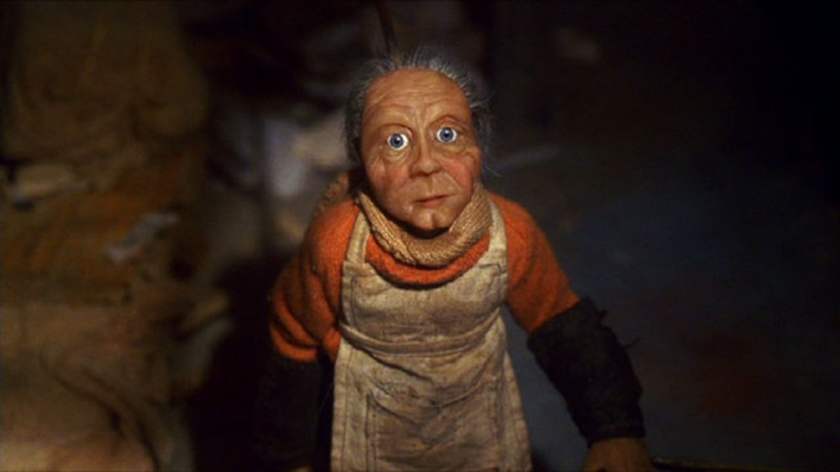
Alice (Něco z Alenky) – Jan Švankmajer, 1988

Alice 1

Once upon a time, I was so little that I could stand on the back of my nan’s sofa and survey the kingdom all around me. That summit seemed very high, and I was still small enough for her living room to be divided into several distinct regions. In the hazy distance opposite me (and it was hazy because my nan was a sixty-a-day woman) was the cliff edge of the mantlepiece. There lived regal ladies and gentlemen dressed in the fashions of the French court, and each of them bore the scars of terrible tumbles into the precipice below. My nan was not a fussy person, and each time one of them got knocked off and broken on the hearth, she would carelessly stick them back together with her trusty tube of Uhu. The figurines looked like Frankenstein creations, with arms, legs and heads reattached with bobbly contusions of sinister yellow glue.

Alice Blu Ray

Buy Alice from Amazon HERE

Away to the far left, through the chasm between a sagging armchair and my nan’s monolithic rented telly, was a little-visited glade beneath the large bay window, where a wooden table contained the remnants of a long-defunct record player. On the far right of the room was my nan’s armchair, where she smoked, watched TV, read Mills and Boon paperbacks and idled away the hours doing word search puzzles. Between her armchair and the mantlepiece was a dark cabinet where she kept her most prized ornaments, glassware and keepsakes. Then, far below me, was the plateau of her coffee table. I was so tiny that I could make a den of it by propping mail-order catalogues against the shelf underneath and crawling inside.

The interior of a house is as big or as small as a child’s imagination needs it to be. A coffee table can be a tiny piece of driftwood afloat in the sea, all that’s protecting them from circling sharks. Or it can be a vast battlefield for their toys to wage war against each other. A wardrobe can be a deep cave to hide in and a tall mountain to conquer…

Continue reading “Alice (Něco z Alenky) – Jan Švankmajer, 1988”

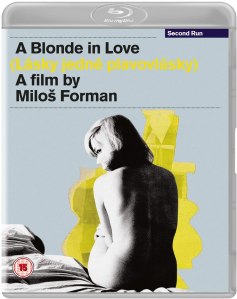
Loves of a Blonde (Lásky jedné plavovlásky) – Miloš Forman, 1965

Loves of a Blonde 1

Andula (Hana Brejchová) works in a shoe factory in a small town where, thanks to inept state planning, women outnumber men by 16 to 1. She shares a dorm in a dreary hostel with several other women of her age, and despite the odds has a good-looking boyfriend called Tonda. He’s bought her a ring and told her the stone in it is a diamond. She wants to believe it.

Loves of a Blonde was Miloš Forman’s sophomore effort after Black Peter (Černý Petr) and is a key film of the Czech New Wave. The title may well be ironic. While Andula certainly seems to have no trouble attracting the attention of the opposite sex, the men in her life don’t seem even remotely capable of giving her the relationship she needs. She is quite worldly compared to some of her friends, but still dreams of love and romance – we can tell that from the opening scene, where she is cuddled up in bed with one of her friends cooing over the ring.

Buy Loves of a Blonde from Amazon HERE

Tonda, despite his respectable portrait pic, turns out to be an aggressive, possessive moron and the other guys in the movie aren’t much better. At a village dance, Andula and two friends are approached by three sleazy middle-aged soldiers who are stationed nearby. Their idea of wooing the girls is to get them drunk and take them for a quick knee-trembler in the woods nearby…

Continue reading “Loves of a Blonde (Lásky jedné plavovlásky) – Miloš Forman, 1965”

The Oddsockeaters (Lichožrouti) – Galina Miklínová, 2016

Oddsockeaters 1

Entertaining two young kids during lockdown for eight weeks has sometimes involved a lot of Netflix. Now, I’m a snob and I like my five-year-old daughter to watch as many live-action movies as possible, and it’s crazy how many family films these days are CGI.

That said, I don’t have anything against computer-generated features as such, because studios like Pixar and Laika have produced some of the best family films of the past quarter of a century, balancing rollicking adventure and unforgettable characters with meaningful themes.

Buy The Oddsockeaters from Amazon HERE

However, for every Toy Story or Kubo and the Two Strings there are tons of poorly animated dross like The Dancing Pumpkin and the Ogre’s Plot, something that looks like it was put together by an algorithm rather than thinking, feeling human beings.

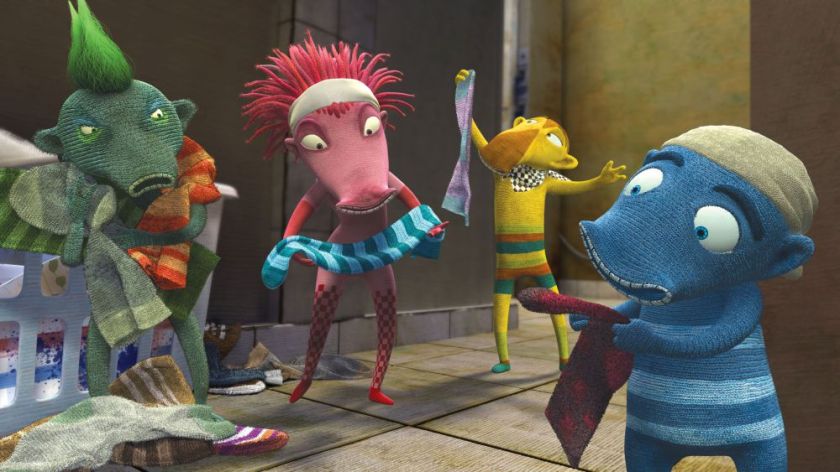
Somewhere in between – and thankfully more towards the Kubo end of the spectrum than The Dancing Pumpkin end – is The Oddsockeaters, a quirky fantasy adventure based on the book of the same name by Pavel Šrut. Directed by the book’s illustrator Galina Miklínová, it’s a playful tale about small magical creatures that love eating socks, but always leave one half of a pair for the owner, thus creating the age-old laundry mystery…

Continue reading “The Oddsockeaters (Lichožrouti) – Galina Miklínová, 2016”

Page to Screen: Too Loud a Solitude (Příliš hlučná samota) – Genevieve Anderson, 2007

“I can be by myself because I’m never lonely, I’m simply alone, living in my heavily populated solitude, a harum-scarum of infinity and eternity, and Infinity and Eternity seem to take a liking to the likes of me.”  Bohumil Hrabal, Too Loud a Solitude

Too Loud a Solitude is my favourite book, and that passage in particular resonated so deeply during my teaching days in Prague. I’ve always been someone who enjoys time with my own thoughts, and I never felt lonely while I was there. I was in love with the place and, although I had friends, I often preferred it when it was just me alone with the city…

Continue reading “Page to Screen: Too Loud a Solitude (Příliš hlučná samota) – Genevieve Anderson, 2007”

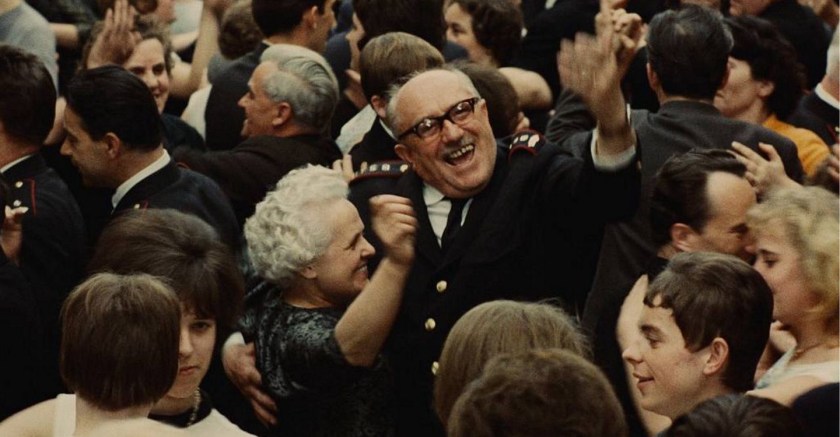
The Firemen’s Ball (Hoří, má panenko) – Miloš Forman, 1967

Miloš Forman’s last Czech film, The Firemen’s Ball, starts off as a lighthearted farce. By the time the film reaches its masterful third act, it has become a tragicomedy of tremendous allegorical power.

It can be seen in numerous ways. A literal reading got Forman in hot water with real fire crews up and down the land, who saw it as an attack on their honour and integrity, resulting in Forman touring the country to make amends. You could interpret it as an indictment of human foibles and corruptibility; a satire on corporate groupthink; or a stealth condemnation of the Communist system. The Czechoslovakian Communist party certainly saw it as the latter, resulting in the film being “banned forever”.

Buy The Firemen’s Ball from Amazon HERE

The story is slight but builds irrevocably towards its conclusion, where details that seem innocuous in the set up suddenly take on massive significance. The committee of a small-town fire department is arranging a ball. The entry is 8kc and attractions include a band, a tombola and a beauty pageant. The guest of honour is the firemen’s retired president, and the plan is to get the winner of the beauty contest to present him with a ceremonial axe for his 86th birthday.

Things quickly go south. One of the firemen, Josef (Josef Kolb), is in charge of the tombola and is panicked when the prizes start going missing before the doors even open. The committee hasn’t selected their contestants for the pageant yet, and hurriedly spend the early part of the ball trying to recruit prospects from the attendees. The selection process also seems to have an ulterior motive, as the largely middle-aged committee see it as an excuse to ogle young women…

Continue reading “The Firemen’s Ball (Hoří, má panenko) – Miloš Forman, 1967”

Dark Blue World (Tmavomodrý svět) – Jan Svěrák, 2001

Much like Michael Bay’s mega-budget travesty Pearl Harbor from the same year, Jan Svěrák’s Dark Blue World (Tmavomodrý svět) squanders a fascinating true story in order to indulge in a tepid love triangle. The sad thing is, while all of Pearl Harbor is awful, it’s only the romantic element of Dark Blue World that brings it into disrepute, tainting an otherwise rousing tale.

The film opens in 1950 with our main protagonist, Franta Sláma (Ondřej Vetchý) banged up in a gloomy prison, having been incarcerated by the communists for his time serving in the RAF during World War II. We then flashback to before the war and happier times with his girlfriend before the Germans marched in.

Dark Blue World DVD

Buy Dark Blue World from Amazon HERE

With the Czechoslovak Army disbanded, Franta and a group of other fliers, including his young hotheaded protégé Karel Vojtíšek (Kryštof Hádek) escape to England to join the RAF. Once there the pilots are sidelined initially, taking part in pointless exercises, learning English, and gazing enviously at the dogfights going on in the skies above them. As the Battle of Britain intensifies the RAF is in constant need of more pilots, so our boys soon get their chance. After a few teething problems they’re soon gunning down German planes with glee, getting a little revenge for all the folks back home…

Continue reading “Dark Blue World (Tmavomodrý svět) – Jan Svěrák, 2001”

Loners (Samotáři) – David Ondříček, 2000

Loners (Samotáři) was the first Czech film I saw in a movie theatre. I was on a teacher training course in Prague at the time, and there was a buzz going around that it was the Czech answer to Trainspotting. I ended up getting completely rat arsed before, during and after the screening, so I couldn’t remember a single thing about it.

That complete blackout has always made Loners something I’ve been eager to revisit. Trainspotting flash-froze a zeitgeist so perfectly that it felt dated by the time it came out on video, so if Loners truly was in any way equivalent, how would it stand the test of time? It’s now half my life since that drunken cinema visit – I was in my early twenties then. What, if anything, would the movie say to me now as a father of two in my early forties?

Loners Blu Ray

Buy Loners from Amazon HERE

Well first up, the Trainspotting comparison was way off. I can kind of see why people at the time were making the analogy, as it focuses on the lives of twenty-somethings in the city and there are drugs involved, albeit ganja rather than smack. Other than that, Loners is a very ho-hum, meandering, mildly amusing look at the lives of a group of young-ish people at the turn of the Millenium. It’s unfair to compare the two really, but since I’ve already started I may as well continue by saying it also lacks Trainspotting‘s vivacity, bleak humour, empathy, and directorial verve. If Trainspotting was a howl of defiance in the dark, Loners is more like a shrug of indifference in a Starbucks…

Continue reading “Loners (Samotáři) – David Ondříček, 2000”

Kolya (Kolja) – Jan Svěrák, 1996

Take one vulnerable kid and dump them with a really disreputable, selfish, unlikely, inappropriate or downright dangerous father figure. The kid doesn’t have to be particularly cute, and the man may or may not be the kid’s actual father. It doesn’t matter, because if you play this well-worn combo well enough there won’t be a dry eye in the house…

This formula has been going almost as long as cinema itself. One of the best early examples came during the early days of the talkies with The Champ, which starred Wallace Beery as a drunken, irresponsible slugger and Jackie Cooper as his disappointed but devoted son. A notable variation on the theme came in 1973 with Paper Moon, starring real-life father and child duo Ryan and Tatum O’Neal, who played a selfish con man and his maybe-daughter on the road working scams.

Kolya Blu Ray

Buy Kolya from Amazon HERE

The formula got pretty crazy in the ’90s. Arnold Schwarzenegger’s unstoppable cyborg got reprogrammed and became an unlikely surrogate father to Edward Furlong’s tearaway teen in T2: Judgement Day; things got a bit iffy in Léon: The Professional as Jean Reno’s childlike hitman ended up sheltering a young Natalie Portman from a demented pill-popping cop, and teaching her a few tricks of the trade along the way…

Continue reading “Kolya (Kolja) – Jan Svěrák, 1996”

The Girl on a Broomstick (Dívka na koštěti) – Václav Vorlíček, 1972

If you imagine Sabrina the Teenage Witch with a dash of Harry Potter thrown in, you’ll get a pretty good idea what to expect from this bright and breezy fantasy comedy. Petra Černocká plays Saxana, a talented but bored young witch who is sentenced to 300 years in detention for screwing up in her shape-shifting classes. With the assistance of the school janitor and retired vampire, (I’m not sure vampirism works like that either, but let’s go with it), Saxana transforms herself into an owl and visits the world of people.

Buy The Girl on a Broomstick from Amazon HERE

The spell is shortlived, though, and unless she can find something called “Hag’s Ear” within 44 hours, she will have to return to witch school and face the consequences for her bad behaviour. While still in owl form, she’s captured by a zookeeper and taken home. There she reverts to her normal form, much to the surprise of the keeper’s son, Honza (Jan Hrušínský). They quickly become friends, setting the stage for all manner of magical shenanigans – usually involving Saxana turning herself or other people into some kind of animal…

Continue reading “The Girl on a Broomstick (Dívka na koštěti) – Václav Vorlíček, 1972”

The Cremator (Spalovac mrtvol) – Juraj Herz, 1969

Anthony Perkins as Norman Bates in Psycho. Anthony Hopkins as Hannibal Lecter in The Silence of the Lambs. Christian Bale as Patrick Bateman in American Psycho. Everyone loves a great movie monster, and it’s a tragedy that Rudolf Hrušínský’s incredible performance as Karel Kopfrkingl in The Cremator hasn’t gained the same kind of international notoriety. He’s just as enjoyably chilling, and, with the film coming from a far darker place than the others, has more important things to say to today’s society.

On the surface, Kopfrkingl is the model professional and devoted family man, married to Lakmé (Vlasta Chramostová) who he met in front of the leopard’s cage at the zoo. They have two children, Zina and Mili, both in their teens. He runs a crematorium and devotes his life to discreetly releasing human souls from their deceased bodies by incinerating them in his furnaces. He’s obsessed with the process of cremation and fuses his interpretations of Buddhism (learned from his lovely book on Tibet) with his own views on death and reincarnation. Outwardly he tries to project himself as a man of good taste and scruples, although dark lusts lurk beneath his prissy manner and sanctimonious smile…

Cremator Blu Ray

Buy The Cremator from Amazon HERE

The film is set during the 1930s, and one of Kopfrkingl’s old army chums, Mr Reinke (Ilja Prachař), is an engineer with ties to the Nazi party who encourages him to recognize the theoretical drop of German blood flowing in his veins. Initially, Kopfrkingl rejects the idea, maintaining that they’re a good Czech family and only speak Czech at home. But as the threat of German invasion looms over the country, we see that Kopfrkingl is an endlessly malleable hypocrite who is easily swayed into informing on his Jewish friends and colleagues. He readily adjusts his beliefs to suit the prevailing wind, especially when there’s some perceived benefit for him involved. As it turns out, the Nazis have a special project in mind for someone in his particular niche, and he’s ready to embrace his calling. And then some…

Continue reading “The Cremator (Spalovac mrtvol) – Juraj Herz, 1969”