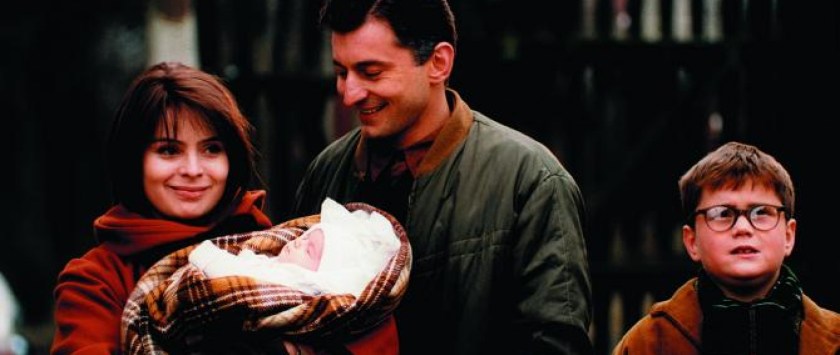
Those Wonderful Years That Sucked (Báječná léta pod psa) – Petr Nikolaev, 1997

If you’re a regular follower of Czech Film Review you’ll know that I have a long-standing beef with movies based on the works of Michael Viewegh. I hate them so much – especially Angels (Andělé všedního dne), which must rank as one of the worst movies I’ve seen in any language – that I’m kind of addicted to them. Not only are they sexist, ageist and homophobic, but they’re also just so damned mean-spirited, with a nihilistic view on human relationships. Perhaps the subtleties of Viewegh’s novels don’t adapt well to the screen, but Viewegh seems to hate all his characters, especially women. So what made the novelist such a black-hearted misanthrope? It’s like a puzzle I need to solve.

Buy Those Wonderful Years That Sucked from Amazon HERE

So I arrived at Those Wonderful Years That Sucked, based on Viewegh’s semi-autobiographical novel of the same name. Semi-autobiographical, eh? It’s probably going to be a heinous chore just like his other adaptations, I thought, but maybe I’ll find some answers…

Continue reading “Those Wonderful Years That Sucked (Báječná léta pod psa) – Petr Nikolaev, 1997”
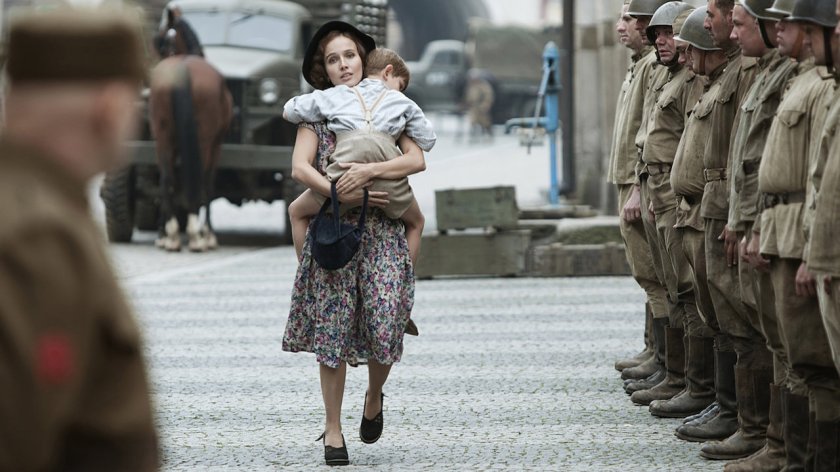
Barefoot (Po strništi bos) – Jan Svěrák, 2017

Barefoot 2017 Sverak

Prequels are, by and large, one of the most pointless things in cinema. By their very nature they lack much dramatic thrust, as we already know where the story will end up. Over the past few decades, prequels have also become synonymous with major studios cashing in on profitable intellectual properties, often ruining the mystique of the original film or films. The very word “prequel” is capable of setting a certain type of Star Wars fan into a fit of rage…

In a very modest field, Barefoot (Po strništi bos) stands out as one of the better prequels available for your delectation. At first it seems like a slender prospect, arriving a full 26 years after Zdeněk and Jan Svěrák’s Oscar-nominated crowdpleaser, The Elementary School (Obecná škola). Delightful though that movie was, it favoured nostalgic, anecdotal comedy and doesn’t seem like the obvious choice for prequel treatment.

Buy Barefoot from Amazon HERE

However, if you ever wondered what the kid in The Elementary School got up to during the death throes of World War II – that is, literally a year or two before the events of the original movie – then Barefoot will answer all your burning questions…

Continue reading “Barefoot (Po strništi bos) – Jan Svěrák, 2017”

3 Seasons in Hell (3 Sezony V Pelke) – Tomás Masín, 2009

Hadek in 3 Seasons in He'll

My curriculum was packed with boring subjects when I was at school. Maths was always a chore, chemistry was just soul-crushing, and history was the biggest snooze. For three years we sat in the same brown dusty classroom full of brown dusty books, listening to the teacher drone on. He was a pale gingery man who resembled the Gestapo agent in Raiders of the Lost Ark, and always wore a brown suit that looked like it was tailored from a rest home carpet. We only ever seemed to study World War I and II, without ever finding out any of the larger context surrounding the conflicts.

It was only after I left school and started reading up on things by myself that I came to wonder: how does anyone make a subject like World War II boring? On paper, it’s like the synopsis of the greatest, most exciting war movie ever made. I realized that it wasn’t the subject that was boring, it was the teacher. It’s the way you tell ’em, I suppose.

On paper, 3 Seasons in Hell sounds like pretty suspenseful stuff. Opening in 1947 Czechoslovakia, we follow a young nonconformist poet who falls in with a Bohemian crowd, just as the Communist regime seizes control of the country and starts clamping down on intellectual and subversive activities that don’t suit their agenda. Our arrogant young hero soon finds himself in increasing danger…

Continue reading “3 Seasons in Hell (3 Sezony V Pelke) – Tomás Masín, 2009”

The Inheritance or You Shouldn’t Say That (Dědictví aneb Kurva se neříká) – Robert Sedláček, 2014

Bolek Polivka as Bohus

You can watch The Inheritance or You Shouldn’t Say That (Dědictví aneb Kurva se neříká) right HERE with our View on Demand partner Eyelet

Later this year, Keanu Reeves and Alex Winter will appear in Bill & Ted Face the Music, almost thirty years after their last outing as the airheaded rockers, Wild Stallyns. Reeves can seemingly do no wrong these days but the omens and the trailer don’t look good.

Alex Winter may have had a quiet couple of decades career-wise, but Reeves has become a cultural icon, the internet’s favourite celebrity nice guy, and has been kicking ass well into his fifties and making it look easy in the John Wick movies. So why does he need to give a belated victory lap as the character that helped make him a huge star? It rarely fares well.

Take a look at Dumb or Dumber To. Or rather, don’t. Jim Carrey and Jeff Daniels had built well-respected, award-winning careers before they put another shrimp on the barbie and reprised their roles as the childish, dim-witted Lloyd Christmas and Harry Dunne. It worked when they were younger, but seeing two middle-aged men behave in such a way was just pathetic, and even a little bit creepy…

Continue reading “The Inheritance or You Shouldn’t Say That (Dědictví aneb Kurva se neříká) – Robert Sedláček, 2014”

Three Wishes for Cinderella (Tři oříšky pro Popelku) – Václav Vorlíček, 1973

Libuse Sanfrankova as Cinderella

Let’s face it – most modern film versions of fairytales suck.

The pervasive obsession with postmodern spins on these timeless tales is largely to blame, and one big green grumpy ogre has been the chief culprit over the past twenty years or so.

The trend started much earlier though, with The Princess Bride in 1987. It wasn’t a hit at the box office but built a devoted cult following and, while it pokes fun at fairytales, it felt like an affectionate tribute and still had a magic of its own.

The real groundwork for the genre’s ultimate destruction came with Robin Williams’ motormouthed genie in Aladdin five years later. The classic Disney comedy sidekick had been around for many years, but it wasn’t until his livewire performance put a jolt into the tired House of Mouse formula that the postmodern take on a classic tale really took hold. Although the film was ostensibly set in ancient Arabia, the genie was a burst of irreverent, anachronistic energy, riffing on cars, quiz shows and submarines while firing off impressions of Groucho Marx and Jack Nicholson.

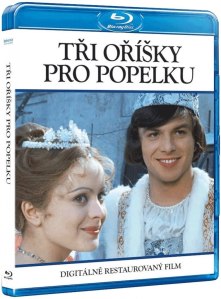
Three Wishes for Cinderella Blu Ray

Buy Three Wishes for Cinderella from Amazon HERE

Then in 2001 came DreamWorks’ Shrek. Based on William Steig’s children’s book, the project had been in development for several years, with names like Nicolas Cage and Chris Farley attached as the grumpy ogre, before the part eventually fell to Mike Myers. He trotted out his favourite Scor-tesh accent and Eddie Murphy tried to out-do the irreverence as his wisecracking donkey sidekick. Indeed, it felt like a movie entirely populated by comedy sidekicks and its approach initially seemed fresh, putting a spin on a variety of fairytale characters ranging from the Gingerbread Man to Puss in Boots (who got his own movie spinoff). Shrek was a massive hit and the concept of an earnest fairytale was pretty much lost…

Continue reading “Three Wishes for Cinderella (Tři oříšky pro Popelku) – Václav Vorlíček, 1973”

Cutting it Short (Postřižiny) – Jiří Menzel, 1980

Jiri Menzel Cutting it Short

It has taken two years to reach this point, but this article marks the 50th post on Czech Film Review. Since the first Czech film I saw was Jiří Menzel’s Closely Watched Trains, I thought it would be appropriate to mark the occasion by talking about another one of his films, Cutting it Short.

It’s yet another idyllic shaggy dog story based on a Bohumil Hrabal work, a rose-tinted yet ultimately kinky tale about the writer’s parents when they conceived the future literary legend. Set around the end of the First World War and shortly before the establishment of the first Czechoslovak Republic, it is a typically Menzelian joint lovingly satirizing small-town life, populated by a familiar bunch of cranks and oddballs.

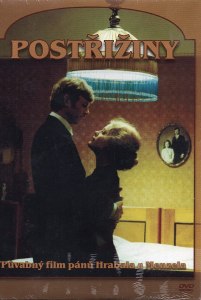
Postriziny DVD

Buy Cutting it Short from Amazon HERE

The story centres on Francin (Jiří Schmitzer), an earnest accountant who has been hired by the local brewery to get their books in order and take the business to the next level. He sets up home in a spacious apartment on the brewery premises with his free-spirited wife Maryška (Magdaléna Vášáryová, who played the eponymous Marketa Lazarová). She knows the way to a Czech guy’s heart, currying favour with the board of directors by slaughtering a pig and laying on a copious meat feast…

Continue reading “Cutting it Short (Postřižiny) – Jiří Menzel, 1980”

Ghoul (2015) – Petr Jákl

Found Footage Horror

This is the blurb on Netflix for Petr Jákl’s Ghoul:

“Three filmmakers investigating a story about cannibalism during a 1932 famine find themselves trapped in a haunted house after conducting a seance.”

Holy shit, I thought, this movie has it all… cannibalism! a haunted house! Seances! Directed by the action-packed former stuntman who gave us the hugely enjoyable Kajinek! How could I refuse?

Buy Ghoul from Amazon HERE

Unfortunately, despite its lurid premise, Ghoul doesn’t hit the spot quite as well. Jákl’s everything-including-the-kitchen-sink approach that worked so well in his wrongly accused hardman thriller works to the detriment of this by-the-numbers found-footage horror, bogging the movie down with evermore plot when we should be getting to the scares…

Continue reading “Ghoul (2015) – Petr Jákl”

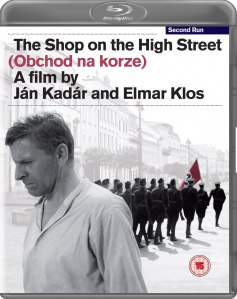
Czechoslovak Film Review: The Shop on Main Street (Obchod na korze) – Ján Kadár and Elmar Klos, 1965

The Shop on Main Street

“Of all my films, The Shop on Main Street touches me most closely. Elmar Klos and I usually work as equal partners, but in this case he left me a free hand. He knows that I am not thinking of the fate of all the six million tortured Jews, but that my work is shaped by the fate of my father, my friends’ fathers, mothers of those near to me and by people whom I have known. I am not interested in the outer trappings—figures, statements, generalizations. I want to make emotive films…”

– Ján Kadár, New York Herald Tribune, Jan 23 1966

With any major catastrophe resulting in the loss of human life, I often find it difficult to get my head around the numbers. Sometimes incidental details can help visualize the size of the tragedy. For example, after I first watched The Shop on Main Street and was pondering Kadár’s quote above, the official Coronavirus death toll in the UK had just passed 30,000. That’s roughly a capacity crowd at Portman Road in Ipswich, where I was a season ticket holder for ten years. So now I only had to imagine a packed stadium suddenly silenced forever to get to grips with the scale of the public health disaster/scandal in my country.

But six million? A quick Google search tells me that is approximately the entire population of Turkmenistan, which doesn’t really help comprehend the vastness of the Holocaust. And that is the brilliance of The Shop on Main Street – better than anything else I’ve seen on the subject, it narrows the focus down to two individuals and makes us feel personally involved in the horror of their circumstances. The 55-year-old Academy Award winner hit me hard, feeling as fresh and vital as any other film I’ve seen about the Holocaust in recent years.

Buy The Shop on Main Street from Amazon HERE

The Shop on Main Street wears its flawed greatness lightly, starting with a comedic tone and growing darker, building a sense of dread until its harrowing conclusion. And then… well, spoilers ahead: I’ll talk about that ending later…

Continue reading “Czechoslovak Film Review: The Shop on Main Street (Obchod na korze) – Ján Kadár and Elmar Klos, 1965”

Adelheid (1970) – František Vláčil

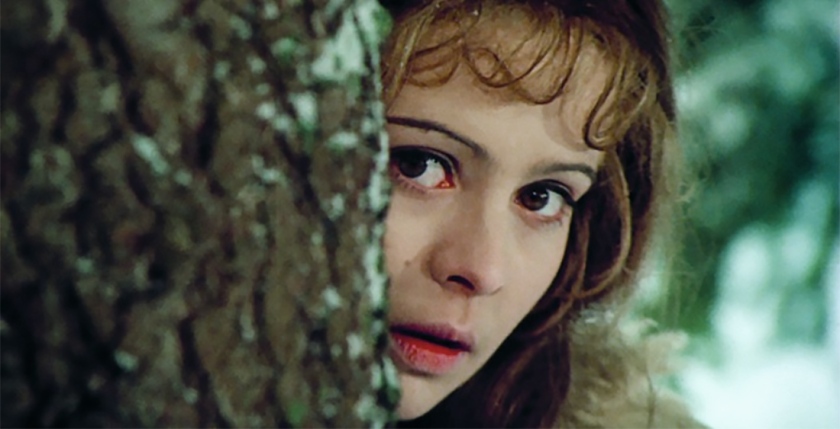
Petr Cepak in Adelheid

Shot in wintry hues, Adelheid is a tragic drama about two shellshocked, fatally star-crossed lovers who find each other amid the psychic fallout of World War II. It is the cinematic equivalent of curling up in front of the fire with a really good book.

The story opens in 1945, during the tumultuous expulsion of Germans from Czechoslovakia. The war may be over but it’s still a dangerous time, with lawlessness and banditry as the liberated country tries to find its feet again. Troubled Lieutenant Viktor Chotovick (Petr Čepek) arrives in a small town after spending the war moving from place to place, longing to return to his home country. He is treated with initial suspicion by Sergeant Hejna (Jan Vostrcil, a familiar face from Miloš Forman’s New Wave stuff, including Loves of a Blonde and The Firemen’s Ball). Turns out Viktor is in town with a job to do – he’s been assigned to catalogue and manage a large isolated mansion.

Adelheid DVD

Buy Adelheid from Amazon HERE

The assignment suits Viktor because he’s just trying to get his head together after the war. The mansion was formerly the home of a wealthy Jewish family before it was commandeered by a local Nazi party member, Heidenmann, who has been captured and taken to Olomouc to await execution. What Viktor isn’t told is that the mansion comes with a cleaner and a cook – Heidenmann’s daughter, Adelheid (Emma Černá), who is sent by Hejna to serve Viktor…

Continue reading “Adelheid (1970) – František Vláčil”

Witchhammer (Kladivo na čarodějnice) – Otakar Vávra, 1970

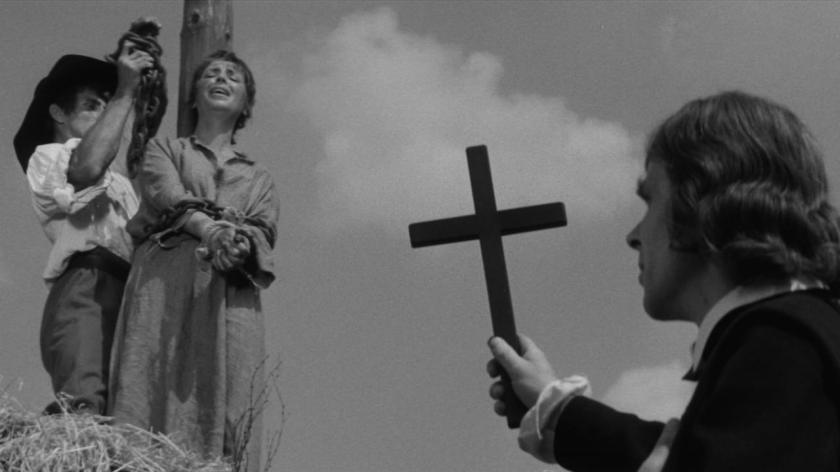
An innocent burnt at the stake in Witchhammer

“A woman’s womb is the gateway to Hell,” whispers a rabidly fanatical monk at the beginning of Otakar Vávra’s Witchhammer (Kladivo na čarodějnice), while we cut away to watch a group of women bathing nude.

It’s a provocative opening and, although Vávra had the Communist show trials of the 1950s in mind while making the film, it sets out its stall early: the problem is the patriarchy, and sexual repression goes hand-in-hand with political repression, a theme that is as depressingly relevant fifty years later. Or 300-odd years on from the events of the film. Same as it ever was.

Witchhammer Blu Ray

Buy Witchhammer from Amazon HERE

The film takes its title from the Malleus Maleficarum, a weighty 15th-century tome that details at length the procedures deemed necessary for dealing with witchcraft, including the methods of torture that were legally permissible for extracting confessions from the accused…

Continue reading “Witchhammer (Kladivo na čarodějnice) – Otakar Vávra, 1970”