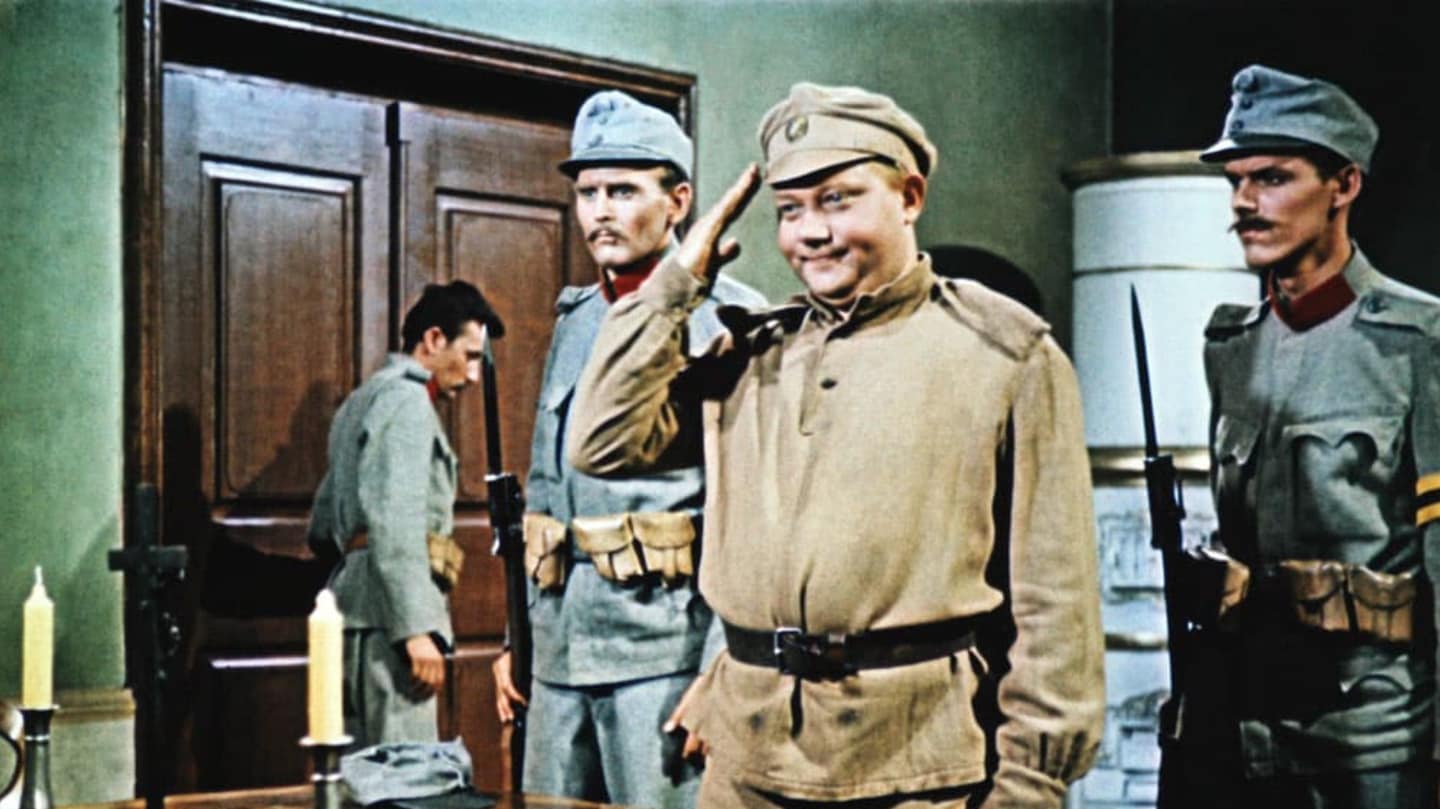
Happy End (Šťastný konec) – Oldřich Lipský, 1966

At the very least it will put a big dumb grin on your face, followed by a slight frown as you gaze into the middle distance trying to figure out whether it all adds up or not. Happy End sure beats the hell out of last year’s joyless Tenet, although when it comes to telling a story backwards, it doesn’t quite hit the heights of Memento or Eternal Sunshine of a Spotless Mind. Just seeing the bravura way in which Oldřich Lipský flourishes the reverse chronology trick is worth your time alone. Yet it is a stunt that offers a breezy blast of comic relief while exploring the classics of the Czech New Wave. Ultimately that is all Happy End is – a stunt, but a clever and often hilarious one.

As brilliantly as Lipský pulls it off, it does get a little tiring towards the end – or should I say the beginning? My brain kept trying to flip the backwards conversations around to track their normal course, and it made my head hurt after a while. The popular director of quirky classics like Lemonade Joe and Adele Hasn’t Had Her Dinner Yet had the sense to keep it short and sweet. Happy End clocks in at just 71 minutes and that is definitely a good thing.

Rounding out the main cast is Josef Abrhám as the shameless seducer, Mr Birdie, and formidable comic actress Helena Růžičková as our hero’s long-lost love. She has an innate knack for comic timing reminiscent of Madeline Kahn in those great Lipský-esque American comedies of around the same era – Blazing Saddles, Young Frankenstein and What’s Up Doc? Jaroslava Obermaierová is a good foil for Menšík as his radiant, fragile wife Julie, gliding through the slapstick elements with grace intact, looking like she’s enjoying herself as much as the audience…

Continue reading “Happy End (Šťastný konec) – Oldřich Lipský, 1966”

One Hand Can’t Clap (Jedna ruka netleská) – David Ondříček, 2003

After watching the deadly serious In the Shadow recently, I decided to go back and check out one of David Ondříček’s earlier, funnier ones and was pleasantly wrong-footed by One Hand Can’t Clap. It is an offbeat crime comedy that gets steadily weirder and sillier as it goes on, tempering the zaniness with the same kind of deadpan fatalism that was such a big feature of his previous hit, Loners.

Ondříček brought many of his Loners stars and crew along for this feature, and the continuity shows – the excellent cast seem completely at ease and totally onboard with the wacky material, written by the director with his two leads, Jiří Macháček and Ivan Trojan.

Macháček plays Standa, a good-natured but gullible loser who is talked into taking the fall after he is busted smuggling a lorry load of endangered birds. After a spell in prison and keeping shtum about the other parties involved in the crime, he meets up with his former boss Zdeněk (Ivan Trojan), the sinister owner of a swish vegetarian restaurant who has heinous plans for his illicit live deliveries. Zdeněk plans to compensate Standa for his time spent behind bars but the handoff is screwed up by Ondřej (Marek Taclík), a hapless store security guard who thinks he’s some kind of badass super cop.

Ondřej and Standa have become fast friends after they were both outwitted (it doesn’t take much) while trying to catch a shoplifter, and Ondřej’s efforts to help his newfound pal out usually end up making things much, much worse. After Standa is rescued from a near-drowning by two shroom-hunting women, he is convinced that he must bring Zdeněk to justice.

After our two halfwit heroes join forces with the girls, Andrea and Martina (Kristina Lukešová and Isabela Bencová), the clueless foursome go on an undercover caper in Zdeněk’s restaurant to unravel the mystery of the illegal rare animals…

Continue reading “One Hand Can’t Clap (Jedna ruka netleská) – David Ondříček, 2003”

The Good Soldier Švejk (Dobrý voják Švejk) – Karel Steklý, 1956

I once knew an indestructible drunk who had a natural talent for causing mischief, then watching the mayhem unfold with a look of cherubic innocence on his face. I shared a grotty Barrandov flat with him for a while. The place was pretty dismal so we spent most of our waking hours in the pub, where I often ended up scrambling to unravel his mess while he sat there with his eyes spinning in opposite directions, chuckling to himself.

It was around this time that I first tried reading The Good Soldier Švejk. There was a remarkable facial similarity between my chaotic flatmate and the novel’s author, Jaroslav Hašek, himself a noted pub denizen, who in turn looked a little like the bottle-nosed character in Josef Lada’s famous illustrations from the book. Over time I conflated the three, so now years later I feel like I once lived with the good soldier himself.

Buy your copy of The Good Soldier Svejk from Amazon HERE

It has taken me almost one hundred posts on Czech Film Review to pluck up the courage to write something about Karel Steklý’s 1956 adaptation, perhaps the most well-known film version of the novel. It’s a daunting task – Švejk is a cultural icon in his home country and one of the most successful Czech exports, with Hašek’s novel translated into over 50 languages. There are dozens -if not hundreds – of beer halls and restaurants across the country bearing his name, and his image is common from the gift shops of Prague to the farmer’s pub in the small Moravian village where I recently moved. The word “Švejk” has also become a catch-all for willfully incompetent, subversive behaviour, commonly linked with the type of passive resistance that the Czechs have relied on to endure the numerous wars and foreign occupations of the last few centuries…

Continue reading “The Good Soldier Švejk (Dobrý voják Švejk) – Karel Steklý, 1956”

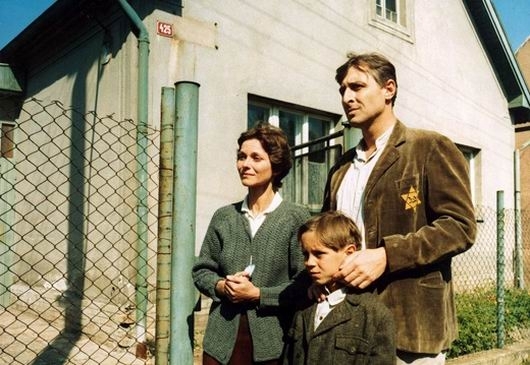
Forbidden Dreams (Smrt krásných srnců) – Karel Kachyna, 1987


Director Karel Kachyna (The Ear) gets his metaphors in early in Forbidden Dreams, otherwise known by its more evocative Czech title, Smrt krásných srnců (The Death of Beautiful Deer). Mr Popper (Karel Heřmánek), a Jewish vacuum cleaner salesman who can’t stop hopping into bed with his female customers, is out fishing in the countryside with his two eldest sons. Through his binoculars, he spots a herd of deer and he is struck by their beauty – but also spies danger threatening in the form of a hunting dog bearing down on the innocent creatures. 

The dog belongs to their grumpy uncle Karel (Rudolf Hrušínský), who loves getting his teeth into some freshly savaged venison. Mr Popper regards killing a deer as almost as bad as killing a human. Popper has no qualms about catching and eating fish, however, and his passion for carp is intertwined with his fortunes throughout the film.

The setting is pre-war Czechoslovakia, and Mr Popper is introduced as a resourceful chancer with a taste for the good life, although those tastes often run him into trouble. He is skint and the family is in debt to the butcher, grocer and the pub, but Popper thinks the latest Electrolux model he receives from Head Office in Prague will pretty much sell itself.

Buy your copy of Forbidden Dreams from Amazon HERE

Plying his trade in the villages, however, he finds that the locals aren’t too impressed with his new-fangled device. His luck changes when he rescues a drowning man with the help of the cable from one of his vacuum cleaners. The man turns out to be a rich benefactor, who buys a few units out of gratitude and throws a party so Popper can sell some more hoovers to his wealthy friends.

Suddenly flush, Popper starts splashing money around, treating the family and sending his sons for boxing lessons with a former champ. Life is good. Now bursting with confidence, Popper cooks up a variety of lucrative schemes to keep the cash rolling in.

Dark days lay ahead, though, as Czechoslovakia falls to the Nazis. Jewish salesmen aren’t in much demand in the protectorate and Popper suddenly finds himself out of work. He retreats to the countryside to sit out the war and live off his carp pond, but is soon driven to destitution by the new regime and must find ever-more risky ways to provide for his family…

Continue reading “Forbidden Dreams (Smrt krásných srnců) – Karel Kachyna, 1987”

3Grapes (3Bobule) – Martin Kopp, 2020

You can watch 3Grapes (3Bobule) HERE with our View on Demand partners Eyelet

The cinematic threequel is often a recipe for disappointment. The Jaws series had already jumped the shark before the third instalment fouled the water with its cheesy 3D money shots. Francis Ford Coppola waited 16 years before giving us a belated conclusion to The Godfather trilogy – it was an offer everyone was quite happy to refuse. Alien 3 has its defenders but it basically poured cold water over Ripley’s heroics in James Cameron’s rip-roaring second film, turning the franchise into a massive bummer.

Of course, there are some great ones too. Return of the King completed the coronation of Peter Jackson’s Award-festooned adaptation of The Lord of the Rings. On the indie circuit, Before Midnight capped off Richard Linklater’s much-loved trio of romantic walk-and-talks, while in the arthouse field Red was a magnificent conclusion to Krzysztof Kieślowski’s Three Colours trilogy.

So what would happen with 3Grapes, shuffling into theatres in the summer of 2020 after a false start due to the Covid-19 pandemic, eleven years after the previous film? Would it manage to recapture the light and fluffy chemistry of the good-natured original, or maybe carry on trying to raise the stakes like its woeful sequel?

The good news is that it certainly gets closer to the gentle comedy-drama of the first movie, but the attractive trio of central characters are now older, wiser and sadder, giving the film a more bittersweet feeling. Which is something to be thankful for after the lame shenanigans of part two.

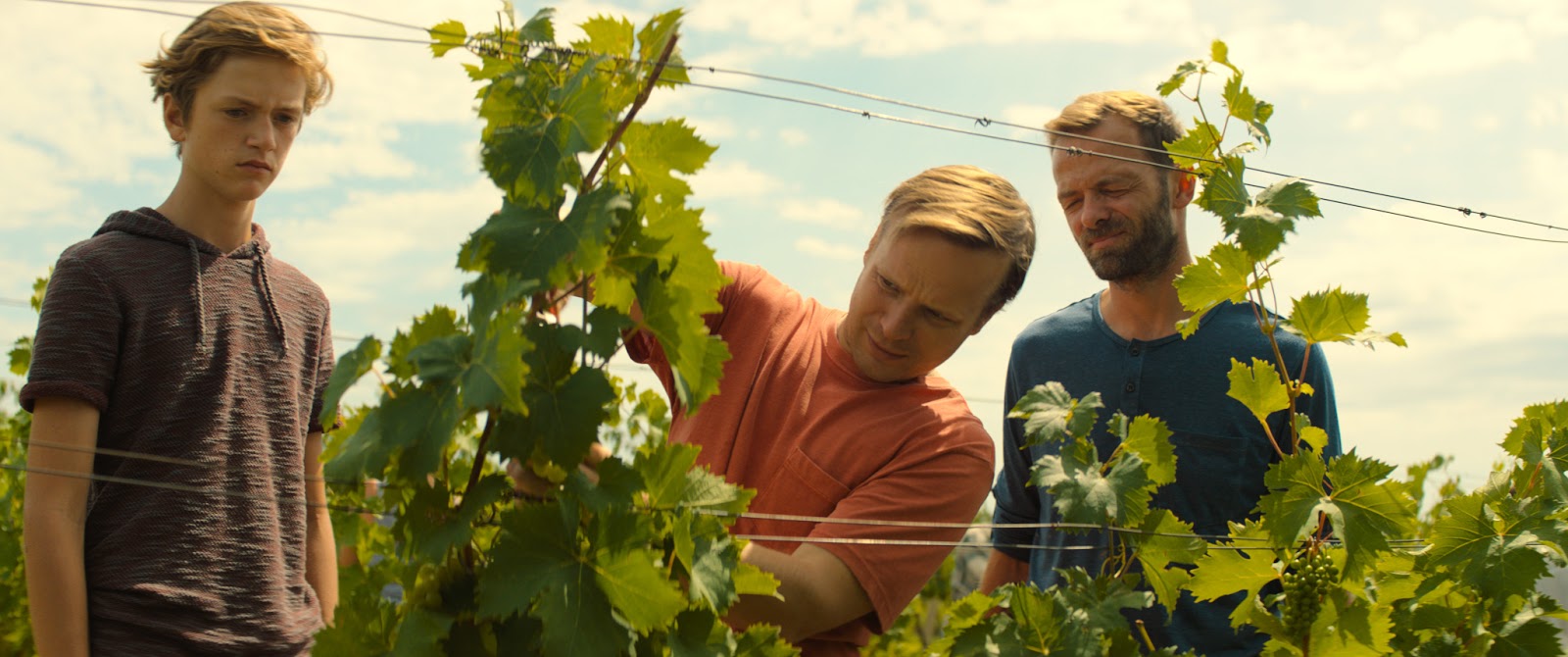
We pick up with Honza (Kryštof Hádek) and Klára (Tereza Ramba, née Voříšková) in Prague where they are picking up an award for their wine at a swanky ceremony. They are now the parents of two bright-eyed, mischievous tweens and have another kid on the way. Our formerly wayward hero has fully committed to the role of the hard-working vintner and respectable family man.

Yet before the credits have even rolled, his incorrigibly dodgy old pal Jirka (Lukáš Langmajer) has crashed the party disguised as a waiter to steal the first prize from another winemaker (Karel Roden in a blink-and-you’ll-miss-it cameo) and bring more trouble into Honza’s life…

Jirka once again heads to the South Moravian wine country with his best friend, this time with his mopey teenage son in tow, to find that domestic tensions are getting the better of the once happy couple. We learn that Klára’s father passed away a few months earlier, leaving her with a sizeable vineyard to manage, and the pressures of running a business and a family are putting a strain on their relationship. Money worries are piling up and there is a grape thief about, adding to their woes.

Jirka claims to be a famous land developer and has an answer to their problems, coming in the form of his “business partner” Miro who wants to buy up all their wine. We can tell he’s trouble right away because he rides into the movie on a black motorbike and wastes no time trying to seduce Klára. Needless to say, he has dastardly motives and a terrible hold over Jirka…

There is also another new character, an attractive, highly motivated South Moravian cop played by Lumíra Prichystalová. She is a little like Simon Pegg’s character in Hot Fuzz – a big fish in a small pond, wanting to catch bad guys while her bumbling partner just wants to catch a few Z’s. Unlike PC Nicholas Angel who is introduced with a snappy montage, Prichystalová is introduced by a gratuitous butt shot. Once that is out of the way, she acquits herself nicely as a sympathetic and intelligent police officer on the case of the grape thieves.

Regarding performances, the central trio of Hádek, Ramba and Langmajer all seem far happier and more engaged than they were in 2Bobule, and the screenplay is much kinder to Ramba this time around. In the previous movie, she was reduced to a nagging girlfriend stereotype, but she has much more to do here. We really feel for her, as a pregnant woman coming to terms with the loss of her father while financial troubles weigh heavily on her.

Grapes demands to be seen by absolutely no-one, but harking back to the character-based comedy-drama of the original film is a modest return to form for the lightweight franchise. As with the previous two movies, there are plenty of sunkissed scenic shots of the landscape around Pálava, which I found unexpectedly poignant after a year when most of us have spent a good deal of time stuck indoors thanks to the Coronavirus.

Perhaps that is the appeal of the Grapes movies. They are no great shakes dramatically, comically, narratively or cinematically, but they are comforting, reminding of us of good days spent outdoors with friends and loved ones, drinking wine or beer, enjoying a warm breeze and the sun on our upturned, smiling faces.

***

This article was originally published by the Prague Daily Monitor.

You can watch 3Grapes (3Bobule) HERE with our View on Demand partners Eyelet.


Pupendo – Jan Hřebejk, 2003

Polivka and Holubova in Pupendo

Apart from being a familiar face in many of the Czech movies I’ve watched over the past two years, Bolek Polívka is omnipresent in my adopted hometown Brno. He stars in public service videos on the trams and peers out of billboards advertising his latest stage performances and is often spotted drinking in the bar at his theatre, Divadlo Bolka Polívky.

His ubiquity also serves director Jan Hřebejk well in his hat trick of turn-of-the-century hits: Cosy DensDivided We Fall and Pupendo.

A bittersweet comedy set in the early ’80s, Pupendo makes an entertaining companion piece to Cosy Dens. They focus on life under Communism, centred around families headed by two very different men, both physically and ideologically…

Continue reading “Pupendo – Jan Hřebejk, 2003”

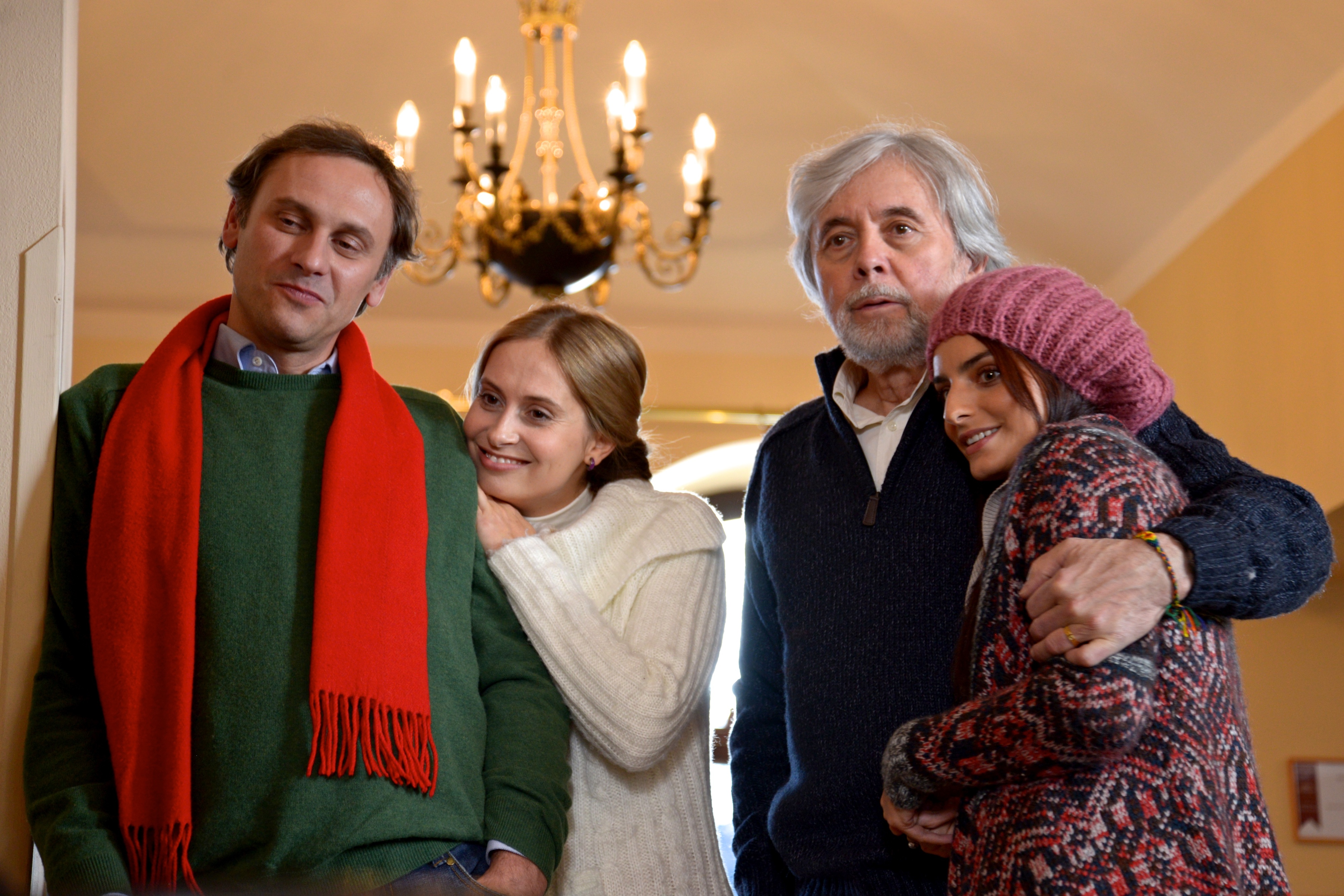
Little Baby Jesus (Prijde letos Jezísek?) – Lenka Kny, 2013

Here is the thing about Christmas films – most of them suck.  There are very few true classics, which is why I’m really glad that Die Hard has entered the conversation over the last couple of years. Not only is it an awesome movie, but it is also very Christmassy, once you come to accept it as a legitimate choice as a Christmas flick.

I’ve yet to feel any Christmas tingles this year, so I thought I’d check out some of the Czech festive offerings on Netflix to see if any of them would put me in the mood…

First on my list was Little Baby Jesus (Prijde letos Jezísek?), a romantic comedy from Lenka Kny. As someone leaning more towards Paganism, I’m wary of movies with the word “Jesus” in the title. It is often a sign of a wholesome Christian-themed message movie, and I avoid those like I tend to avoid S&M orgies in abandoned abattoirs. I know people are into both and that’s OK – it’s just not my cup of tea, that’s all.

Buy your copy of Little Baby Jesus from Amazon HERE

So I was about to flick past it to the next film when I saw that it stars veteran Czech actors Josef Abrhám and Libuše Šafránková. The latter was amazing in Three Wishes for Cinderella four decades earlier, perhaps the country’s most famous Christmas film. Would Little Baby Jesus be another festive classic on her resume?

Not exactly, but – I hate to say it – it does have its moments…

Continue reading “Little Baby Jesus (Prijde letos Jezísek?) – Lenka Kny, 2013”

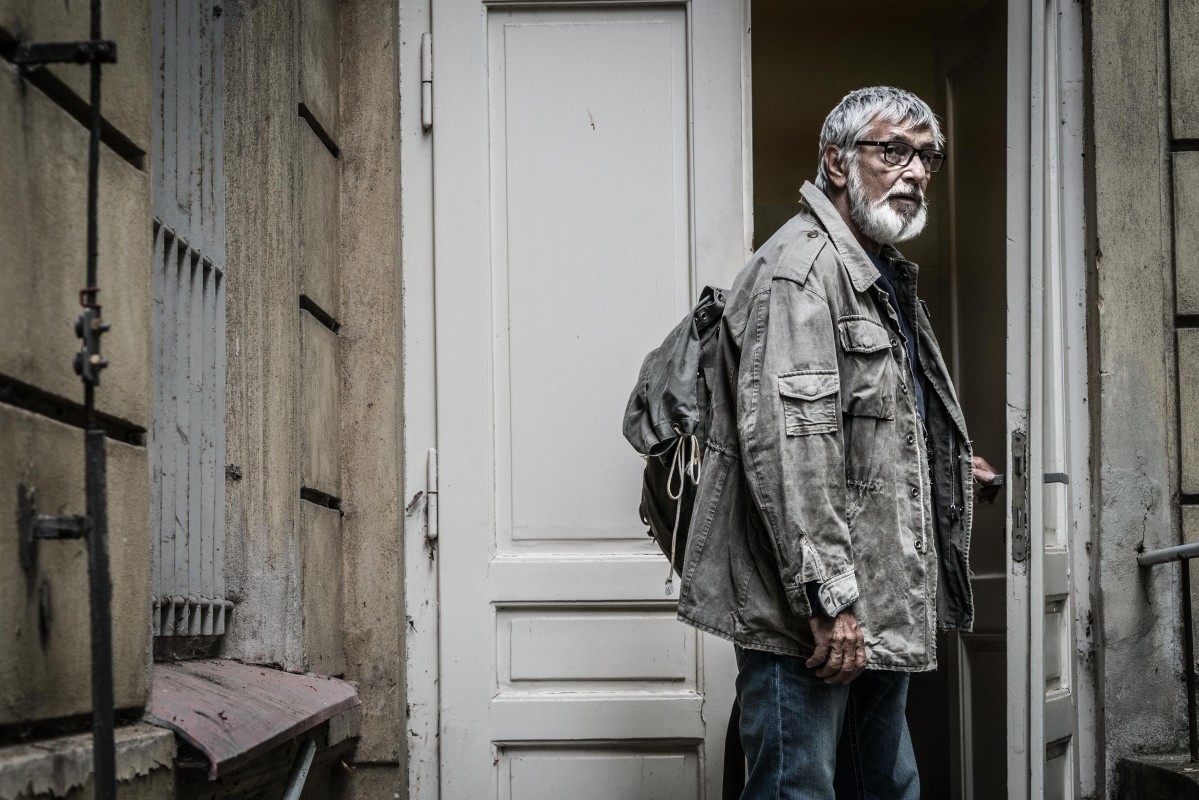
Tiger Theory (Teorie Tygra) – Radek Bajgar, 2016

Tiger Theory review

There is an old Les Dawson joke that goes like this: I said to the chemist, “Can I have some sleeping pills for my wife?” He said, “Why?” I said, “She keeps waking up.”

That is pretty much the attitude of the main character in Tiger Theory, Radek Bajgar’s dramedy about a sixty-something who finds an unconventional way of leaving his controlling wife.

Jan Berger (Jiří Bartoška) is a veterinarian. We first meet him as performs the snip on a tomcat, much to the gratitude of its female owner. It’s a none-too-subtle metaphor for the film’s central thesis, in that most of the male characters feel emasculated by their wives. The only guy who doesn’t has a problem with his sperm and possibly gets cheated on by his free-spirited wife, implying he’s not man enough to get the job done.

The film sets out its stall early, with Berger’s wife Olga (Eliška Balzerovádelivering a lecture to a group of students about the life expectancy of men. They drink more, smoke more and eat unhealthily, all of which affects their longevity. And it is the woman’s lot to keep control of their man’s worst impulses, she asserts.

For the men in Tiger Theory, this equates to endless nagging… Continue reading “Tiger Theory (Teorie Tygra) – Radek Bajgar, 2016”

Tomorrow I’ll Wake Up and Scald Myself with Tea (Zítra vstanu a opařím se čajem) – Jindřich Polák, 1977

Here’s an obscure piece of UK film folklore… 

One Saturday night in the early ’80s, a man goes home early from the pub to watch the football highlights on Match of the Day. He settles down in front of the TV with a fresh beer, but the broadcast hasn’t started yet. He turns over to see what’s on the other two channels and drops into a strange film about identical twins, time travel and Nazis.

He becomes so engrossed that he watches to the end, missing the footie. On Monday morning he goes to work and tells his mates about this peculiar film, but no-one knows what he’s talking about. He doesn’t know the title because he missed the start, and trying to elaborate on the plot just makes him sound crazy…

Continue reading “Tomorrow I’ll Wake Up and Scald Myself with Tea (Zítra vstanu a opařím se čajem) – Jindřich Polák, 1977”

On the Roof (Na střeše) – Jiří Mádl, 2019

Na střeše 2019

You can watch On the Roof (Na střeše) right HERE with our View on Demand partner Eyelet

There was a time when every pub and restaurant in Brno seemed to be competing for the title of the city’s best burger. Everyone I knew had an opinion on whose was top, and my own pick wasn’t too popular with pub-owner friends who prided themselves on their homemade patties. 

A new craze put paid to all that nonsense, and we partially have the country’s burgeoning Vietnamese community to thank for that – suddenly everyone was head-over-heels for Bún bò Nam Bô and Bánh mì sandwiches.

Vietnamese immigrants began settling in Czechoslovakia during the Communist era, arriving as guest workers invited by the government. Nowadays Vietnamese people make up the Czech Republic’s third-largest ethnic minority, after Slovaks and Ukrainians.

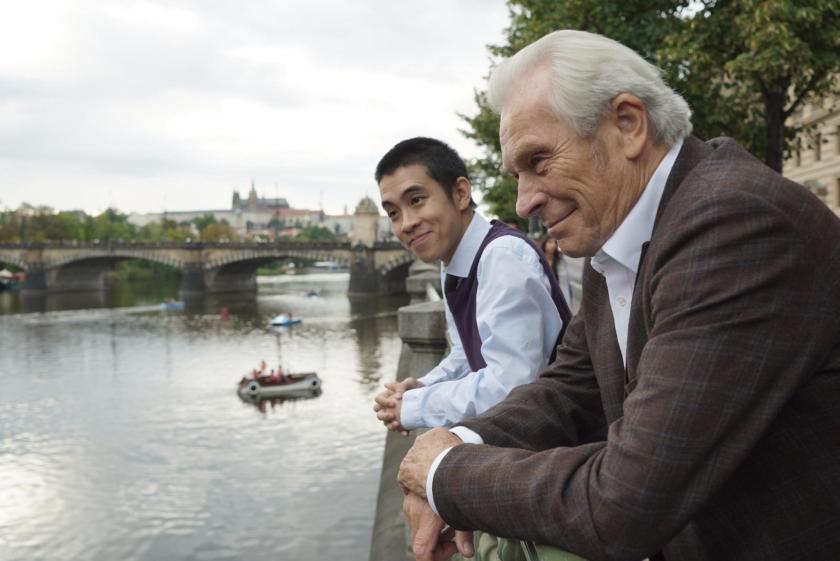
The first Czech film I’ve seen so far that touches upon the Vietnamese-Czech experience is Jiří Mádl’s On the Roof, a comedy-drama that focuses on the growing friendship between a lonely old man and a desperate young immigrant…

Alois Švehlík plays Antonín Rypar, a cantankerous retired professor living alone in his top floor apartment in Prague. He doesn’t have much time for people, and people aren’t too keen on him either – especially when they find out he was a communist during the soviet era. His wife left him a long time ago, taking their son with her, and he hasn’t heard from them in years – he’s isolated and regretful.

One day he pops up to the roof for a smoke and finds a distraught young Vietnamese guy, Song (Duy Anh Tran) getting ready to jump. Song has escaped from the marijuana farm where he was forced to work before it was raided by the police. Now homeless and on the run, Song is about to end it all. 

Antonín talks Song down and gives the hungry and frightened young man some food while treating him to his bigoted ideas. The old man is angry at the state of the world and thinks the answer to the country’s problems is to close the borders and prevent illegal immigrants from getting in, a view that will strike a topical nerve with audience members on both sides of the argument.

Despite this, Antonín begrudgingly enjoys Song’s company and offers him his spare room, in exchange for some free cleaning. He strikes upon the idea of finding Song a Czech bride so he can stay in the country legally, and the pair secretively turn their attention to the attractive young woman living across the hall…

On the Roof takes a bunch of modern social issues and lightly squeezes them into the shape of an odd-couple movie, which hits all the comedic and dramatic beats you’d expect. The pair are distrustful at first but soon start to benefit from each other – Antonín helps Song learn Czech, while Song teaches the old man how to use Facebook to woo their pretty neighbour. You see, friendship isn’t bound by age, race or language…

Then, just when I was about to write off On the Roof as an entertaining but formulaic movie, it pulled out a genuinely surprising and touching plot turn in the final act that left me grinning. I won’t give it away but if I was the type of reviewer to give star ratings, that one thing would be enough to upgrade this from a three-star movie to a four-star one.

On the Roof was originally intended as a vehicle for Jan Tříska (The Elementary School), who sadly died just before shooting began. Alois Svehlík stepped into the role of Antonín and he’s terrific. Irritable and defiant, Antonín is a man who knows his time is coming slowly to an end and isn’t happy about it all. While he’s a redoubtable character, his loneliness makes him strangely vulnerable and regret haunts his eyes. Svehlík plays him sternly without ever trying to make him seem like a loveable old gent.

Duy Anh Tran makes an interesting foil for Svehlík’s crotchety old-timer, giving an emotional, unguarded performance as Song. He’s scared and alone until his friendship with Antonín encourages him to slowly come out of his shell. 

The pair work off each other well and they manage to sell the film’s unlikelier elements, especially during the scenes when they’re trying to flirt with the neighbour without letting her know who’s doing the flirting. Together, the two actors make their character’s budding bromance worth rooting for – they are so good that I just wish they were in a better movie.

Don’t get me wrong, there’s nothing bad about On The Roof. In fact, it’s a perfectly enjoyable evening’s entertainment. It’s a decent watch, just be prepared to feel a little undernourished afterwards.

***

This article was first published by the Prague Daily Monitor.

If you enjoyed the review and now want to check out the movie, you can watch it HERE with our VOD partner Eyelet.