Indie Profiles: Valida Baba

Filmmaker Valida Baba
Photo credit: Jakub Hrab

Valida Baba is an Azeri filmmaker who has called Prague her home for the past eight years. She uses photography, poetry and dance in her short experimental films to explore her ideas about human relationships and existence. I spoke to her about her work, her influences and her experiences so far in the Czech capital.

Hey, so thanks for making time to speak with me! First off, can you tell me about your first impressions of Prague?

Well, when I was first accepted at FAMU to study photography, I didn’t even know that it was so famous for film and photo! But when I first arrived at the airport I got the feeling of coming home. Of course, Azerbaijan is my home too, but even when I travel abroad now I get the sense of coming home when I return to Prague, and it is such a deep feeling for me, you know?

How does Azerbaijan compare to the Czech Republic culturally?

They are not too similar culturally, because Azeri culture is more like Turkish. However, because we were also part of the Soviet Union we have Russian as a second language, so there are some Slavic influences there.

Prague has become almost synonymous with Hollywood blockbusters over the last few decades, but how does the city treat an indie filmmaker working on smaller projects?

When I was studying at FAMU I could see that there are lots of opportunities to make films here. However, there was always some divide between the Czech community and the foreign community, and I was so introverted to begin with that I found it hard to communicate. I love making films but it felt like there was a border I needed to cross before I could start working with people, which is why I originally did it independently. Then I realised that it’s hard to make a film by yourself, and much easier when you have a team of like-minded people all working towards one goal.

Generally, Czech people are open and willing to collaborate if you are willing to open up to them, so it was my problem to solve, how to be more outgoing with them. Now there are many female film producers coming through who are looking to work with female directors, so it’s easier to start working on a project and take it in the direction to want…

Continue reading “Indie Profiles: Valida Baba”

I Enjoy the World with You (S tebou mě baví svět) – Marie Poledňáková, 1982

As a writer dad, I enjoy observing the behaviour of other fathers at children’s cafes and play areas. There’s always the guy with his face stuck in his phone, oblivious to his offspring force-feeding a plastic pineapple to another kid. Then there’s the frazzled dad, gazing sadly into the middle distance as if trying to catch a glimpse of a parallel universe where he still doesn’t have children.

There’s the laddish dad, trying gamely to get involved with a beer in hand, giving it his best while also clearly wishing he was down the pub with his mates. Then there’s my favourite, the dad who starts eating a bag of Pom-Bar out of boredom or hunger, picks up speed, marvelling at how moreish they are until he’s stuffing whole fistfuls into his mouth, glancing around furtively to see if anyone has noticed him devouring his kid’s snack. I’ve often thought that the manufacturers of Pom-Bar should do an alternative grown-up packaging, like when there were adult covers for Harry Potter books, so dads could get stuck into a bag without feeling guilty or childish for enjoying them so much.

Buy I Enjoy the World with You from Amazon HERE

Of all the types of dad I observe in these situations, it’s very rare to see one committing to his role with as much gusto or joie de vivre as the three central characters in I Enjoy the World with You. It’s a relentlessly kind-hearted family film that was once voted the best Czech comedy of all time. And, while it didn’t exactly have me rolling around on the floor with laughter, it’s not hard to see why the movie is so enduringly popular…

Continue reading “I Enjoy the World with You (S tebou mě baví svět) – Marie Poledňáková, 1982”

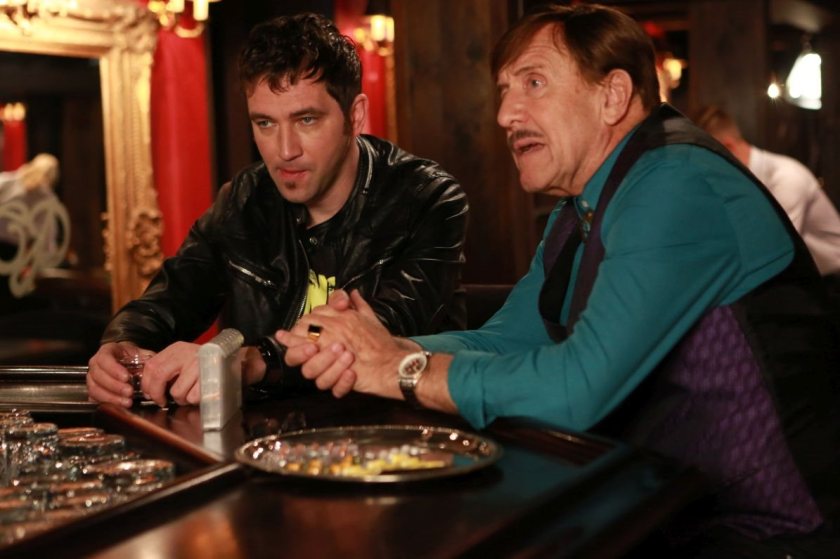
2Grapes (2Bobule) – Vlad Lanné, 2009

You can watch 2Grapes (2Bobule) HERE with our View on Demand partners Eyelet

Sequels often tend to go for bigger, faster, more. So what should we expect from 2Grapes (no, I don’t get the nonsense title either), the sequel to the mild romantic comedy hit Grapes?

I got to thinking about how the original film had at least three scenes that hinged on the explosive properties of burčák (young wine). So if we follow the bigger, faster, more model, what could be in store? Honza (Kryštof Hádek) returning to his criminal ways and using bottles of burčák to blow open a bank vault? Or perhaps converting his granddad’s battered old Citroen 2CV into a time machine, and using burčák to propel it to the 142kmh required to send it through time?

Continue reading “2Grapes (2Bobule) – Vlad Lanné, 2009”

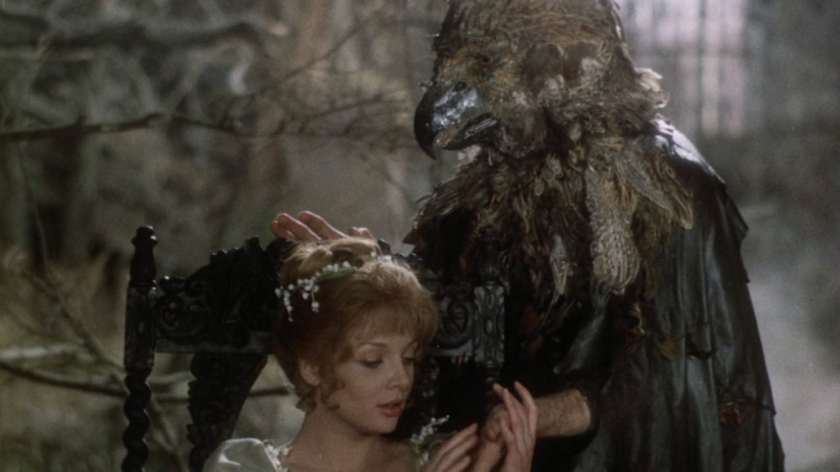
Beauty and the Beast (Panna a Netvor) – Juraj Herz, 1978

Panna a Netvor 1

From subterranean lairs beneath Paris opera houses to the belfries of Notre Dame, it’s a story we’ve heard time and time again. Here’s another version – boy is a giant ape from Skull Island who falls in love with a human girl; girl freaks out because the boy is a giant ape who’s carrying her around like a rag doll. Boy snaps a few dinosaur necks to protect her, and the girl suddenly realises he’s just a big sweetie inside. Girl goes back to New York and the boy is captured, goes on a rampage through the city. Boy finds girl again and drags her to the top of the Empire State Building, where gets shot down by some biplanes. Just in case the viewer missed the influence, the original King Kong concludes with the line: “Oh no, it wasn’t the airplanes. It was beauty killed the beast.”

The format first found widespread popularity in Gabrielle-Suzanne Barbot de Villeneuve’s 1740 fairytale, La Belle et la Bête, although the story itself can be traced to much older myths like Cupid and Psyche in the 2nd Century AD – hence the lyric “Tale as old as time” in the Disney version.

Buy Beauty and the Beast from Amazon HERE

Filmmakers were relatively late in making a movie version of the story, starting with Jean Cocteau’s revered La Belle et la Bête in 1946, widely regarded as the definitive film adaptation of the tale. Then, of course, there was the Disney version, a prized asset in the House of Mouse’s Renaissance in the 90s.

Before and since there have been many other adaptations, including Juraj Herz’s 1978 Panna a Netvor. With Herz, the mastermind behind The Cremator and Morgiana, in charge, it’s safe to say you’re not going to get any singing teapots in this version…

Continue reading “Beauty and the Beast (Panna a Netvor) – Juraj Herz, 1978”

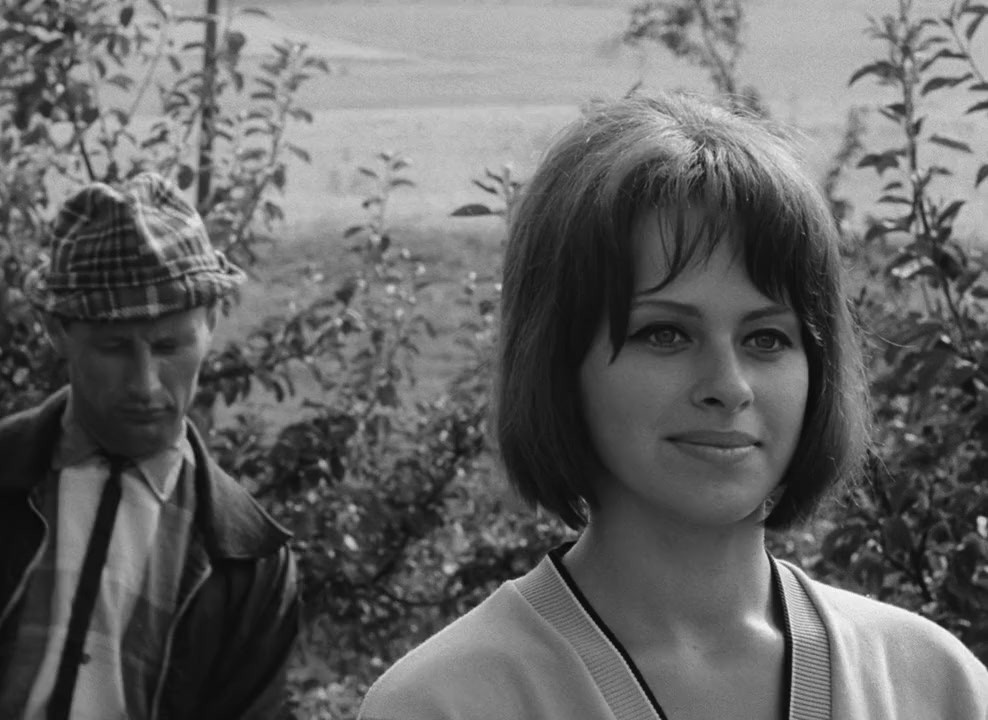
Intimate Lighting (Intimní osvetlení)- Ivan Passer, 1965

As many of you already know, 2020 has been the year of a number of misfortunes that have affected all of us. One of which was the passing of Ivan Passer, a prominent figure that helped establish the Czech New Wave movement. He worked as an assistant director for some of Miloš Forman’s earlier films like Black Peter and Loves of a Blonde, a film he also co-wrote along with The Firemen’s Ball. Before he and Forman moved to the United States, Passer managed to direct his first full-length feature in his homeland of Czechoslovakia, titled Intimate Lighting, which is widely considered to be his masterpiece.

Buy Intimate Lighting from Amazon HERE

The story centres around Bambas (Karel Blažek), a music teacher who invites his old friend Petr (Zdeněk Bezušek) to play as the soloist for an upcoming concert. Petr arrives at Bambas’ house accompanied by his young girlfriend, Stepa (Věra Křesadlová), where he meets Bamba’s wife, kids, and parents — who all live under the same roof. Much like Black Peter, the film focuses on individual moments in the lives of these characters as they go about their days. This might seem like there isn’t a lot going on, but that couldn’t be further from the truth. These moments actually give us insight into the lives of these characters and paint an earnest and realistic picture of domestic life…

Continue reading “Intimate Lighting (Intimní osvetlení)- Ivan Passer, 1965”

All My Good Countrymen (Všichni dobří rodáci) – Vojtěch Jasný, 1968

All My Good Countrymen cinematography

When people find out that I write about Czech movies, one of the questions they sometimes ask is: why are so many Czech films about the Communist era?

The example I always use is this: I’m from England, and such a large part of our national identity is defined by World War II, which lasted six years. Three iconic events from the conflict – Dunkirk, the Blitz, and the Battle of Britain – are still touchstones in our collective conscience and influence how we think of ourselves as a people. Even seventy-odd years later, nostalgia for the war played a part in the campaign to leave the European Union.

And, of course, we’re still making successful movies about it.

Buy All My Good Countrymen from Amazon HERE

Czechoslovakia, by comparison, spent over forty years in the clutches of a Communist regime, only to regain independence relatively recently. It’s little wonder that the period still exerts such a powerful hold on the Czech national psyche and is ingrained so deeply in the country’s culture. Not only that, but forty years is a long time, so even films that aren’t directly about it still have life under communism very present as background scenery. We can probably expect Czech cinema to go on exploring those decades of subjugation for many years to come…

Continue reading “All My Good Countrymen (Všichni dobří rodáci) – Vojtěch Jasný, 1968”

Return of the Prodigal Son (Návrat ztraceného syna) — Evald Schorm, 1967

Released in 1967 and directed by Evald Schorm, Return of the Prodigal Son centres around the mental health of an engineer named Jan (Jan Kacer) as he stays in a psychiatric ward following a suicide attempt. The film begins with a brief disclaimer: “The film you are about to see — in its plot, characters and setting — bears no resemblance to reality. It is only a play in which everything is distorted and exaggerated. Life isn’t like this.” Of course, this is meant to be a very tongue-in-cheek statement seeing as how the film is very much representing the existential dilemmas found in real life…

Continue reading “Return of the Prodigal Son (Návrat ztraceného syna) — Evald Schorm, 1967”

Zelary (Želary) – Ondřej Trojan, 2003

As sturdy and dependable as its rugged leading man, György Cserhalmi, Želary is a classy wartime romantic drama that scored an Academy Award nomination for Best Foreign Language Film in 2004. While the story suffers from over-familiarity, it earns its emotional payoff thanks to strong performances by an excellent cast and thoughtful direction by Ondřej Trojan.

The film opens in 1940s Nazi-occupied Prague as dapper surgeon Richard (Trojan) and his nurse/lover Eliška (Anna Geislerová) respond to an emergency call to save a seriously injured man. The patient requires an urgent transfusion and Eliška unquestioningly gives the much-needed blood.

Buy Zelary from Amazon HERE

Richard and Eliška are also part of the resistance, and when her attempt to run a message to a contact falls foul of the Gestapo, the whole network is suddenly in mortal danger. Richard hastily emigrates, leaving Eliška with forged papers, and a friend tells her that if she wants to escape detection she must assume a new identity and leave the city in the company of Joza (Cserhalmi), the man whose life she helped save…

Continue reading “Zelary (Želary) – Ondřej Trojan, 2003”

Food (Jídlo) – Jan Švankmajer, 1992

Svankmajer's Jidlo (Food)

Introducing Jan Švankmajer (Alice) to anyone always nets you a reputation for being a weirdo. From the word go, Food’s style is absurd and choppy, often very naturalistic, and more than a little risqué. But I think it’s well worth anyone’s time – so please indulge this weirdo as I talk about Švankmajer’s 1992 film Food and why it’s a lesser-known gem of Czech cinema.

Food contains three shorts films – breakfast, lunch, and dinner – that are thematically connected. They all contain some sort of food consumption (surprisingly) but there is often a twist that turns the simple daily rituals to downright bizarre affairs. In sixteen minutes, Food shows people who turn into machines, hungry diners devouring their clothes, and various kinds of gourmands digging into their own body-parts. So yeah, there’s a lot going on…

Continue reading “Food (Jídlo) – Jan Švankmajer, 1992”

Black Peter (Černý Petr) – Miloš Forman, 1964

Black Peter (1964) - Photo Gallery - IMDb

Recently, I’ve been reviewing films that dealt with more social and political issues, but this time around, I’m kind of glad to be reviewing a film that focuses on a much more easy-going subject: adolescence. Black Peter — the first feature-length film directed by one of the most celebrated filmmakers of Czech Cinema, Miloš Forman (Loves of a Blonde, The Firemen’s Ball) — focuses on the life of a young man named Petr (Ladislav Jakim) and his journey through adolescence.

Buy Black Peter from Amazon HERE

The film begins with Petr on his first day working at a supermarket. He is tasked to keep an eye on the customers and to make sure that they aren’t stealing any of the merchandise, but he is so oblivious to the concept of subtlety that he easily exposes himself. He then proceeds to follow a man he believes may have stolen some merchandise by walking right behind him. Unfortunately, he never really confronts him. This is an interesting way to convey just how young and inexperienced Petr is and how much he has yet to learn…

Continue reading “Black Peter (Černý Petr) – Miloš Forman, 1964”