Return of the Prodigal Son (Návrat ztraceného syna) — Evald Schorm, 1967

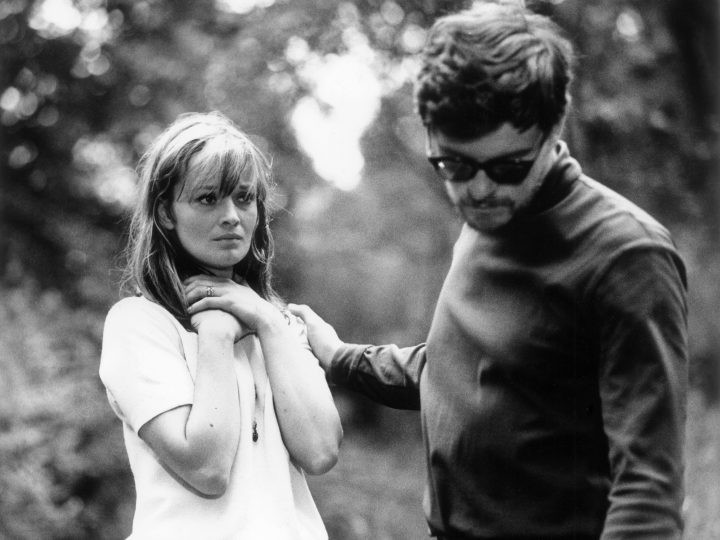
Released in 1967 and directed by Evald Schorm, Return of the Prodigal Son centres around the mental health of an engineer named Jan (Jan Kacer) as he stays in a psychiatric ward following a suicide attempt. The film begins with a brief disclaimer: “The film you are about to see — in its plot, characters and setting — bears no resemblance to reality. It is only a play in which everything is distorted and exaggerated. Life isn’t like this.” Of course, this is meant to be a very tongue-in-cheek statement seeing as how the film is very much representing the existential dilemmas found in real life…

Continue reading “Return of the Prodigal Son (Návrat ztraceného syna) — Evald Schorm, 1967”

Zelary (Želary) – Ondřej Trojan, 2003

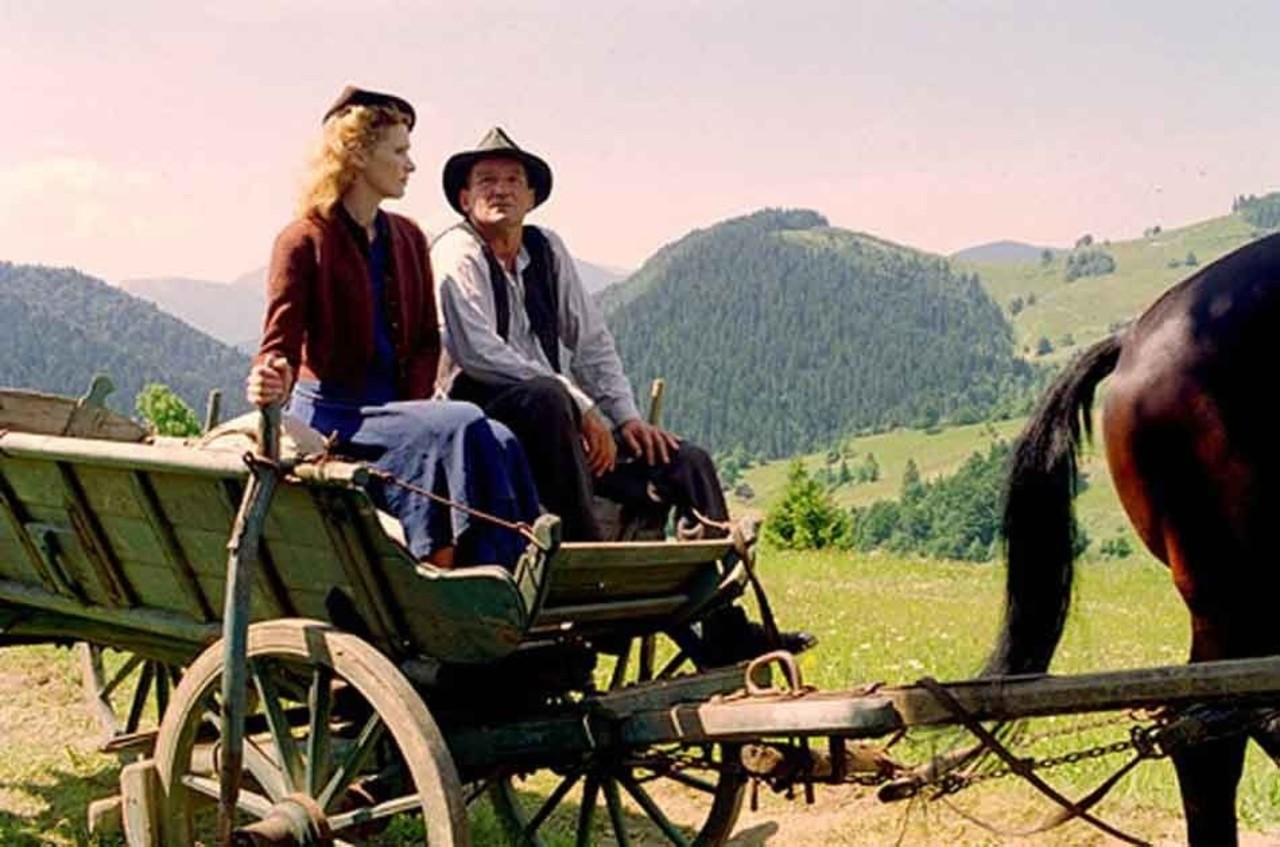
As sturdy and dependable as its rugged leading man, György Cserhalmi, Želary is a classy wartime romantic drama that scored an Academy Award nomination for Best Foreign Language Film in 2004. While the story suffers from over-familiarity, it earns its emotional payoff thanks to strong performances by an excellent cast and thoughtful direction by Ondřej Trojan.

The film opens in 1940s Nazi-occupied Prague as dapper surgeon Richard (Trojan) and his nurse/lover Eliška (Anna Geislerová) respond to an emergency call to save a seriously injured man. The patient requires an urgent transfusion and Eliška unquestioningly gives the much-needed blood.

Buy Zelary from Amazon HERE

Richard and Eliška are also part of the resistance, and when her attempt to run a message to a contact falls foul of the Gestapo, the whole network is suddenly in mortal danger. Richard hastily emigrates, leaving Eliška with forged papers, and a friend tells her that if she wants to escape detection she must assume a new identity and leave the city in the company of Joza (Cserhalmi), the man whose life she helped save…

Continue reading “Zelary (Želary) – Ondřej Trojan, 2003”

Food (Jídlo) – Jan Švankmajer, 1992

Svankmajer's Jidlo (Food)

Introducing Jan Švankmajer (Alice) to anyone always nets you a reputation for being a weirdo. From the word go, Food’s style is absurd and choppy, often very naturalistic, and more than a little risqué. But I think it’s well worth anyone’s time – so please indulge this weirdo as I talk about Švankmajer’s 1992 film Food and why it’s a lesser-known gem of Czech cinema.

Food contains three shorts films – breakfast, lunch, and dinner – that are thematically connected. They all contain some sort of food consumption (surprisingly) but there is often a twist that turns the simple daily rituals to downright bizarre affairs. In sixteen minutes, Food shows people who turn into machines, hungry diners devouring their clothes, and various kinds of gourmands digging into their own body-parts. So yeah, there’s a lot going on…

Continue reading “Food (Jídlo) – Jan Švankmajer, 1992”

Black Peter (Černý Petr) – Miloš Forman, 1964

Black Peter (1964) - Photo Gallery - IMDb

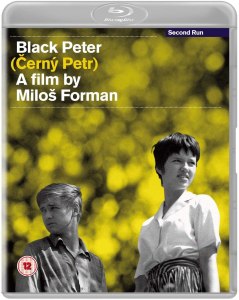
Recently, I’ve been reviewing films that dealt with more social and political issues, but this time around, I’m kind of glad to be reviewing a film that focuses on a much more easy-going subject: adolescence. Black Peter — the first feature-length film directed by one of the most celebrated filmmakers of Czech Cinema, Miloš Forman (Loves of a Blonde, The Firemen’s Ball) — focuses on the life of a young man named Petr (Ladislav Jakim) and his journey through adolescence.

Buy Black Peter from Amazon HERE

The film begins with Petr on his first day working at a supermarket. He is tasked to keep an eye on the customers and to make sure that they aren’t stealing any of the merchandise, but he is so oblivious to the concept of subtlety that he easily exposes himself. He then proceeds to follow a man he believes may have stolen some merchandise by walking right behind him. Unfortunately, he never really confronts him. This is an interesting way to convey just how young and inexperienced Petr is and how much he has yet to learn…

Continue reading “Black Peter (Černý Petr) – Miloš Forman, 1964”

Something Different (O něčem jiném) — Věra Chytilová, 1963

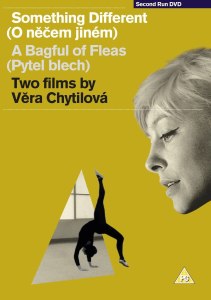
Written and directed by avant-garde filmmaker Věra Chytilová (Daisies, The Inheritance or Fuckoffguysgoodday), Something Different tells the story of the lives of two women: Eva Bosáková, a real-life gymnast training for her final performance, and Vera (Vera Uzelacová), a fictional housewife who lives an unfulfilled life. The film presents a nuanced look into the worlds of both women as they face the daily challenges that life brings upon them.

The opening sequence features Eva performing her routine until it cuts away to reveal that Vera’s son is watching it on TV. The film then intercuts between the lives of both women as they go about their everyday life. While one might assume that Eva’s life might be more interesting than Vera’s, I found myself equally invested in both stories. A lot of Eva’s days are spent practising for her final performance, while Vera’s days are consumed by housework as she raises her son at the same time—an equally exhausting balancing act. 

Buy Something Different from Amazon HERE

Eva strives for perfection but is sometimes unsure of her own abilities, while Vera is unsatisfied with her marriage and has a hard time taking care of her hyperactive son. Her husband barely pays any attention to her and would rather spend his time reading the newspaper. He tells her he does this because he can only read it after work, to which Vera replies, “my work is never done.” He also says he’s saving money for a car, which means Vera can’t buy anything for herself. This is frustrating for her as she also spends her days working, but never receives anything in return. This leads to her having an affair with a man she meets while buying groceries…

Continue reading “Something Different (O něčem jiném) — Věra Chytilová, 1963”

Barefoot (Po strništi bos) – Jan Svěrák, 2017

Barefoot 2017 Sverak

Prequels are, by and large, one of the most pointless things in cinema. By their very nature they lack much dramatic thrust, as we already know where the story will end up. Over the past few decades, prequels have also become synonymous with major studios cashing in on profitable intellectual properties, often ruining the mystique of the original film or films. The very word “prequel” is capable of setting a certain type of Star Wars fan into a fit of rage…

In a very modest field, Barefoot (Po strništi bos) stands out as one of the better prequels available for your delectation. At first it seems like a slender prospect, arriving a full 26 years after Zdeněk and Jan Svěrák’s Oscar-nominated crowdpleaser, The Elementary School (Obecná škola). Delightful though that movie was, it favoured nostalgic, anecdotal comedy and doesn’t seem like the obvious choice for prequel treatment.

Buy Barefoot from Amazon HERE

However, if you ever wondered what the kid in The Elementary School got up to during the death throes of World War II – that is, literally a year or two before the events of the original movie – then Barefoot will answer all your burning questions…

Continue reading “Barefoot (Po strništi bos) – Jan Svěrák, 2017”

3 Seasons in Hell (3 Sezony V Pelke) – Tomás Masín, 2009

Hadek in 3 Seasons in He'll

My curriculum was packed with boring subjects when I was at school. Maths was always a chore, chemistry was just soul-crushing, and history was the biggest snooze. For three years we sat in the same brown dusty classroom full of brown dusty books, listening to the teacher drone on. He was a pale gingery man who resembled the Gestapo agent in Raiders of the Lost Ark, and always wore a brown suit that looked like it was tailored from a rest home carpet. We only ever seemed to study World War I and II, without ever finding out any of the larger context surrounding the conflicts.

It was only after I left school and started reading up on things by myself that I came to wonder: how does anyone make a subject like World War II boring? On paper, it’s like the synopsis of the greatest, most exciting war movie ever made. I realized that it wasn’t the subject that was boring, it was the teacher. It’s the way you tell ’em, I suppose.

On paper, 3 Seasons in Hell sounds like pretty suspenseful stuff. Opening in 1947 Czechoslovakia, we follow a young nonconformist poet who falls in with a Bohemian crowd, just as the Communist regime seizes control of the country and starts clamping down on intellectual and subversive activities that don’t suit their agenda. Our arrogant young hero soon finds himself in increasing danger…

Continue reading “3 Seasons in Hell (3 Sezony V Pelke) – Tomás Masín, 2009”

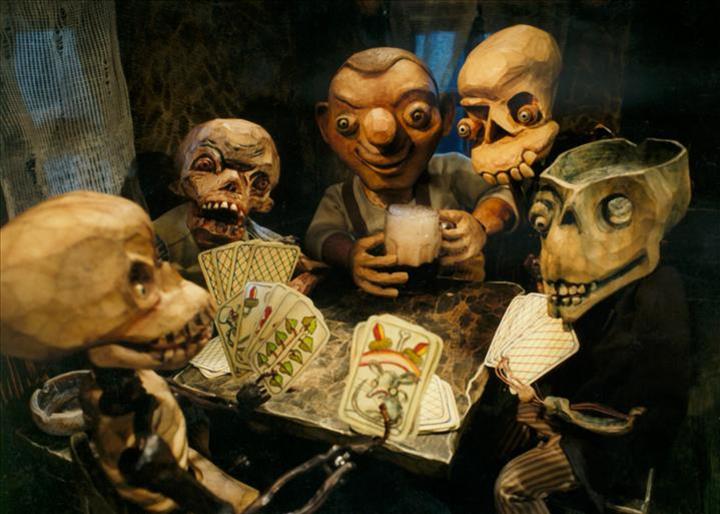
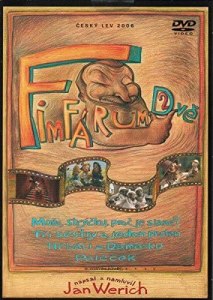
Jan Werich’s Fimfárum (Fimfárum Jana Wericha) – Vlasta Pospíšilová and Aurel Klimt, 2002

Fimfarum Jana Werich
One ČSFD (Czech IMDb) reviewer reports that the lesson they learned from watching Fimfárum Jana Wericha is the following: if you’re a drunk unable to provide for your family or take care of your farm, offer your son to the devil and then use a homeless woman to get him back. And they’re not even reading anything into it. 
 
Buy Jan Werich’s Fimfárum from Amazon HERE
 

Fimfárum is one of those strange collections of stories that don’t like simple answers in life. The original book, written and later recorded on tape by Jan Werich in the 1960s, included 21 fairy tales, most of which are absurd or downright bizarre. The 2002 film adaptation didn’t have an easy task translating the light humour, ambiguous moral messages, and beautiful use of the Czech language to the big screen, but they nailed it!

Continue reading “Jan Werich’s Fimfárum (Fimfárum Jana Wericha) – Vlasta Pospíšilová and Aurel Klimt, 2002”

The Inheritance or You Shouldn’t Say That (Dědictví aneb Kurva se neříká) – Robert Sedláček, 2014

Bolek Polivka as Bohus

You can watch The Inheritance or You Shouldn’t Say That (Dědictví aneb Kurva se neříká) right HERE with our View on Demand partner Eyelet

Later this year, Keanu Reeves and Alex Winter will appear in Bill & Ted Face the Music, almost thirty years after their last outing as the airheaded rockers, Wild Stallyns. Reeves can seemingly do no wrong these days but the omens and the trailer don’t look good.

Alex Winter may have had a quiet couple of decades career-wise, but Reeves has become a cultural icon, the internet’s favourite celebrity nice guy, and has been kicking ass well into his fifties and making it look easy in the John Wick movies. So why does he need to give a belated victory lap as the character that helped make him a huge star? It rarely fares well.

Take a look at Dumb or Dumber To. Or rather, don’t. Jim Carrey and Jeff Daniels had built well-respected, award-winning careers before they put another shrimp on the barbie and reprised their roles as the childish, dim-witted Lloyd Christmas and Harry Dunne. It worked when they were younger, but seeing two middle-aged men behave in such a way was just pathetic, and even a little bit creepy…

Continue reading “The Inheritance or You Shouldn’t Say That (Dědictví aneb Kurva se neříká) – Robert Sedláček, 2014”

Three Wishes for Cinderella (Tři oříšky pro Popelku) – Václav Vorlíček, 1973

Libuse Sanfrankova as Cinderella

Let’s face it – most modern film versions of fairytales suck.

The pervasive obsession with postmodern spins on these timeless tales is largely to blame, and one big green grumpy ogre has been the chief culprit over the past twenty years or so.

The trend started much earlier though, with The Princess Bride in 1987. It wasn’t a hit at the box office but built a devoted cult following and, while it pokes fun at fairytales, it felt like an affectionate tribute and still had a magic of its own.

The real groundwork for the genre’s ultimate destruction came with Robin Williams’ motormouthed genie in Aladdin five years later. The classic Disney comedy sidekick had been around for many years, but it wasn’t until his livewire performance put a jolt into the tired House of Mouse formula that the postmodern take on a classic tale really took hold. Although the film was ostensibly set in ancient Arabia, the genie was a burst of irreverent, anachronistic energy, riffing on cars, quiz shows and submarines while firing off impressions of Groucho Marx and Jack Nicholson.

Three Wishes for Cinderella Blu Ray

Buy Three Wishes for Cinderella from Amazon HERE

Then in 2001 came DreamWorks’ Shrek. Based on William Steig’s children’s book, the project had been in development for several years, with names like Nicolas Cage and Chris Farley attached as the grumpy ogre, before the part eventually fell to Mike Myers. He trotted out his favourite Scor-tesh accent and Eddie Murphy tried to out-do the irreverence as his wisecracking donkey sidekick. Indeed, it felt like a movie entirely populated by comedy sidekicks and its approach initially seemed fresh, putting a spin on a variety of fairytale characters ranging from the Gingerbread Man to Puss in Boots (who got his own movie spinoff). Shrek was a massive hit and the concept of an earnest fairytale was pretty much lost…

Continue reading “Three Wishes for Cinderella (Tři oříšky pro Popelku) – Václav Vorlíček, 1973”