Capricious Summer (Rozmarné léto) – Jiří Menzel, 1967

Unlike where I come from in England, we tend to get long hot summers here in the Czech Republic. The good weather sets in towards the end of April and usually runs through until late September. It’s my ninth summer here now and each year, sometime around late August, when the nights are drawing in and there’s a breath of autumn on the breeze, I’m always struck by a bittersweet feeling. It’s a sense of longing and loss and melancholy, a sensation that has intensified as the years ticked down towards my 40th birthday. Somewhere inside I sigh and think, “Well, that’s another year over.” Followed by a nasty little whisper at the back of my mind, “How many good summers have you got left?”

That bittersweet feeling is captured so beautifully by Jiří Menzel’s Rozmarné Léto. I first saw it very early after we arrived to live in the Czech Republic, and initially I was quite dismissive of it. I hadn’t adjusted to the rhythm and pace of Czech films and to me it felt like a pilot for a sitcom, mainly because of its surface similarity to the long-running British comedy series, Last of the Summer Wine, which followed the shenanigans of three retired blokes in a small town in northern England.
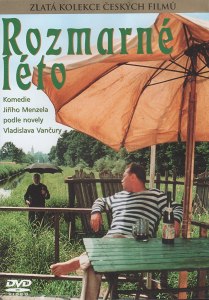
Capricious Summer DVD

Buy Capricious Summer from Amazon HERE

Rozmarné Léto is a perennial favourite in the Czech Republic. It is Menzel’s follow up to his Oscar-nominated Ostře Sledované Vlaky (Closely Watched Trains), adapted from the novel by Vladislav Vančura. It’s a gentle yet neatly observed bedroom face about three old friends whose comfortable boredom is disrupted when a travelling acrobat rolls into town, and each one’s trousers are set a-rustling by his beautiful young assistant.

Continue reading “Capricious Summer (Rozmarné léto) – Jiří Menzel, 1967”
Daisies (Sedmikrásky) – Věra Chytilová, 1966

Surrealist and Avant-Garde films aren’t always the most popular choice for the average moviegoer. Until Leos Carax’s demented Holy Motors generated some outside-bet Oscar buzz a few years ago, I’d rather watch a compilation tape of hairy builders receiving a back, sack and crack before dabbling with the avant-garde.

My perspective has changed slightly since then, largely on the basis of Denis Lavant’s incredible (literally) balls-out multiple performances in that movie, and two of my favourite films of the past few years are of the avant-garde variety – Dziga Vertov’s hypnotic portrait of a city in Man with a Movie Camera, and Věra Chytilová’s playful yet provocative Daisies.

Daisies Blu Ray

Buy Daisies from Amazon HERE

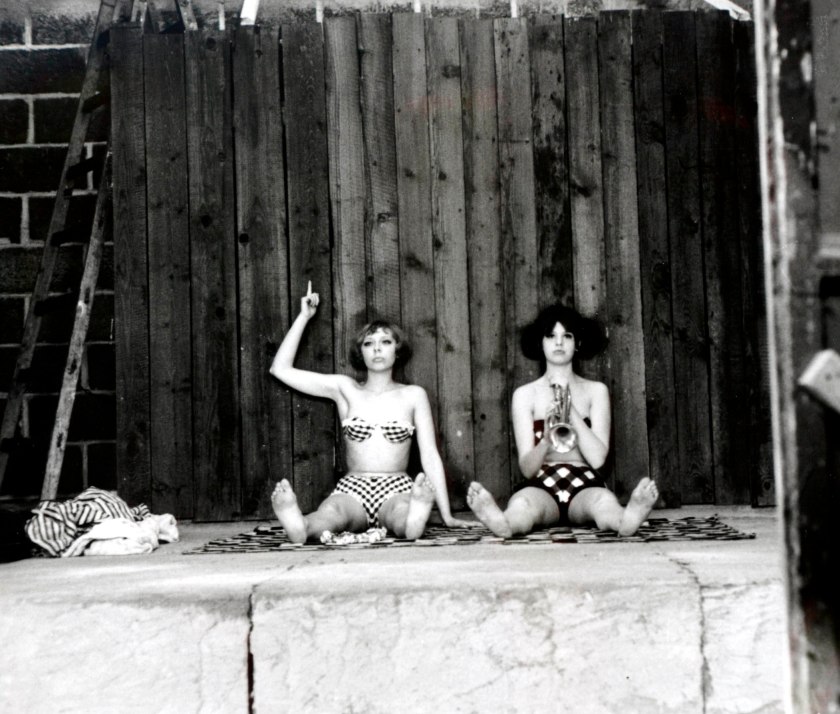
A cornerstone of the Czech New Wave, Daisies tells of two young women, known as Marie I (Jitka Cerhová) and Marie II (Ivana Karbanová), who declare that they are broken and in that case, they might as well be bad…

Continue reading “Daisies (Sedmikrásky) – Věra Chytilová, 1966”

Cosy Dens (Pelíšky) – Jan Hřebejk, 1999

You can watch Cosy Dens (Pelíšky) right HERE with our View on Demand partners Eyelet.

Last year when I was trying to figure out which movies made Czechs laugh the most, I asked 100 people to name their favourite Czech comedy. I was expecting the perennial favourite Pelíšky (Cosy Dens) to come up a few times, but it absolutely romped home with 25% of the vote.

I guess it’s not hard to see why. Early in my days of watching and reviewing Czech films it was my first truly five star pick, an hugely satisfying tragicomedy set in the months prior to the Prague Spring in 1968. Offering laughs and robust family drama, it also features a gallery of wonderful performances from a formidable cast of Czech and Slovak stars.

The picture opens in the winter of ’67, and lovelorn teenager Michal  Šebek (Michael Beran) wants to end it all. He is hopelessly in love with his upstairs neighbour Jindřiška (Kristýna Nováková). The trouble is, she is going out with his much cooler mate Elien (Ondřej Brousek), who gets all the latest movies, music and fashion from his parents living in the States.

To make matters worse, her father, Mr Kraus (Jiří Kodet) is a rabid anti-communist  war hero who often has flaming rows with Michal’s dad. Mr Šebek (Miroslav Donutil, The Inheritance or Fuckoffguysgoodday) is a staunch supporter of the Communist government, an army officer so petty and regimented that he types out a weekly menu for his family…

Continue reading “Cosy Dens (Pelíšky) – Jan Hřebejk, 1999”

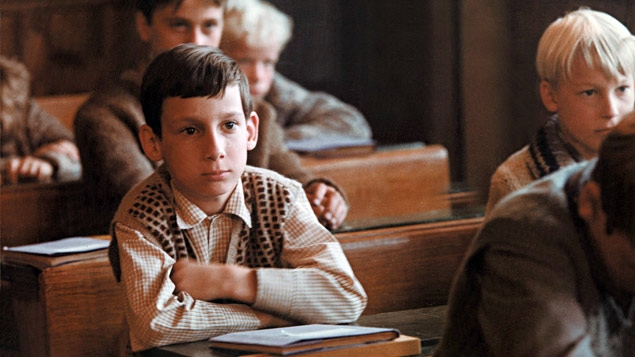
The Elementary School (Obecná škola) – Jan Svěrák, 1991

Living here in Brno, Czech Republic, I’ve spoken to many other expats over the years about Czech film. Most don’t watch them – sure, they’ve seen a few of the biggies, but generally people don’t bother unless they have to. They tend to find them slow, boring and difficult to engage with, and Czech humour doesn’t seem to translate well on film – to those not on the right wavelength (and I include myself in that category), it tends to be a little too bitter and deadpan, or too broad and nostalgic.

As a Brit, the former usually works better for me, as our own humour tends toward the straight-faced and understated, whereas the broadest excesses of Czech comedy reminds me more of the bawdiness of our 70s sex farces.

Obecna Skola Blu Ray

Buy The Elementary School Blu Ray from Amazon HERE

The Elementary School (Obecná škola) is a sweet-natured coming-of-age tale set just after WWII, “after the Fascists have been defeated, and before the Communists have won.” It swings towards the broad and nostalgic end of the Czech comedy spectrum, but is a genuinely funny movie. Oscar-winning director Jan Svěrák (Kolja, Dark Blue World) demonstrates a deft touch for slapstick and draws excellent comic performances from his small cast.

Continue reading “The Elementary School (Obecná škola) – Jan Svěrák, 1991”

Nowhere in Moravia (Díra u Hanušovic) – Miroslav Krobot, 2014

Miroslav Krobot’s morosely funny Nowhere in Moravia is a downbeat portrayal of small lives, set in a tiny village where life takes forever.

The opening hours of the local hospoda marks the passing of time, and there are two main ways out – by bus and by coffin. Buses aren’t very frequent, so the villagers eat, drink and screw the days away until death finally comes along to relieve them of their boredom.

If you think that sounds pretty grim, then you’re right – it is.

Having said that, I laughed far more during Nowhere in Moravia than I do in most mainstream American comedies these days, and there is much joy to be had from the bric-a-brac of ordinary life tucked in the corners of cinematographer Jan Baset Střítežský’s gorgeous compositions.

Some of the more farcical elements could be straight from the pages of Hrabal, and a thread of small-town ennui traces back at least as far as Rozmarné léto (Capricious Summer)although the bittersweet fatalism of Menzel’s work curdles into outright pessimism in Krobot’s film debut.

Continue reading “Nowhere in Moravia (Díra u Hanušovic) – Miroslav Krobot, 2014”

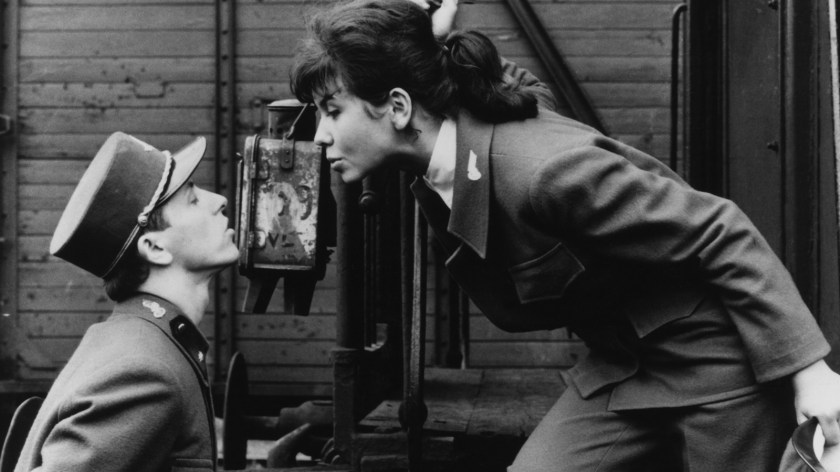
Closely Watched Trains (Ostře sledované vlaky) – Jiří Menzel, 1966

Jiří Menzel’s Closely Watched Trains (Ostře sledované vlaky) is probably one of the best known Czech films beyond the country’s borders, having won the Oscar for Best Foreign Language Film in 1968. Adapted from Bohumil Hrabal’s slender novel, it was also the first Czech movie I saw by a long way, years before the idea of even visiting the country crossed my mind, let alone immigrating here.

I was pretty underwhelmed on first viewing – it was when I was first getting heavily into film, after the treble-whammy of Pulp Fiction, Seven and Trainspotting first made me conscious that there was a director behind the camera making decisions resulting in the movie I saw up there on the big screen.

Closely Observed Trains Blu Ray

Buy Closely Watched Trains from Amazon HERE

I could handle the nonlinear structure of QT’s early efforts, but struggled a bit with the rhythm and pace of my first Czech movie – having been brought up on a diet of largely British and American films, usually with a distinct beginning, middle and end, Closely Watched Trains seemed a lot like all middle with a little bit of end.

Continue reading “Closely Watched Trains (Ostře sledované vlaky) – Jiří Menzel, 1966”