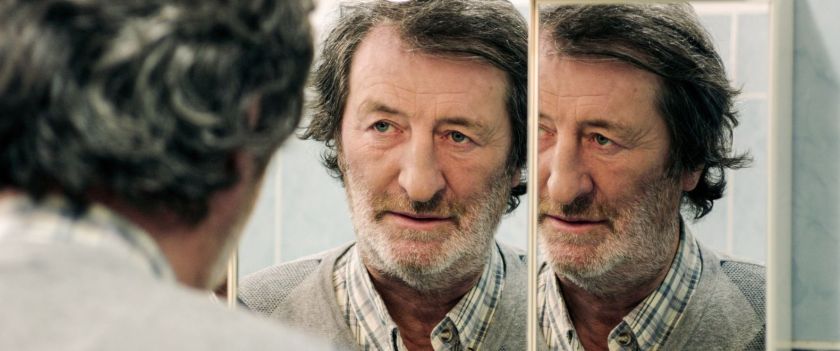
Holiday Makers (Účastníci zájezdu) – Jiří Vejdělek, 2006

A broad cross-section of Czech society go on a coach trip to Slovenia for their holidays, and much mirthlessness ensues. While this ensemble comedy-drama from Jiří Vejdělek is wildly unfunny, it is strangely entertaining, if only because it serves as another terrifying glimpse into the cynical and predatory mind of the Czech Republic’s pervert laureate, Michal Viewegh.

The best selling author also provided the source material for easily one of the worst films I’ve ever seen, Andělé všedního dne (Angels of Everyday). While the attitudes towards sex and women in Holiday Makers aren’t quite as repellent as in that movie, it is still pretty reprehensible. It’s worth saying at this point that I haven’t read Viewegh’s original material for either so perhaps the subtleties of his work don’t translate well to film. However since I found the sexual politics in both films gross, crass and just plain creepy, I think it’s fair to say that I probably have a vastly different worldview to the writer. But more on that later…

Continue reading “Holiday Makers (Účastníci zájezdu) – Jiří Vejdělek, 2006”

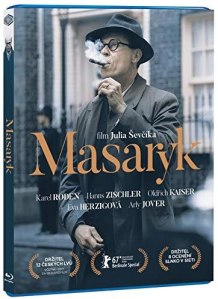
A Prominent Patient (Masaryk) – Julius Ševčík, 2016

It was a full house at Kino Art for a Friday night screening of Julius Ševčík’s Masaryk (aka A Prominent Patient), and it made uncomfortable viewing. I was about the last one in and had to sit on the front row, one English guy watching a film about how my country sold out Czechoslovakia with a room full of Czechs.

I grew up thinking that we were unconditionally the good guys. In history class, we learnt a little about the Munich Agreement, saw pictures of Neville Chamberlain waving his piece of paper and his infamous “Peace for our time” speech. Our teacher never really got into the human consequences of it – who cared about Czechoslovakia anyway? He just wanted to get to the fun stuff, and it was just a prologue before Winston Churchill sparked up a big cigar and guided us to our Finest Hour.

Buy Masaryk from Amazon HERE

History is written by the victors, and we were raised on our grandparent’s war stories. Although they all lost friends and family during the war, they always talked about it with pride and nostalgia. Pride in playing their own small part in defeating the Nazis, and nostalgia for the sense of identity and purpose it gave them.

Then I grew up a bit, and found out that we weren’t always the good guys. In fact, there were many occasions when we were the bad guys. That boggled my mind for a while because I’d always been unthinkingly proud of my country’s role in World War II and the world as a whole, and it didn’t occur to me that other countries might not like us very much. Then it dawned on me – perhaps there is a reason no-one votes for us in the Eurovision Song Contest…

Continue reading “A Prominent Patient (Masaryk) – Julius Ševčík, 2016”

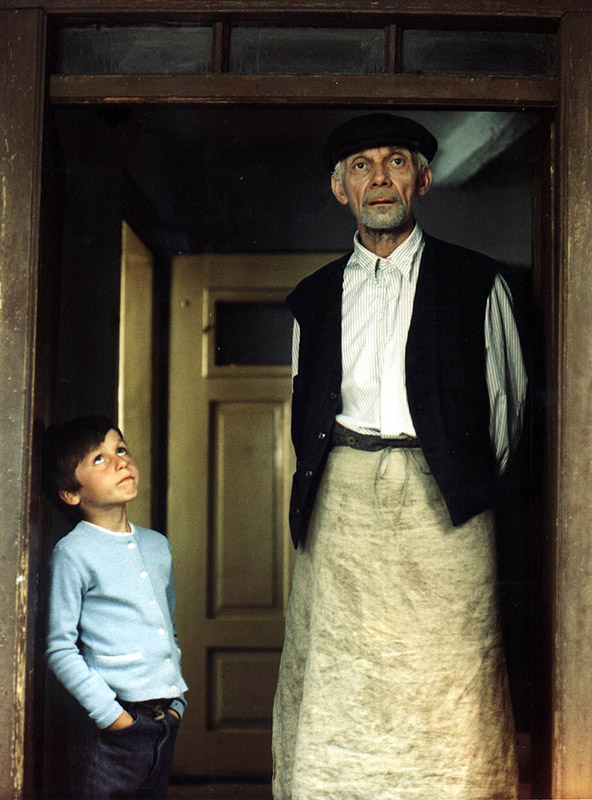
Seclusion Near a Forest (Na samotě u lesa) – Jiří Menzel, 1976

There can be no greater picture of contentment than a Czech guy standing with a beer in his hand, meat on the grill, and his feet in the grass on a summer’s day. Czechs rarely need an excuse to evacuate the towns and cities at the weekends in the summer and head out to the forests, lakes and hills, where many still own a vacation cottage. They genuinely seem to draw spiritual energy from contact with their nature, which stands in stark contrast to back home in Britain. For many urban-dwelling Brits, a trip to the countryside is something to be dutifully endured rather than enjoyed. This may be the reason that we have folk horror, and the Czechs have gentle folk comedies like Na samotě u lesa.

Zdeněk Svěrák (Kolya, Empties) plays Olda Lavička, head of a nice Prague family who are looking to buy their own country cottage. An eccentric acquaintance, Radim Zvon (Ladislav Smoljak, the man behind Jára Cimrman Lying, Sleeping in a colourful role) has taken up residence in a beautiful old mill. He points them in the direction of an elderly farmer, Mr Komárek (Josef Kemr – Marketa Lazarova), who may be willing to sell up and relocate to Slovakia to live with his son. He’s got a few loose ends to tie up first though, like selling his cow and sorting out the crops, so in the meantime, he agrees to rent the Lavičkas a room so they can stay whenever they like.

Seclusion DVD

Buy Seclusion Near a Forest from Amazon HERE

Mr Komárek’s cottage is picturesquely ramshackle, with rotten floorboards and damp in the walls. Apart from the old man, the Lavičkas end up sharing the joint with his mischievous goat, some invasive chickens, a cow, a dog and its fleas (despite the locals’ insistence that dog fleas don’t bite humans). Olda is totally enthralled by every aspect of country living, and his inquisitive son and daughter settle in well, instinctively calling Mr Komárek “grandad”. Mrs Lavička is less enthused about cottage sharing with a strange old man and the total lack of mod cons, such as electricity. She also thinks they should be encouraging Mr Komárek to get his arse into gear and sell up so they can enjoy the cottage without him hanging around, rather than feeding him and keeping him company…

Continue reading “Seclusion Near a Forest (Na samotě u lesa) – Jiří Menzel, 1976”

Sun, Hay, Strawberries (Slunce, seno, jahody) – Zdeněk Troška, 1983

“What do you think of Slunce, Seno, Jahody?” I messaged a Czech friend after my first viewing of the lowbrow villagecore classic.

“Cheap jokes for people who vote Zeman.” Came her rather sniffy reply.

Sign of the times, I guess – I wanted to talk movies and she gets all political on me. Not that her reply was entirely unexpected. The film has a reputation of being loud, crude and stupid – pretty much how young progressive urban Czechs regard those living in rural areas, who tend to be the kind of people who vote for Trump-ish characters like the drunken, bigoted, chain-smoking President Zeman.

Slunce seno jahody DVD

Buy Sun, Hay, Strawberries from Amazon HERE

Make no mistake, Slunce, Seno, Jahody is extremely loud, crude and stupid. To give an example of the level of humour, one scene features a senile old lady trying to hide a turd from her overbearing daughter. That’s it, that’s the whole joke. However, the film has a directness that I appreciated, unlike the ponderous pace of so many Czech movies I’ve seen so far. It bounces along nicely with a goofy energy that I found genuinely charming.

Continue reading “Sun, Hay, Strawberries (Slunce, seno, jahody) – Zdeněk Troška, 1983”

Angels (Andělé všedního dne) – Alice Nellis, 2014

Death comes to us all, and when that last moment stretches out to eternity, all men face the same questions. Have I lived my life to the fullest? Have I done the best for my loved ones? Was I man enough when circumstances demanded it? Did I dare disturb the universe? Did I get enough blowjobs?

Andělé všedního dne by Alice Nellis is a crass, tasteless and utterly depressing film. It tries to say things about mortality and kindness, but is literally about a man who thinks his life is shit because he’s never been sucked off before.

Ever reliable Bolek Polívka (Divided We Fall, The Inheritance or Fuckoffguysgoodday) plays Karel, an ageing driving instructor stuck in a loveless marriage with his neurotic, sour-faced wife Marie (Zuzana Bydžovská). They’ve been married for twenty-seven years, but he’s never experienced the pleasures of oral sex. Karel has the hots for Ester (Klára Melíšková), one of his pupils and a recently widowed doctor. It is the last day of Karel’s life, and four angels arrive on earth to oversee his final few hours.

There are other characters vaguely populating the background, including Václav Neužil as a stalker, whose life will intersect with Karel’s at the most unlikely and inconvenient moment. Andělé všedního dne is a small film overcrowded with lots of thinly written characters, but its main dramatic thrust depends on this – will Karel die with a smile on his face?

Continue reading “Angels (Andělé všedního dne) – Alice Nellis, 2014”

Capricious Summer (Rozmarné léto) – Jiří Menzel, 1967

Unlike where I come from in England, we tend to get long hot summers here in the Czech Republic. The good weather sets in towards the end of April and usually runs through until late September. It’s my ninth summer here now and each year, sometime around late August, when the nights are drawing in and there’s a breath of autumn on the breeze, I’m always struck by a bittersweet feeling. It’s a sense of longing and loss and melancholy, a sensation that has intensified as the years ticked down towards my 40th birthday. Somewhere inside I sigh and think, “Well, that’s another year over.” Followed by a nasty little whisper at the back of my mind, “How many good summers have you got left?”
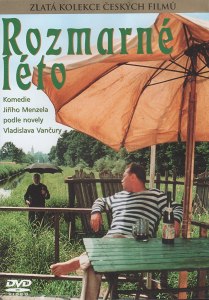
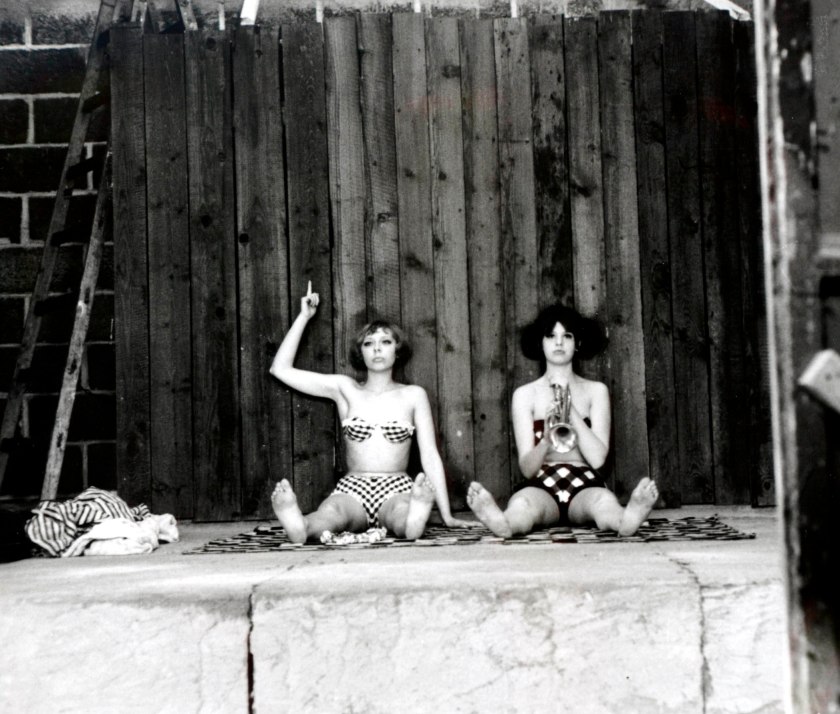
That bittersweet feeling is captured so beautifully by Jiří Menzel’s Rozmarné Léto. I first saw it very early after we arrived to live in the Czech Republic, and initially I was quite dismissive of it. I hadn’t adjusted to the rhythm and pace of Czech films and to me it felt like a pilot for a sitcom, mainly because of its surface similarity to the long-running British comedy series, Last of the Summer Wine, which followed the shenanigans of three retired blokes in a small town in northern England.

Capricious Summer DVD

Buy Capricious Summer from Amazon HERE

Rozmarné Léto is a perennial favourite in the Czech Republic. It is Menzel’s follow up to his Oscar-nominated Ostře Sledované Vlaky (Closely Watched Trains), adapted from the novel by Vladislav Vančura. It’s a gentle yet neatly observed bedroom face about three old friends whose comfortable boredom is disrupted when a travelling acrobat rolls into town, and each one’s trousers are set a-rustling by his beautiful young assistant.

Continue reading “Capricious Summer (Rozmarné léto) – Jiří Menzel, 1967”

Anthropoid – Sean Ellis, 2016

Every now and then two films come out around the same time covering the same topic – Twilight and Let the Right One InDeep Impact and ArmageddonHitchcock and The Girl. A few years ago, there was a mesmerising, beautifully erotic examination of a couple involved in a kinky sub-dom relationship. It was called The Duke of Burgundy, and Jamie Dornan wasn’t in it. He was in the other one, Fifty Shades of something.

Then we had two films released within a few months of each other about the valiant Czechoslovak parachutists who assassinated Hitler’s third in command, Reinhard Heydrich. First out of the gate was Anthropoid, starring Dornan alongside Cillian Murphy, followed by HHhH, an adaptation of Laurent Binet’s well-received novel. Would Dornan be in the better movie of the two this time round?

I hate to say it without seeing both, but probably not. Any film on this subject is bound to be compared to Binet’s terrific book, which managed the tricky task of making a historic event genuinely suspenseful and exciting. The book had scope, compassion and a lightness of touch, and the chapters covering the assassination and the parachutist’s last stand in a Prague cathedral flew past so quick that I left burn marks on the pages. It’s a fantastic story that deserves a modern re-telling (although maybe not twice in the space of a year), and I dearly hoped that Anthropoid would do justice to the tale.

Continue reading “Anthropoid – Sean Ellis, 2016”

Daisies (Sedmikrásky) – Věra Chytilová, 1966

Surrealist and Avant-Garde films aren’t always the most popular choice for the average moviegoer. Until Leos Carax’s demented Holy Motors generated some outside-bet Oscar buzz a few years ago, I’d rather watch a compilation tape of hairy builders receiving a back, sack and crack before dabbling with the avant-garde.

My perspective has changed slightly since then, largely on the basis of Denis Lavant’s incredible (literally) balls-out multiple performances in that movie, and two of my favourite films of the past few years are of the avant-garde variety – Dziga Vertov’s hypnotic portrait of a city in Man with a Movie Camera, and Věra Chytilová’s playful yet provocative Daisies.

Daisies Blu Ray

Buy Daisies from Amazon HERE

A cornerstone of the Czech New Wave, Daisies tells of two young women, known as Marie I (Jitka Cerhová) and Marie II (Ivana Karbanová), who declare that they are broken and in that case, they might as well be bad…

Continue reading “Daisies (Sedmikrásky) – Věra Chytilová, 1966”

Marketa Lazarová – František Vláčil, 1967

There’s an underseen film called The Navigator: A Medieval Odyssey, where some English miners from the Middle Ages tunnel through the earth and emerge in modern-day New Zealand. Watching Marketa Lazarová feels a bit like that in reverse – you leave your comfortable 21st-century life behind for a few hours and pop up in medieval Bohemia.

Director František Vláčil (Adelheid, The White Dove) spent around two years filming on location, which meant his cast and crew were afforded barely much more luxury than the story’s characters. Few films have such a feeling of history – not in the studious sense of dates and places, but of deep dark waters of time rolling beneath the keel of the present day’s unsteady ship.

Marketa Lazarova Blu Ray

Buy Marketa Lazarova from Amazon HERE

Few films also match Marketa Lazarová‘s dazzling visuals with such authentic production values, so while the virtuosity of Vláčil’s film making often distracts from the story, the credibility of its setting is never in doubt.

Based on the novel by Vladislav Vančura, which in turn was based on an ancient Czech legend, the film declares itself a “Rhapsody” on the title card. That might seem a little precious, but Vláčil is a director who freely admits to valuing visuals over story, and by dispensing with most conventional narrative techniques creates a film that is both lyrical and rhapsodic. It is perhaps best enjoyed if you can forget the story and surrender yourself to it as a purely sensory experience…

Continue reading “Marketa Lazarová – František Vláčil, 1967”

Cosy Dens (Pelíšky) – Jan Hřebejk, 1999

You can watch Cosy Dens (Pelíšky) right HERE with our View on Demand partners Eyelet.

Last year when I was trying to figure out which movies made Czechs laugh the most, I asked 100 people to name their favourite Czech comedy. I was expecting the perennial favourite Pelíšky (Cosy Dens) to come up a few times, but it absolutely romped home with 25% of the vote.

I guess it’s not hard to see why. Early in my days of watching and reviewing Czech films it was my first truly five star pick, an hugely satisfying tragicomedy set in the months prior to the Prague Spring in 1968. Offering laughs and robust family drama, it also features a gallery of wonderful performances from a formidable cast of Czech and Slovak stars.

The picture opens in the winter of ’67, and lovelorn teenager Michal  Šebek (Michael Beran) wants to end it all. He is hopelessly in love with his upstairs neighbour Jindřiška (Kristýna Nováková). The trouble is, she is going out with his much cooler mate Elien (Ondřej Brousek), who gets all the latest movies, music and fashion from his parents living in the States.

To make matters worse, her father, Mr Kraus (Jiří Kodet) is a rabid anti-communist  war hero who often has flaming rows with Michal’s dad. Mr Šebek (Miroslav Donutil, The Inheritance or Fuckoffguysgoodday) is a staunch supporter of the Communist government, an army officer so petty and regimented that he types out a weekly menu for his family…

Continue reading “Cosy Dens (Pelíšky) – Jan Hřebejk, 1999”