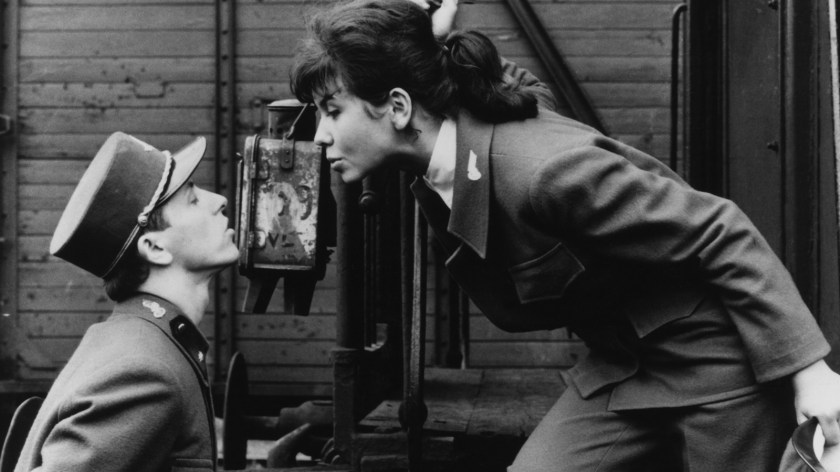
Larks on a String (Skřivánci na niti) – Jiří Menzel, 1969/1990

Banned for over twenty years and only released after the Velvet Revolution, Jiří Menzel’s Larks on a String is a film out of time. It was one of the director’s more overtly critical works in the ’60s, openly sarcastic about the Communist regime in Czechoslovakia. As a result, it endured censure and became a valuable relic of the grim post-Prague Spring era, lacking the timelessness of Menzel’s more gently comedic films of the period.

It’s a shame that it has dated in comparison to the likes of Closely Watched Trains (Ostře sledované vlaky) and Capricious Summer (Rozmarné léto), because as well as ripping the piss out of the petty bureaucrats and their dim-witted slogans (“We’ll pour our peaceful steel down the imperialist war-mongers’ throat!”) it is also an extremely tender and poignant film.
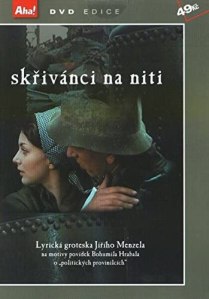
Larks on a String DVD

Buy Larks on a String from Amazon HERE

Set in a huge scrapyard in the Bohemian town of Kladno in the ’50s, the story centres around a group of so-called dissidents and counter-revolutionaries, sent by the authorities for re-education among the piles of broken typewriters and twisted wrought-iron bedsteads. They’re a mostly meek and browbeaten bunch, resigned to shuffling about among the mountains of waste, having philosophical discussions and sneaking a peek at the group of women detained for attempted defection across the fence…

Continue reading “Larks on a String (Skřivánci na niti) – Jiří Menzel, 1969/1990”
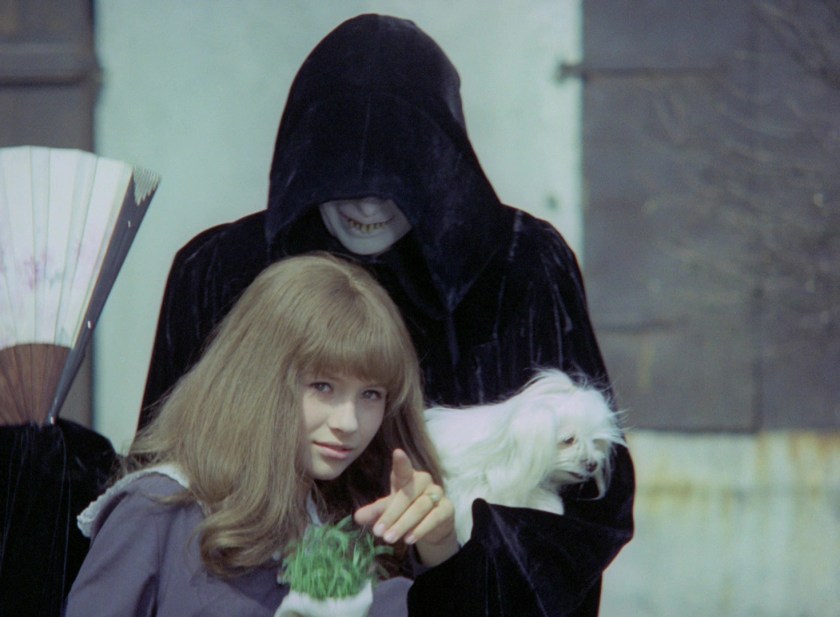
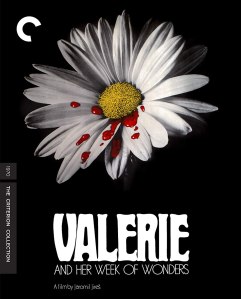
Valerie and Her Week of Wonders (Valerie a týden divů) – Jaromil Jireš, 1970

Rapturously beautiful, disturbingly erotic, and strangely frightening, Valerie and Her Week of Wonders is an intoxicating blend from director Jaromil Jireš, a key figure in the Czechoslovak New Wave. It’s a surrealist horror where reality and identity are fluid, yet the film has its own dreamlike logic where it all makes a kind of sense while you’re watching it. Then, like so many dreams, the more you try to remember on waking, the more it slips from your grasp…

That was my first experience of the film. I’ve wanted to write about it for a year now because when I saw it on a crappy Youtube copy, I realized that I’d just watched something very special. I just couldn’t quite define what I’d watched. It probably didn’t help that I forgot a key detail – that our young protagonist, Valerie (Jaroslava Schallerová), is encountering her first period.

Valerie and Her Week of Wonders Blu Ray

Buy Valerie and Her Week of Wonders from Amazon HERE

It occurs early on, and provides one of the iconic images of the film – a droplet of bright fresh blood on the head of a daisy – but the moment was lost to me almost immediately in the subsequent whirl of ravishing imagery, potent symbolism, ethereal beauty and earthy sensuality. Luboš Fišer’s score is also transportive, whisking you away to another time and place…

Continue reading “Valerie and Her Week of Wonders (Valerie a týden divů) – Jaromil Jireš, 1970”

Capricious Summer (Rozmarné léto) – Jiří Menzel, 1967

Unlike where I come from in England, we tend to get long hot summers here in the Czech Republic. The good weather sets in towards the end of April and usually runs through until late September. It’s my ninth summer here now and each year, sometime around late August, when the nights are drawing in and there’s a breath of autumn on the breeze, I’m always struck by a bittersweet feeling. It’s a sense of longing and loss and melancholy, a sensation that has intensified as the years ticked down towards my 40th birthday. Somewhere inside I sigh and think, “Well, that’s another year over.” Followed by a nasty little whisper at the back of my mind, “How many good summers have you got left?”
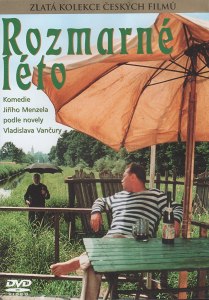
That bittersweet feeling is captured so beautifully by Jiří Menzel’s Rozmarné Léto. I first saw it very early after we arrived to live in the Czech Republic, and initially I was quite dismissive of it. I hadn’t adjusted to the rhythm and pace of Czech films and to me it felt like a pilot for a sitcom, mainly because of its surface similarity to the long-running British comedy series, Last of the Summer Wine, which followed the shenanigans of three retired blokes in a small town in northern England.

Capricious Summer DVD

Buy Capricious Summer from Amazon HERE

Rozmarné Léto is a perennial favourite in the Czech Republic. It is Menzel’s follow up to his Oscar-nominated Ostře Sledované Vlaky (Closely Watched Trains), adapted from the novel by Vladislav Vančura. It’s a gentle yet neatly observed bedroom face about three old friends whose comfortable boredom is disrupted when a travelling acrobat rolls into town, and each one’s trousers are set a-rustling by his beautiful young assistant.

Continue reading “Capricious Summer (Rozmarné léto) – Jiří Menzel, 1967”

Daisies (Sedmikrásky) – Věra Chytilová, 1966

Surrealist and Avant-Garde films aren’t always the most popular choice for the average moviegoer. Until Leos Carax’s demented Holy Motors generated some outside-bet Oscar buzz a few years ago, I’d rather watch a compilation tape of hairy builders receiving a back, sack and crack before dabbling with the avant-garde.

My perspective has changed slightly since then, largely on the basis of Denis Lavant’s incredible (literally) balls-out multiple performances in that movie, and two of my favourite films of the past few years are of the avant-garde variety – Dziga Vertov’s hypnotic portrait of a city in Man with a Movie Camera, and Věra Chytilová’s playful yet provocative Daisies.

Daisies Blu Ray

Buy Daisies from Amazon HERE

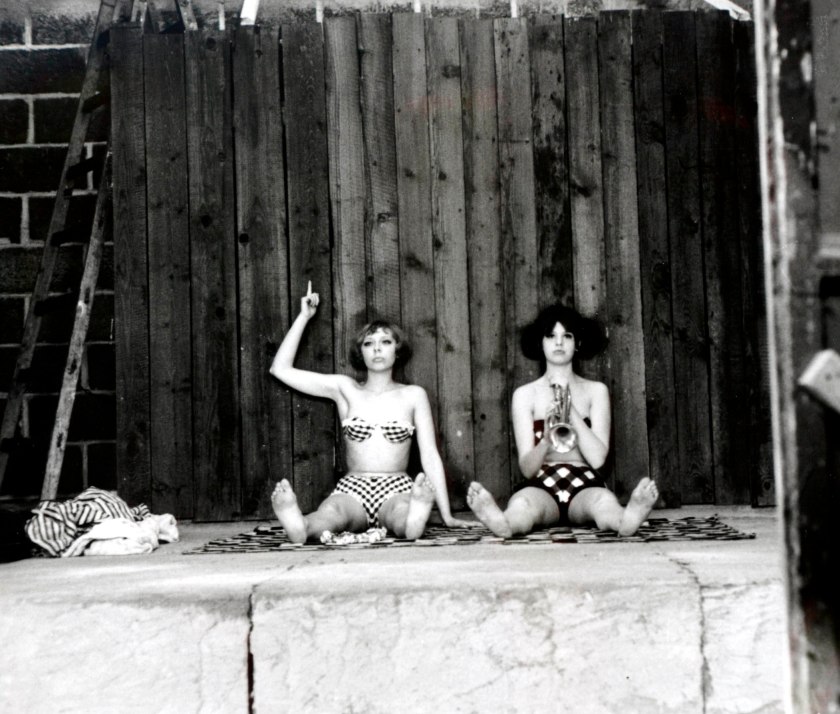
A cornerstone of the Czech New Wave, Daisies tells of two young women, known as Marie I (Jitka Cerhová) and Marie II (Ivana Karbanová), who declare that they are broken and in that case, they might as well be bad…

Continue reading “Daisies (Sedmikrásky) – Věra Chytilová, 1966”

Marketa Lazarová – František Vláčil, 1967

There’s an underseen film called The Navigator: A Medieval Odyssey, where some English miners from the Middle Ages tunnel through the earth and emerge in modern-day New Zealand. Watching Marketa Lazarová feels a bit like that in reverse – you leave your comfortable 21st-century life behind for a few hours and pop up in medieval Bohemia.

Director František Vláčil (Adelheid, The White Dove) spent around two years filming on location, which meant his cast and crew were afforded barely much more luxury than the story’s characters. Few films have such a feeling of history – not in the studious sense of dates and places, but of deep dark waters of time rolling beneath the keel of the present day’s unsteady ship.

Marketa Lazarova Blu Ray

Buy Marketa Lazarova from Amazon HERE

Few films also match Marketa Lazarová‘s dazzling visuals with such authentic production values, so while the virtuosity of Vláčil’s film making often distracts from the story, the credibility of its setting is never in doubt.

Based on the novel by Vladislav Vančura, which in turn was based on an ancient Czech legend, the film declares itself a “Rhapsody” on the title card. That might seem a little precious, but Vláčil is a director who freely admits to valuing visuals over story, and by dispensing with most conventional narrative techniques creates a film that is both lyrical and rhapsodic. It is perhaps best enjoyed if you can forget the story and surrender yourself to it as a purely sensory experience…

Continue reading “Marketa Lazarová – František Vláčil, 1967”

Nowhere in Moravia (Díra u Hanušovic) – Miroslav Krobot, 2014

Miroslav Krobot’s morosely funny Nowhere in Moravia is a downbeat portrayal of small lives, set in a tiny village where life takes forever.

The opening hours of the local hospoda marks the passing of time, and there are two main ways out – by bus and by coffin. Buses aren’t very frequent, so the villagers eat, drink and screw the days away until death finally comes along to relieve them of their boredom.

If you think that sounds pretty grim, then you’re right – it is.

Having said that, I laughed far more during Nowhere in Moravia than I do in most mainstream American comedies these days, and there is much joy to be had from the bric-a-brac of ordinary life tucked in the corners of cinematographer Jan Baset Střítežský’s gorgeous compositions.

Some of the more farcical elements could be straight from the pages of Hrabal, and a thread of small-town ennui traces back at least as far as Rozmarné léto (Capricious Summer)although the bittersweet fatalism of Menzel’s work curdles into outright pessimism in Krobot’s film debut.

Continue reading “Nowhere in Moravia (Díra u Hanušovic) – Miroslav Krobot, 2014”

Closely Watched Trains (Ostře sledované vlaky) – Jiří Menzel, 1966

Jiří Menzel’s Closely Watched Trains (Ostře sledované vlaky) is probably one of the best known Czech films beyond the country’s borders, having won the Oscar for Best Foreign Language Film in 1968. Adapted from Bohumil Hrabal’s slender novel, it was also the first Czech movie I saw by a long way, years before the idea of even visiting the country crossed my mind, let alone immigrating here.

I was pretty underwhelmed on first viewing – it was when I was first getting heavily into film, after the treble-whammy of Pulp Fiction, Seven and Trainspotting first made me conscious that there was a director behind the camera making decisions resulting in the movie I saw up there on the big screen.

Closely Observed Trains Blu Ray

Buy Closely Watched Trains from Amazon HERE

I could handle the nonlinear structure of QT’s early efforts, but struggled a bit with the rhythm and pace of my first Czech movie – having been brought up on a diet of largely British and American films, usually with a distinct beginning, middle and end, Closely Watched Trains seemed a lot like all middle with a little bit of end.

Continue reading “Closely Watched Trains (Ostře sledované vlaky) – Jiří Menzel, 1966”