Indie Profiles: Nora Štrbová, director of S P A C E S (M E Z E R Y)

Nora Strbova

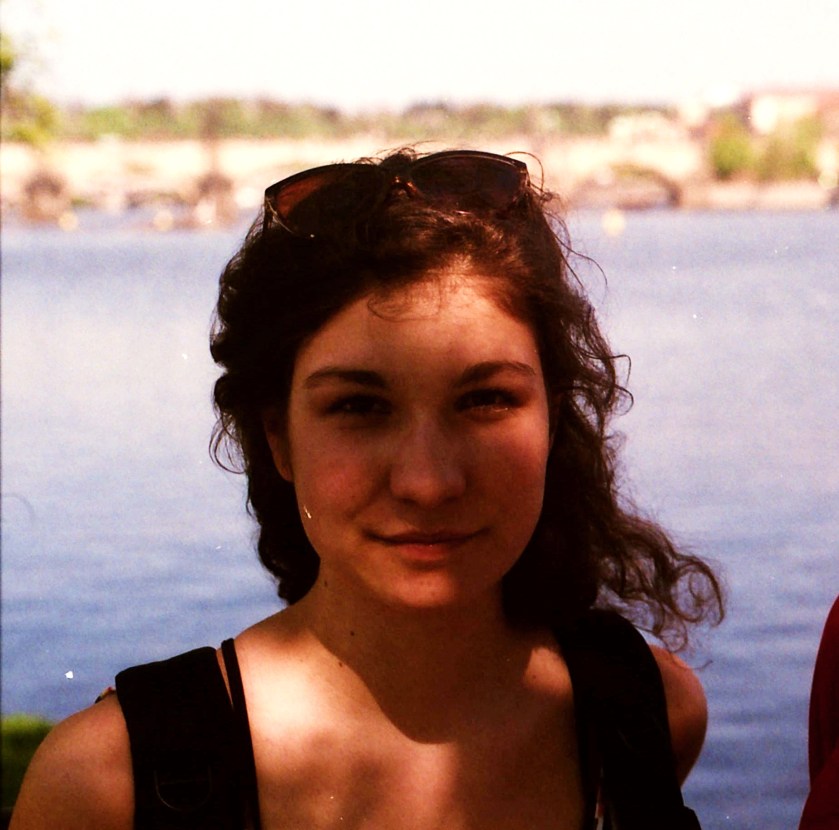
Of all the terrific entries on display recently at the 61st BRNO16 International Short Film Festival, Nora Štrbová’s S P A C E S was perhaps the most moving. In just seven minutes, the animated documentary explores memory from the perspective of her brother, who suffered a rare neurological disorder before his untimely death in his twenties. With a minimalist, hand-crafted style that evokes the glitching memory of its central character, S P A C E S is a poignant blend of artistic medium and heartfelt subject matter.

I spoke to Nora about S P A C E S and her experiences as a filmmaker with my friend Tomáš Hůsek, who helped translate the conversation…

LA & TH: This is clearly a labour of love about a very personal subject, as you directed, wrote, animated and created the art design for the film. What made you choose this style to tell the story?

NS: Well, at the beginning when I was thinking about what the movie is going to be, the idea about the subject matter came to me. The entire style of the film is derived from that original concept. It is a very personal story about my brother who lost his memory because of the brain tumour that eventually caused his death. I wanted to try… after I was no longer able to ask him about it… try to imagine how he might perceive the world without memory, what does it mean to live without memory, and also think about what memory actually is.

I started reading articles, books, stories – both fiction and non-fiction – poetry, everything. From this, I put together a sort of mosaic and the style of the film, which is mosaic-like, actually reflects that. It felt fitting to choose a kaleidoscopic form to show how the human mind and memory works. The more I analysed how memory behaves, the more I found out that it is mostly fragments, even in healthy individuals. It is just fragments saved into memory. Sometimes just emotions or sensations that we once felt during situations rather than the situations themselves – colours, smells, textures etc. So I wanted to create that feeling for the viewer… Continue reading “Indie Profiles: Nora Štrbová, director of S P A C E S (M E Z E R Y)”
Forbidden Dreams (Smrt krásných srnců) – Karel Kachyna, 1987


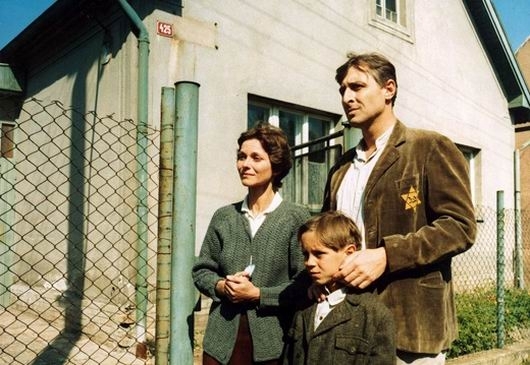
Director Karel Kachyna (The Ear) gets his metaphors in early in Forbidden Dreams, otherwise known by its more evocative Czech title, Smrt krásných srnců (The Death of Beautiful Deer). Mr Popper (Karel Heřmánek), a Jewish vacuum cleaner salesman who can’t stop hopping into bed with his female customers, is out fishing in the countryside with his two eldest sons. Through his binoculars, he spots a herd of deer and he is struck by their beauty – but also spies danger threatening in the form of a hunting dog bearing down on the innocent creatures. 

The dog belongs to their grumpy uncle Karel (Rudolf Hrušínský), who loves getting his teeth into some freshly savaged venison. Mr Popper regards killing a deer as almost as bad as killing a human. Popper has no qualms about catching and eating fish, however, and his passion for carp is intertwined with his fortunes throughout the film.

The setting is pre-war Czechoslovakia, and Mr Popper is introduced as a resourceful chancer with a taste for the good life, although those tastes often run him into trouble. He is skint and the family is in debt to the butcher, grocer and the pub, but Popper thinks the latest Electrolux model he receives from Head Office in Prague will pretty much sell itself.

Buy your copy of Forbidden Dreams from Amazon HERE

Plying his trade in the villages, however, he finds that the locals aren’t too impressed with his new-fangled device. His luck changes when he rescues a drowning man with the help of the cable from one of his vacuum cleaners. The man turns out to be a rich benefactor, who buys a few units out of gratitude and throws a party so Popper can sell some more hoovers to his wealthy friends.

Suddenly flush, Popper starts splashing money around, treating the family and sending his sons for boxing lessons with a former champ. Life is good. Now bursting with confidence, Popper cooks up a variety of lucrative schemes to keep the cash rolling in.

Dark days lay ahead, though, as Czechoslovakia falls to the Nazis. Jewish salesmen aren’t in much demand in the protectorate and Popper suddenly finds himself out of work. He retreats to the countryside to sit out the war and live off his carp pond, but is soon driven to destitution by the new regime and must find ever-more risky ways to provide for his family…

Continue reading “Forbidden Dreams (Smrt krásných srnců) – Karel Kachyna, 1987”

Dimensions of Dialogue (Možnosti dialogu) – Jan Švankmajer, 1983

Dimensions of Dialogue Eternal Conversation

Reader, I screwed up. It was deadline day for my latest review and I was up against it, having just moved into an old house in the countryside. The place doesn’t have a working kitchen, bathroom or heating system. As I type this, I’m pressed against an oil radiator wearing four layers of clothing and a blanket wrapped around me. In desperation, I reached for a movie to review on Netflix. Only when I got to the end did I realise that it was a Slovak film.

Perhaps the cold has got to my senses. While I don’t speak Czech, I have lived in the country long enough to tell the difference between the Czech language and Slovak. But not on this occasion…

Luckily my good friend and former writing partner sent me a short film some time ago which I’ve been meaning to watch. It is Dimensions of Dialogue by legendary surrealist filmmaker Jan Švankmajer. It is only 14 minutes long so you can watch it in your lunchbreak and it will give you far more food for thought than the 90 minutes of romantic comedy dross I sat through earlier…

Continue reading “Dimensions of Dialogue (Možnosti dialogu) – Jan Švankmajer, 1983”

Tiger Theory (Teorie Tygra) – Radek Bajgar, 2016

Tiger Theory review

There is an old Les Dawson joke that goes like this: I said to the chemist, “Can I have some sleeping pills for my wife?” He said, “Why?” I said, “She keeps waking up.”

That is pretty much the attitude of the main character in Tiger Theory, Radek Bajgar’s dramedy about a sixty-something who finds an unconventional way of leaving his controlling wife.

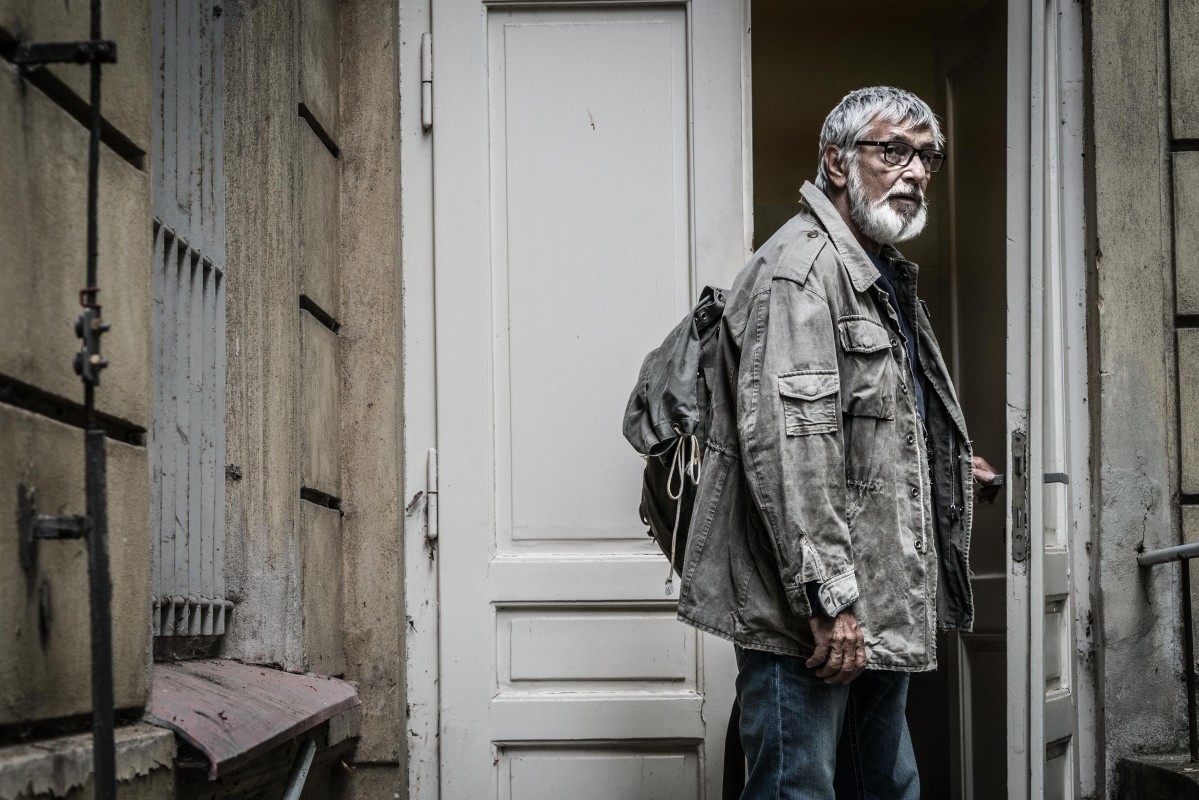
Jan Berger (Jiří Bartoška) is a veterinarian. We first meet him as performs the snip on a tomcat, much to the gratitude of its female owner. It’s a none-too-subtle metaphor for the film’s central thesis, in that most of the male characters feel emasculated by their wives. The only guy who doesn’t has a problem with his sperm and possibly gets cheated on by his free-spirited wife, implying he’s not man enough to get the job done.

The film sets out its stall early, with Berger’s wife Olga (Eliška Balzerovádelivering a lecture to a group of students about the life expectancy of men. They drink more, smoke more and eat unhealthily, all of which affects their longevity. And it is the woman’s lot to keep control of their man’s worst impulses, she asserts.

For the men in Tiger Theory, this equates to endless nagging… Continue reading “Tiger Theory (Teorie Tygra) – Radek Bajgar, 2016”

Bathory: Countess of Blood – Juraj Jakubisko, 2008

Bathory bathing in virgin blood (allegedly)

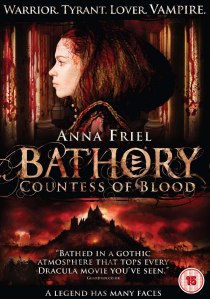
According to the Guinness Book of World Records, the most prolific female murderer of all time was Elizabeth Báthory, a 16th-century Hungarian noblewoman. She is said to have murdered over 600 young women, practising vampirism and bathing in their blood to preserve her own youth and beauty.

Now I don’t know what the verification process is for the Guinness Book of records (it’s been a long time since my own unsuccessful attempt to build the world’s largest pyramid out of empty beer cans) but this seems like an iffy one to me. Many of the testimonies were based on hearsay from superstitious bumpkins or extracted from “witnesses” by torture. The exact kill count is thought to be greatly exaggerated.

Buy your copy of Bathory: Countess of Blood from Amazon HERE

Going to bat for poor old Elizabeth is veteran Slovak director Juraj Jakubisko with Bathory: Countess of Blood, an expensively mounted Czech, Slovak, Hungarian and British co-production. Setting out its stall as a revisionist historical epic, the movie veers wildly between horror, political intrigue and bodice-ripping romance, with some wacky comic touches thrown in for good measure – monks on clockwork rollerskates, for example.

In short, it’s a pretty kooky way to try clearing someone’s name, as Jakubisko attempts to rescue Báthory from the naughty step of history by spinning his own unreliable yarn…

Continue reading “Bathory: Countess of Blood – Juraj Jakubisko, 2008”

2Grapes (2Bobule) – Vlad Lanné, 2009

You can watch 2Grapes (2Bobule) HERE with our View on Demand partners Eyelet

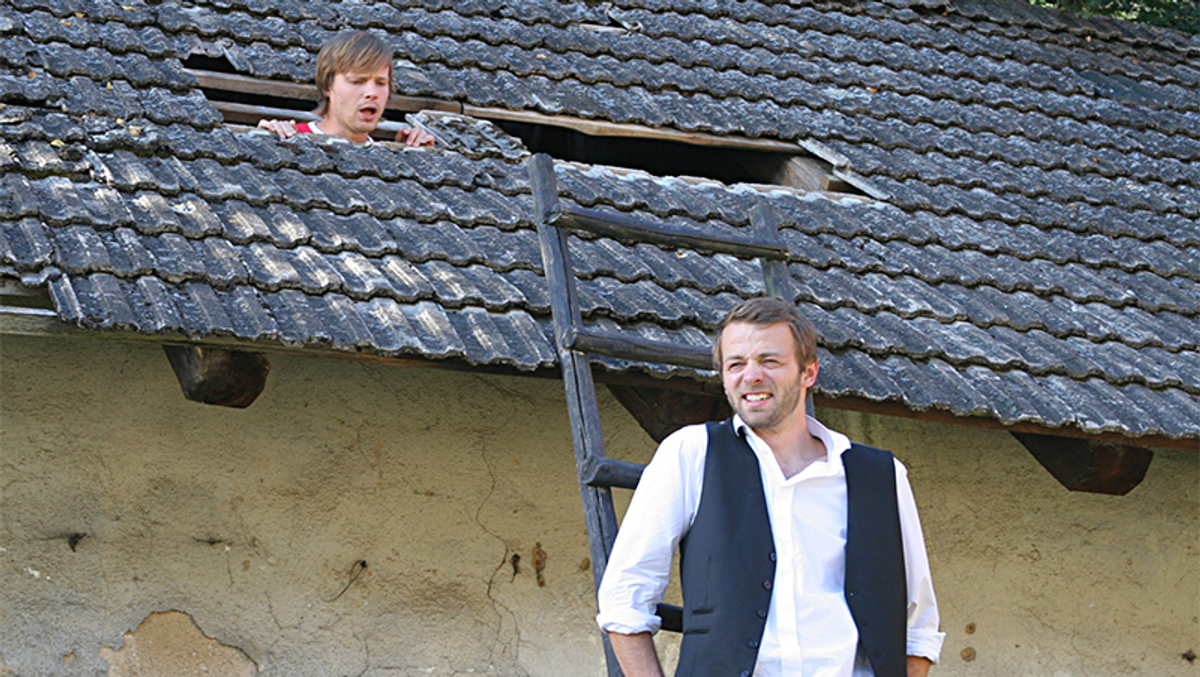
Sequels often tend to go for bigger, faster, more. So what should we expect from 2Grapes (no, I don’t get the nonsense title either), the sequel to the mild romantic comedy hit Grapes?

I got to thinking about how the original film had at least three scenes that hinged on the explosive properties of burčák (young wine). So if we follow the bigger, faster, more model, what could be in store? Honza (Kryštof Hádek) returning to his criminal ways and using bottles of burčák to blow open a bank vault? Or perhaps converting his granddad’s battered old Citroen 2CV into a time machine, and using burčák to propel it to the 142kmh required to send it through time?

Continue reading “2Grapes (2Bobule) – Vlad Lanné, 2009”

Beauty and the Beast (Panna a Netvor) – Juraj Herz, 1978

Panna a Netvor 1

From subterranean lairs beneath Paris opera houses to the belfries of Notre Dame, it’s a story we’ve heard time and time again. Here’s another version – boy is a giant ape from Skull Island who falls in love with a human girl; girl freaks out because the boy is a giant ape who’s carrying her around like a rag doll. Boy snaps a few dinosaur necks to protect her, and the girl suddenly realises he’s just a big sweetie inside. Girl goes back to New York and the boy is captured, goes on a rampage through the city. Boy finds girl again and drags her to the top of the Empire State Building, where gets shot down by some biplanes. Just in case the viewer missed the influence, the original King Kong concludes with the line: “Oh no, it wasn’t the airplanes. It was beauty killed the beast.”

The format first found widespread popularity in Gabrielle-Suzanne Barbot de Villeneuve’s 1740 fairytale, La Belle et la Bête, although the story itself can be traced to much older myths like Cupid and Psyche in the 2nd Century AD – hence the lyric “Tale as old as time” in the Disney version.

Buy Beauty and the Beast from Amazon HERE

Filmmakers were relatively late in making a movie version of the story, starting with Jean Cocteau’s revered La Belle et la Bête in 1946, widely regarded as the definitive film adaptation of the tale. Then, of course, there was the Disney version, a prized asset in the House of Mouse’s Renaissance in the 90s.

Before and since there have been many other adaptations, including Juraj Herz’s 1978 Panna a Netvor. With Herz, the mastermind behind The Cremator and Morgiana, in charge, it’s safe to say you’re not going to get any singing teapots in this version…

Continue reading “Beauty and the Beast (Panna a Netvor) – Juraj Herz, 1978”

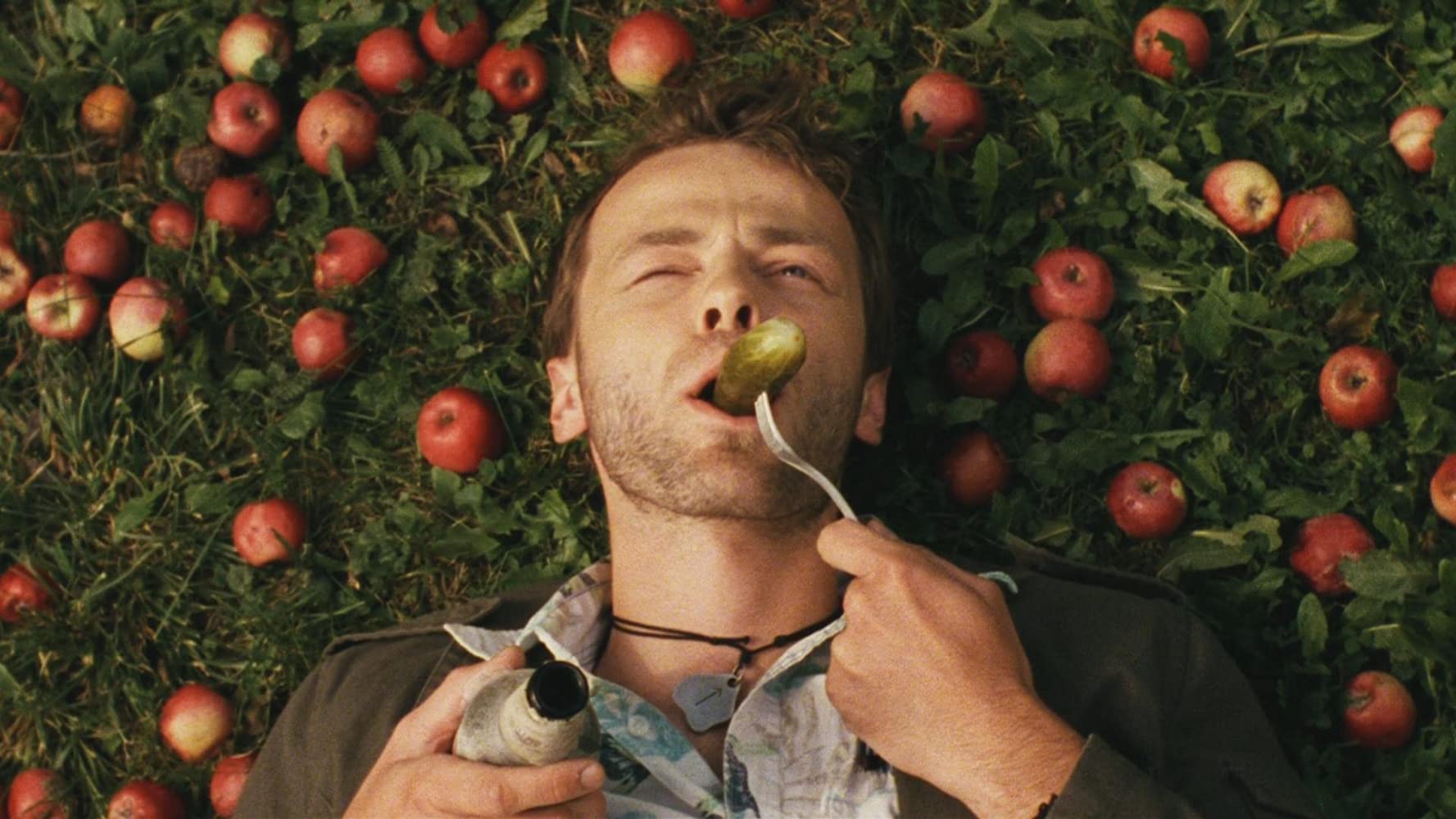
Food (Jídlo) – Jan Švankmajer, 1992

Svankmajer's Jidlo (Food)

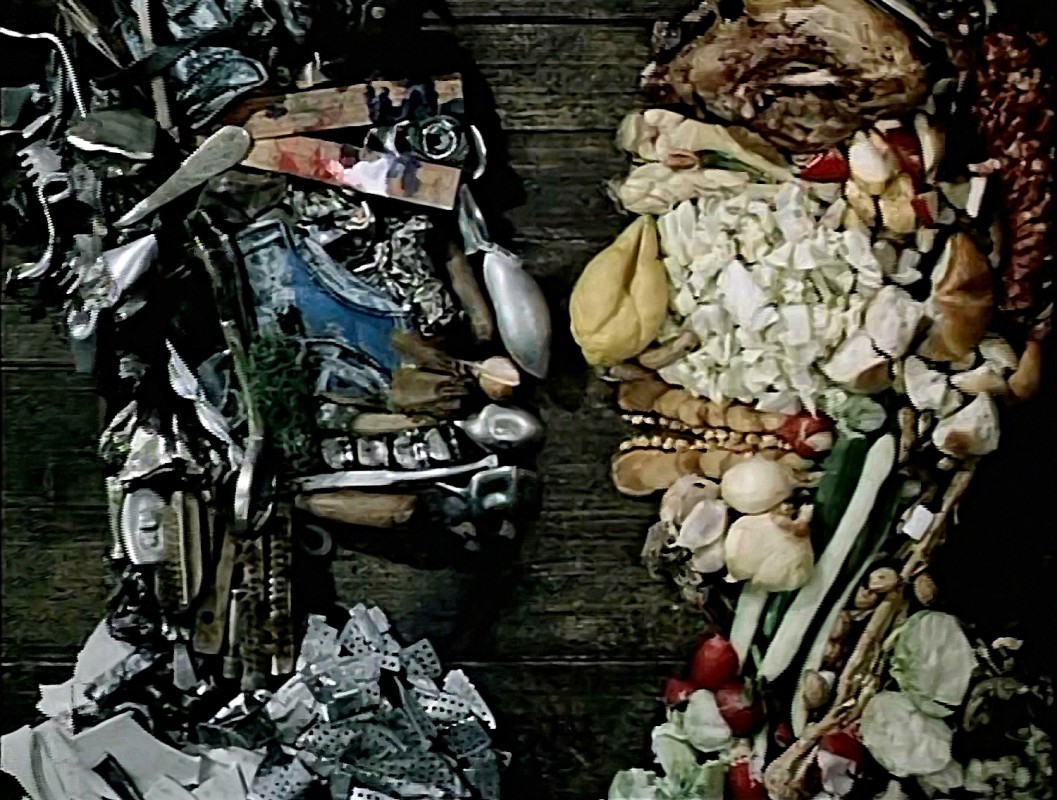
Introducing Jan Švankmajer (Alice) to anyone always nets you a reputation for being a weirdo. From the word go, Food’s style is absurd and choppy, often very naturalistic, and more than a little risqué. But I think it’s well worth anyone’s time – so please indulge this weirdo as I talk about Švankmajer’s 1992 film Food and why it’s a lesser-known gem of Czech cinema.

Food contains three shorts films – breakfast, lunch, and dinner – that are thematically connected. They all contain some sort of food consumption (surprisingly) but there is often a twist that turns the simple daily rituals to downright bizarre affairs. In sixteen minutes, Food shows people who turn into machines, hungry diners devouring their clothes, and various kinds of gourmands digging into their own body-parts. So yeah, there’s a lot going on…

Continue reading “Food (Jídlo) – Jan Švankmajer, 1992”

Grapes (Bobule) – Tomáš Bařina, 2008

You can watch Grapes (Bobule) right HERE with our View on Demand partners Eyelet.

It’s been a funny sort of year so far, hasn’t it? Usually one of the things I love most about living in the Czech Republic is the slow build-up to summer, with the palpable sense of anticipation that grows during the spring months before the good weather really sets in. It’s been a different story in 2020 thanks to Covid-19, going into lockdown in early March and popping up again months later with summer already in full swing. Now we’re only a few weeks away from the start of burčák season, which means autumn is already on its way…

This year also saw the release of 3Bobule, the third in the popular series of romantic comedies set among the vineyards of South Moravia. So with these two things combined, I thought it was the perfect time to check out the original film in the trilogy, Bobule

Continue reading “Grapes (Bobule) – Tomáš Bařina, 2008”

Black Peter (Černý Petr) – Miloš Forman, 1964

Black Peter (1964) - Photo Gallery - IMDb

Recently, I’ve been reviewing films that dealt with more social and political issues, but this time around, I’m kind of glad to be reviewing a film that focuses on a much more easy-going subject: adolescence. Black Peter — the first feature-length film directed by one of the most celebrated filmmakers of Czech Cinema, Miloš Forman (Loves of a Blonde, The Firemen’s Ball) — focuses on the life of a young man named Petr (Ladislav Jakim) and his journey through adolescence.

Buy Black Peter from Amazon HERE

The film begins with Petr on his first day working at a supermarket. He is tasked to keep an eye on the customers and to make sure that they aren’t stealing any of the merchandise, but he is so oblivious to the concept of subtlety that he easily exposes himself. He then proceeds to follow a man he believes may have stolen some merchandise by walking right behind him. Unfortunately, he never really confronts him. This is an interesting way to convey just how young and inexperienced Petr is and how much he has yet to learn…

Continue reading “Black Peter (Černý Petr) – Miloš Forman, 1964”